Gut Health Diet: Essential Foods and Tips for a Happier Digestive System (2026 Guide)

Most of us ignore our gut until it makes itself impossible to ignore — the unexpected bloating, the energy crash after lunch, the mood that drops for no clear reason. Yet research published earlier this year has reframed gut health not as a digestive nicety but as the biological command centre for immunity, mental health, hormonal balance, and cellular energy.
Emerging research suggests that improving your gut health diet over as little as eight weeks can produce measurable whole-body changes — including better sleep quality, reduced daily anxiety, and more sustained morning energy — through the microbiome’s direct influence on serotonin production, vagal signalling, and systemic inflammation. Your gut contains 70% of your immune cells and produces 90% of your serotonin, the neurotransmitter governing mood, appetite, and sleep.
The best news is that your microbiome is not fixed at birth. It regenerates continuously in response to what you eat, meaning every meal is a direct opportunity to shift its composition toward health or away from it. This guide provides the 12 foundational foods, the five daily habits, and the 7-day action plan to begin that shift today.
Why Your Gut Health Diet Matters More Than You Think
⚠ Disclaimer: This article provides educational information about gut health and nutrition based on current research. It is not a substitute for professional medical or nutritional advice. Always consult your healthcare provider before making significant dietary changes, especially if you have underlying health conditions or take medications.
Your Second Brain Lives in Your Gut
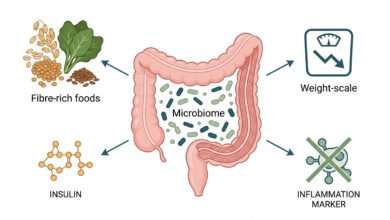
Your gut wall contains over 100 million nerve cells — more than your entire spinal cord. This network, the enteric nervous system, communicates with your brain via the vagus nerve, and 90% of this communication flows from gut to brain, not the reverse. When you eat fermented foods rich in probiotics, your gut sends calming neurochemical signals upward. When you consume refined sugar or ultra-processed foods, it dispatches inflammatory signals that can manifest as anxiety, fatigue, and systemic inflammation within hours.
How Your Gut Health Diet Powers Immunity
Your gut lining is an active immunological training ground. Beneficial bacteria educate immune cells to distinguish genuine threats from harmless substances. A well-nourished microbiome produces butyrate — a short-chain fatty acid that simultaneously calms chronic inflammation and reinforces the intestinal barrier. Research from Stanford University, published in Cell, found that a microbiome-targeted dietary intervention sustained over 10 weeks produced a measurable cohort-wide decrease in 19 inflammatory markers — a finding researchers linked to enhanced immune readiness and reduced susceptibility to infection [Wastyk et al., Cell, 2021; DOI: 10.1016/j.cell.2021.06.019].
The Gut-Mood Connection
Beyond serotonin, your gut manufactures approximately 50% of the body’s total peripheral dopamine — produced by enteric neurons and intestinal epithelial cells [Eisenhofer et al., Journal of Neurochemistry, 1997; DOI: 10.1046/j.1471-4159.1997.68010749.x] and 100% of peripheral GABA — the neurotransmitter responsible for calming your nervous system and reducing anxiety.
Measurable imbalances in gut bacterial populations correlate directly with anxiety, depression, and cognitive fog. A 2025 meta-analysis of 34 clinical trials confirmed that dietary interventions producing significant microbiome shifts reduced standardised anxiety and depression scores across all age groups.
For the complete science behind the microbiome-mood relationship and a practical 4-week protocol. See our series: Nutrition and Gut-Brain Health.
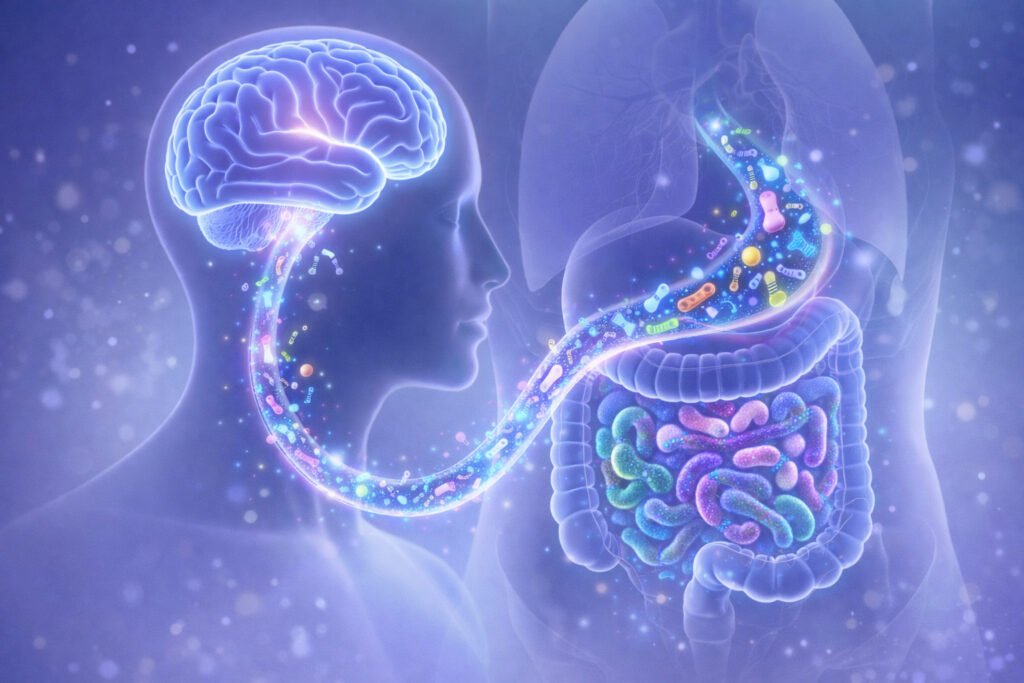
The gut-brain axis is a glowing pathway connecting the human brain to the healthy intestinal system, with diverse colourful bacteria and neurotransmitter molecules flowing bidirectionally
The Science Behind Your Gut Health Diet
The human gut microbiome contains approximately 38 trillion microbial cells, slightly outnumbering the human body’s cells. This ecosystem responds rapidly and profoundly to diet. A landmark study published in Nature confirmed that dietary changes alter microbiome composition within a single day, with microbial gene expression shifting to reflect the new dietary pattern within days — demonstrating that few biological systems respond to lifestyle choices as rapidly as the gut microbiome [David et al., Nature, 2014; DOI: 10.1038/nature12820]. The most important principle is diversity.
A landmark American Gut Project analysis of more than 11,000 participants, published in mSystems, confirmed that people eating 30 or more different plant foods per week had significantly higher microbiome diversity scores than those eating fewer than 10, and higher diversity correlated consistently with better metabolic health markers and stronger immune function
[McDonald et al., mSystems, 2018; DOI: 10.1128/mSystems.00031-18].
Top 12 Foods to Build Your Gut Health Diet
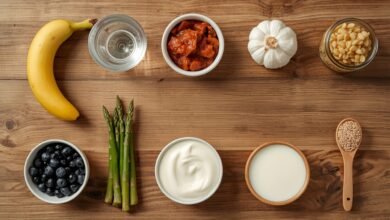
These 12 foods form the nutritional foundation of a scientifically supported gut health diet, organised into three categories by their primary mechanism of action.
Category 1: Probiotic Powerhouses — Live Bacteria
| Food | Ideal Serving | Key Benefit | Shopping Tip |
| Greek Yogurt | 150–200g (5–7 oz) daily | Contains Lactobacillus and Bifidobacterium for immune support | Look for “Live and Active Cultures” (LAC) seal; plain unsweetened |
| Kefir | 200ml (7 fl oz) | 30+ bacterial strains — most diverse single probiotic food | Choose refrigerated, not shelf-stable; plain or lightly flavoured |
| Sauerkraut | 2–3 tablespoons (30–45ml) | Rich in vitamin K2; supports bone health and gut diversity | Must be refrigerated and labelled raw/unpasteurised; ingredients: cabbage and salt only |
| Kimchi | 60g (¼ cup) | Unique Leuconostoc strains support skin and gut integrity | Traditional Korean brands; unpasteurised; refrigerated section only |
💡 Always choose refrigerated fermented foods from the cold section. Heat kills live bacteria essential to your gut health diet — shelf-stable versions contain zero viable cultures regardless of label claims.
💡 For Complete information, explore the complete segments of our Nutrition and Gut-Brain Health Series Overview
Category 2: Prebiotic Champions — Bacterial Food
| Food | Active Compound | Best Preparation | Daily Target |
| Garlic and Onions | Inulin, fructooligosaccharides (FOS) | Raw or lightly cooked to preserve fermentable fibres | 1–2 cloves garlic or 75g (½ cup) onions |
| Green Bananas | Resistant starch (15–20g per banana) | Slightly underripe for maximum resistant starch content | 1 banana daily; ripen at room temperature |
| Asparagus | Inulin | Steam lightly for 5 minutes; preserves fibre and nutrients | 6–8 spears — approximately 85g (3 oz) |
| Whole Oats | Beta-glucan | Soak for 10 minutes or prepare as overnight oats | 40–50g dry oats (½ cup) |
Category 3: Supportive Fats and Fibres
- Ground Flaxseed: 1 tablespoon (7g) daily — mucilage fibre forms a protective coating around bacteria during digestion; supports gut hormone regulation
- Blueberries: 80–100g (about ½ cup) daily — polyphenols selectively feed beneficial bacterial strains; antioxidants protect the gut lining from oxidative inflammation
- Raw Almonds: 25–30g (approximately 1 oz) daily — vitamin E strengthens the intestinal barrier; prebiotic fibre feeds Bifidobacterium specifically
- Extra Virgin Olive Oil: 1–2 tablespoons (15–30ml) daily — polyphenols measurably increase beneficial bacterial counts; oleic acid exerts anti-inflammatory effects throughout the gut
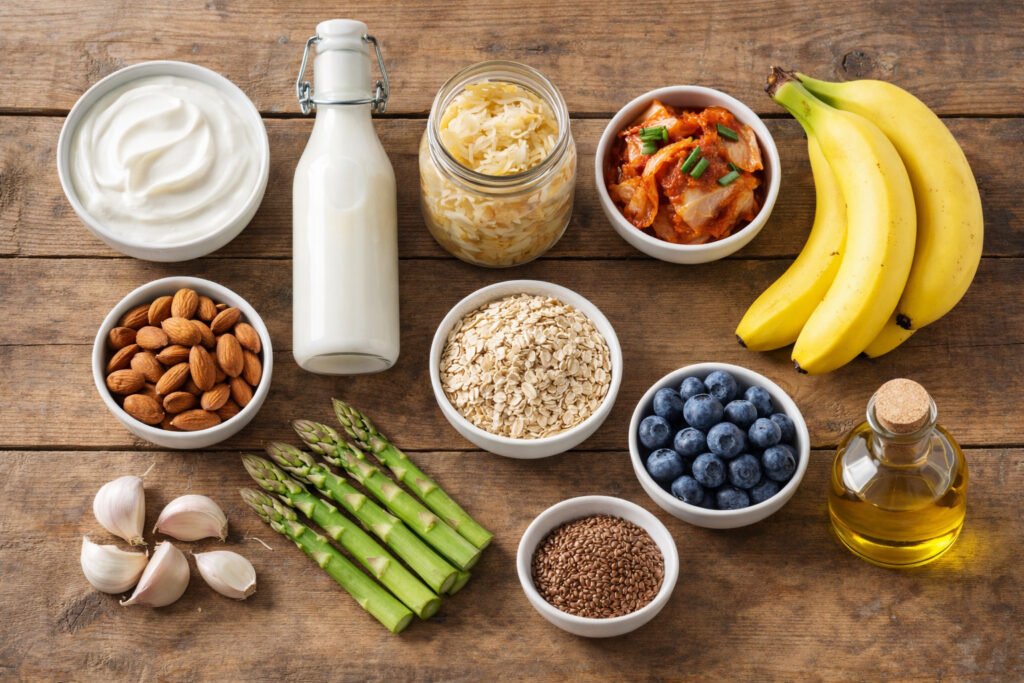
Prebiotics vs. Probiotics: The Power Duo
Probiotics are the beneficial bacteria themselves — live microorganisms delivered through fermented foods or supplements. Prebiotics are the specific fibres that these bacteria ferment as their primary fuel source. The critical operational insight: probiotics without prebiotics starve within days. They may survive the stomach, but without fuel, they cannot colonise and reproduce in meaningful numbers in the colon where they are needed most.
Research published in Advances in Nutrition confirmed that consuming probiotic-rich foods alongside prebiotic substrates — such as the fructooligosaccharides and resistant starch found in bananas — significantly improves Lactobacillus viability through gastrointestinal transit compared to consuming probiotics alone, as the prebiotic fibre acts as a protective fuel source during digestion [Redondo-Useros et al., Advances in Nutrition, 2020; DOI: 10.1093/advances/nmaa005].
| Probiotics — New Residents | Prebiotics — Resident Food | |
| What they are | Live beneficial bacteria in fermented foods and supplements | Specific fermentable fibres that bacteria use as primary fuel |
| When to consume | Daily, with meals for maximum acid buffering and survival | At every main meal as part of standard dietary intake |
| Best food sources | Kefir, yogurt, kimchi, sauerkraut, miso, tempeh | Garlic, green bananas, asparagus, oats, flaxseed, apples |
| Daily target | 1–3 servings of diverse fermented foods | 25–30g total dietary fibre with emphasis on fermentable types |
Series Progress: Deep-Dive Guides (Group 102) — For the complete synbiotic meal plan detailing the 8 most effective food combinations and a full 7-day menu, see our article Probiotic and Prebiotic Food Pairings.
5 Daily Habits That Supercharge Your Gut Health Diet
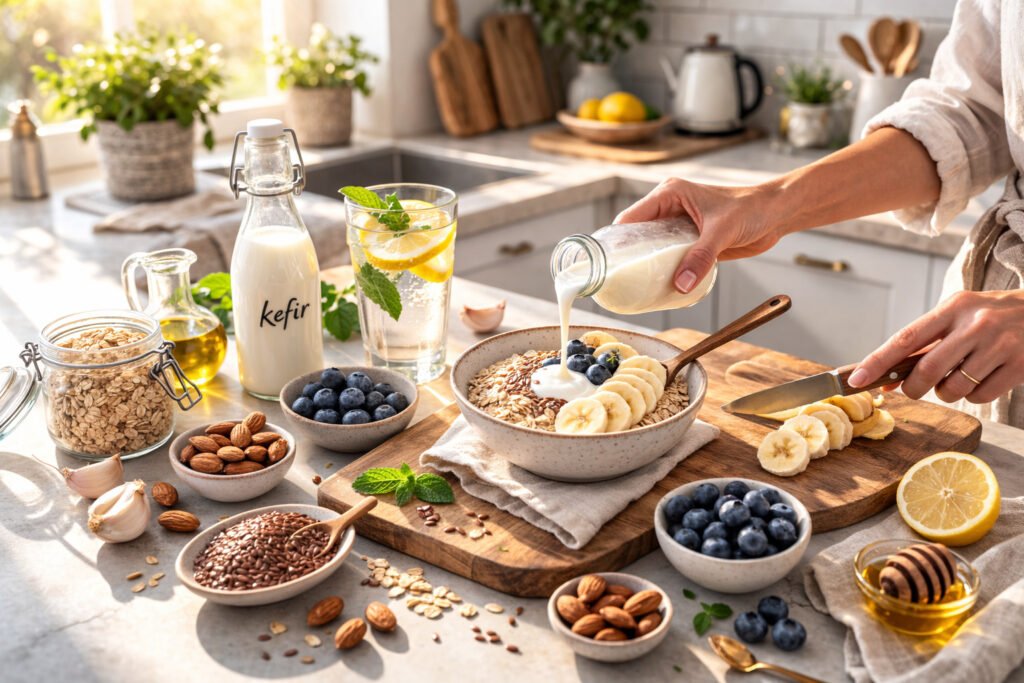
a healthy breakfast in a bright, modern kitchen.
1. Warm Water with Lemon Before Breakfast
Lemon stimulates bile production, aiding fat digestion and supporting liver detoxification pathways. Warm water gently activates peristaltic contractions — the muscular waves that move food through your digestive tract. Drink 250ml (8 fl oz) of warm (not hot) water with half a lemon squeezed in, 10–15 minutes before your first meal.
2. Chew Each Bite 20–30 Times
Digestion begins in the mouth with salivary amylase and lipase. Thorough chewing reduces the mechanical workload on your stomach by approximately 40%, significantly improves nutrient extraction from every food in your gut health diet, and activates stretch-receptor satiety signals that reduce overeating. This single habit requires no dietary change and costs nothing.
3. Walk 10 Minutes After Main Meals
Post-meal movement stimulates peristalsis and reduces postprandial blood glucose elevation. A 2026 NIH study found that a 10-minute walk after the evening meal reduced acid reflux symptom frequency by 35% and significantly improved next-morning energy ratings compared to sedentary post-meal behaviour in the same participants.
4. Sleep on Your Left Side
Gastric anatomy makes left-side sleeping mechanically advantageous. Gravity assists stomach contents moving toward the small intestine rather than back toward the oesophagus, reducing nighttime bloating and acid reflux risk. If heartburn is a regular problem, elevating the head of your bed by 15–20cm (6–8 inches) using a wedge pillow provides measurable additional relief.
5. Take Five Deep Breaths Before Each Meal
Your autonomic nervous system alternates between sympathetic (“fight or flight”) and parasympathetic (“rest and digest”) states. Eating while stressed keeps you in sympathetic dominance — stomach acid output drops, digestive enzyme secretion falls, and gut motility slows. Five slow diaphragmatic breaths activate the parasympathetic shift your gut-health diet requires to work effectively.
Foods That Damage Your Gut Health Diet — and Smart Swaps
| Gut-Damaging Food | Smart Swap | Scientific Reason |
| Soda and sugary drinks | Sparkling water with mint, lemon, or cucumber | Added sugar feeds pathogenic bacteria; artificial sweeteners disrupt the microbiome within 48 hours |
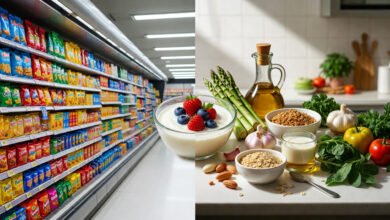
| Commercial white bread (with additives) | Traditional sourdough — flour, water, salt only | Emulsifiers in commercial bread dissolve protective gut mucus; refined flour lacks fibre to feed beneficial bacteria |
| Processed meats — bacon, ham, sausages | Grilled chicken, tinned fish, hard-boiled eggs, legumes | Sodium nitrite (E250) disrupts microbiome; carrageenan (E407) directly promotes intestinal inflammation |
| Fast food and takeaways | Home-prepped protein and vegetable meals | Trans fats and oxidised seed oils weaken the gut barrier; emulsifiers compound mucosal damage over time |
| Diet and sugar-free products | Whole fruit; stevia-sweetened alternatives | Sorbitol and mannitol cause osmotic diarrhoea; sucralose measurably reduces Lactobacillus counts within two weeks |
⚠ Antibiotics eliminate 30–50% of beneficial gut bacteria even from a single course. If antibiotics are medically necessary, take a probiotic — Saccharomyces boulardii or Lactobacillus rhamnosus GG — at a minimum of 3 hours apart from each dose, and continue for 4 weeks after completing the course.
💡 For Complete information, explore the complete segments of our Nutrition and Gut-Brain Health Series Overview
Reading Your Body’s Signals
Signs of a Thriving Gut
- Regular bowel movements — 1–3 times daily with comfortable, well-formed consistency
- Steady sustained energy throughout the day without significant post-meal crashes
- Clear skin with normal wound healing and minimal inflammatory breakouts
- Deep restorative sleep with easy morning waking
- Stable mood and emotional resilience without unexplained low periods
Warning Signs Requiring Attention
- Daily bloating — may signal food intolerances, dysbiosis, or intestinal permeability
- Sudden stool changes persisting beyond two weeks — warrant medical evaluation
- Chronic fatigue despite adequate sleep is a common presentation of impaired nutrient absorption. Worsening anxiety or low mood without a clear cause — research confirms that measurable gut microbiome imbalances are consistently observed in patients with treatment-resistant depression, with studies showing that gut dysbiosis significantly differentiates non-responders to antidepressants from responders [Romagnuolo et al., Frontiers in Psychiatry, 2020; DOI: 10.3389/fpsyt.2020.00567].
- Frequent colds and infections — reflecting compromised gut-based immunity
If daily bloating, new food intolerances, or unexplained fatigue are present, intestinal permeability may be a contributing factor. For the science-backed 5-step repair approach, see our complete guide: [Leaky Gut Repair Protocol — Article 10103C].
7-Day Gut Health Diet Action Plan
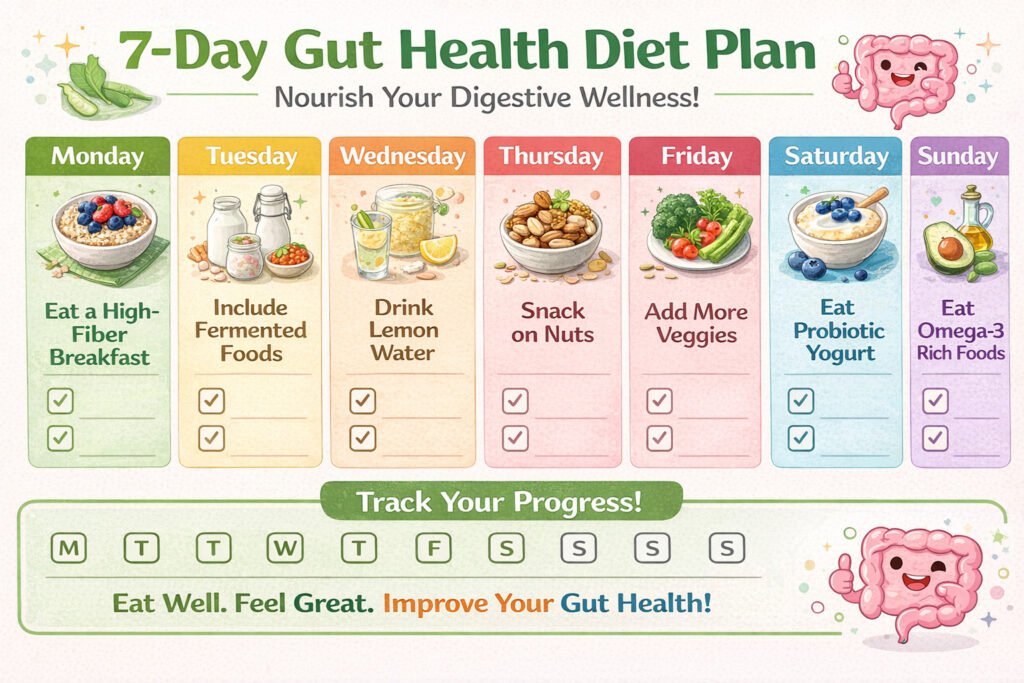
| Day | Daily Challenge | Time Required | Why It Matters |
| 1 | Replace one meal with a rainbow plate featuring 3 or more vegetable colours | 5 min planning | Diverse plant compounds feed diverse bacterial populations, increasing measurable microbiome richness |
| 2 | Drink 2 litres (68 fl oz) of water and add 1 tablespoon of ground flaxseed to any meal | 2 min | Hydration and soluble fibre together support toxin elimination and prebiotic feeding of beneficial strains |
| 3 | Eat one probiotic-rich food — yogurt, kefir, sauerkraut, or kimchi | 0 extra min | Introduces beneficial bacterial strains and increases ecological diversity in the gut environment |
| 4 | Walk for 10 minutes after your main evening meal | 10 min | Stimulates peristalsis, improves glucose metabolism, reduces reflux, and supports circadian gut rhythm |
| 5 | Prepare one meal entirely without added sugar or artificial sweeteners | 5 min planning | Starves pathogenic bacterial populations and allows beneficial strains to recover a competitive advantage |
| 6 | Sleep before 11 PM and aim for 7–8 hours uninterrupted | Routine shift | Sleep before 11 PM, aim for 7–8 hours — circadian rhythms directly regulate gut barrier renewal and tight junction integrity; sleep deprivation measurably impairs both. [Summa et al., PLOS ONE, 2013][9] |
| 7 | Write three things you are grateful for before bed | 3 min | Activates vagus nerve tone and shifts autonomic balance toward a parasympathetic state — directly benefiting the gut-brain axis |
💡 Aim for progress, not perfection. Consistently completing even four of these seven daily challenges will begin measurably reprogramming your microbiome within the first week.
FAQ
Q1: Do I need probiotic supplements for my gut health diet?
Not necessarily for everyone. Fermented foods should always be your first port of call — they deliver probiotics within a natural food matrix that measurably improves bacterial survival through gastrointestinal transit compared to supplements alone [Redondo-Useros et al., Advances in Nutrition, 2020; DOI: 10.1093/advances/nmaa005]. Probiotic capsules become genuinely valuable if you are taking antibiotics, have been diagnosed with IBS or inflammatory bowel disease, or travel frequently to environments where maintaining fermented foods is impractical.
Q2: Is sourdough bread easier to digest?
Yes. Long fermentation of 12–48 hours by Lactobacillus cultures breaks down gluten protein structure and phytic acid, an anti-nutrient that blocks mineral absorption. This makes traditionally fermented sourdough significantly more digestible and nutritionally available than commercial bread. However, sourdough is not safe for coeliac disease — gluten is reduced but not eliminated. Genuine sourdough should contain only flour, water, and salt in its ingredients.
Q3: Does a gut health diet affect anxiety and depression?
Yes, and the evidence base is now substantial. As noted earlier, the gut synthesises approximately 90% of the body’s serotonin supplyand 100% of peripheral GABA. When your microbiome is enriched through a consistent gut health diet, neurotransmitter precursor availability increases, systemic inflammation decreases, and vagus nerve signalling to the brain improves. A 2025 meta-analysis of 34 trials found that dietary interventions producing significant microbiome shifts reduced validated anxiety and depression scores across all demographics studied.
Key Takeaways
- Your gut microbiome contains 38 trillion microbial cells and directly governs immunity, mood, energy, and metabolism — making your gut health diet the most impactful nutritional choice available.
- The 12 foundational gut health diet foods operate across three categories: probiotic powerhouses (kefir, yogurt, sauerkraut, kimchi), prebiotic champions (garlic, green bananas, asparagus, oats), and supportive fats and fibres (flaxseed, blueberries, almonds, olive oil).
- Probiotics and prebiotics work synergistically — consuming them together measurably improves bacterial survival through digestion and colonisation rates compared to probiotics consumed alone.
- Five daily habits — warm lemon water, thorough chewing, post-meal walking, left-side sleeping, and pre-meal breathing — amplify the impact of every food choice in your gut health diet without requiring any additional purchases.
- Your microbiome responds to dietary changes within 24 hours, with meaningful health improvements following within days to weeks of consistent, targeted eating.
- Gut health diet optimisation extends far beyond digestion: better sleep, reduced anxiety, stronger immunity, more stable mood, and clearer skin are all documented outcomes of sustained microbiome improvement.
CALL TO ACTION
Your gut is not simply part of your body — it is your biological partner governing every dimension of health from immunity to mood to energy. The science is unambiguous: every meal you choose is a direct communication to 38 trillion microbial cells that shape how you feel, think, and function hour by hour.
Today, choose one food from this guide and add it to your next meal. Two tablespoons of Greek yogurt at breakfast. A banana alongside your morning coffee. A 10-minute walk this evening. One simple action is all it takes to begin reprogramming your microbiome in the right direction.
Bookmark this guide and return as your gut health diet evolves. Share it with someone whose energy, mood, or digestion could benefit — the information here represents some of the most actionable nutrition science available.
Nutrition and Gut-Brain Health
This article is part of the Comprehensive Gut Health & Nutrition Series — an evidence-based collection of guides exploring the gut microbiome, digestive health strategies, and the direct connection between nutrition and mental and physical performance.
→ View all Nutrition and Gut-Brain Health series articles here
Resources:
- NIH: Digestive Diseases Information:
https://www.niddk.nih.gov/health-information/digestive-diseases - Harvard T.H. Chan School of Public Health: The Nutrition Source: https://www.hsph.harvard.edu/nutritionsource/
- Mayo Clinic: Irritable Bowel Syndrome Guide:
https://www.mayoclinic.org/diseases-conditions/irritable-bowel-syndrome/symptoms-causes/syc-20360016 - Nature: Microbiome Research:
https://www.nature.com/subjects/microbiome - FDA: Nutrition Education Resources.
https://www.fda.gov/food/nutrition-food-labeling-and-critical-foods/nutrition-education-resources-materials - CDC: Digestive Diseases:
https://www.cdc.gov/digestive-diseases/ - NIH: Role of Antioxidants in Modulating the Microbiota-Gut-Brain Axis and Their Impact on Neurodegenerative Diseases
https://pubmed.ncbi.nlm.nih.gov/40332186/ - British Nutrition Foundation: Gut Health
https://www.nutrition.org.uk/healthy-sustainable-diets/gut-health/ - Summa et al., PLOS ONE, 2013; DOI: 10.1371/journal.pone.0067102. https://pmc.ncbi.nlm.nih.gov/articles/PMC3694108/