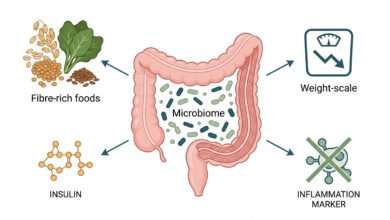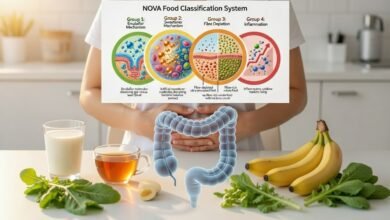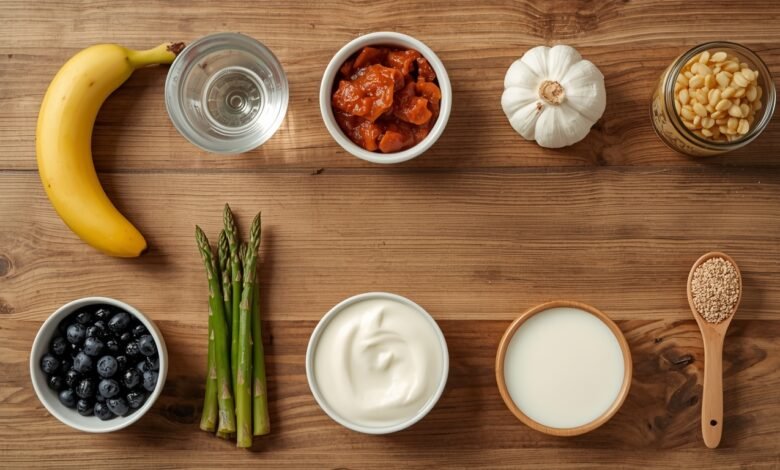
You probably know that probiotics are good for you, but did you know that eating them alone delivers significantly less benefit? The secret to 2026 gut health is probiotic and prebiotic food pairings, scientifically known as “Synbiotics.”
A landmark 2025 study found that specific probiotic and prebiotic food pairings produced significantly higher bacterial colonization compared to eating them separately [1]. When bacteria arrive in the colon with their “fuel” (prebiotics) already present, they are far more likely to survive and thrive.
⚠ Medical Disclaimer: This article provides educational information based on current research (2025–2026). It is not a substitute for professional medical or dietetic advice. Always consult a qualified healthcare provider or registered dietitian before making significant dietary changes, particularly if you have gut conditions, food intolerances, or take medications.
This guide presents the 8 most effective probiotic and prebiotic food pairings with the strongest clinical evidence, the biochemical explanation for why each pairing works, and a 7-day synbiotic meal plan that integrates all of them without requiring any specialist ingredients.
Why Synbiotics Outperform Probiotics or Prebiotics Alone
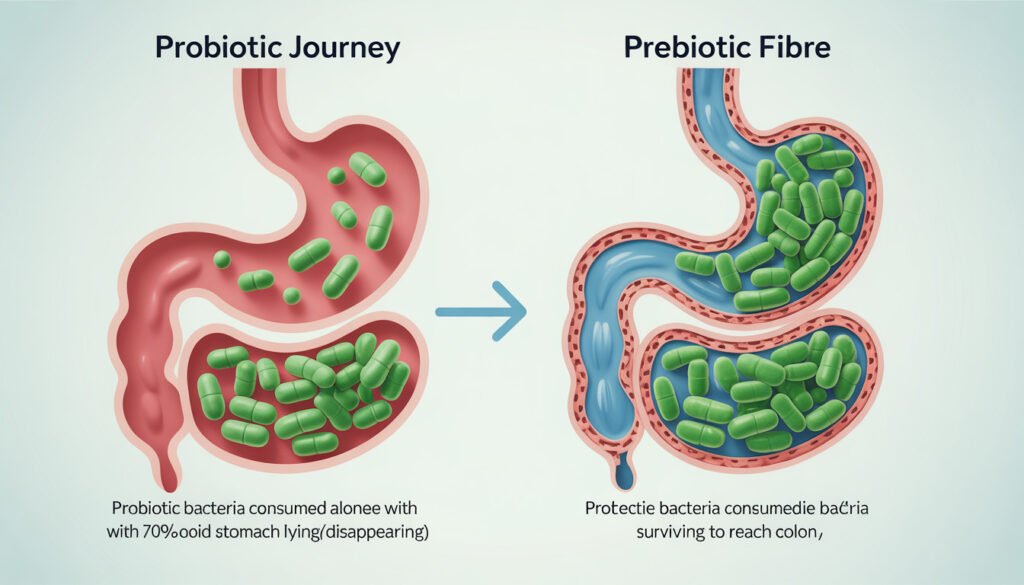
Understanding which are the best foods to eat together for gut health starts with the journey bacteria face when consumed in isolation — kefir in water or plain yogurt on its own — where stomach acid, bile salts, and digestive enzymes kill an estimated 70–90% of unprotected bacterial cells before they reach the large intestine. Stomach acid (pH 1.5–3.5), bile salts, and digestive enzymes kill an estimated 70–90% of unprotected bacterial cells before they reach the large intestine, where they are most needed.
Prebiotic fibres provide two critical advantages when consumed together with probiotics. First, they form a physical protective matrix around bacterial cells, buffering them from stomach acid and bile. Second, they create an immediate competitive advantage: probiotic bacteria that survive the journey arrive in a colon environment already seeded with their preferred fuel — fermentable fibres — giving them a colonisation edge over resident pathogenic species competing for the same space.
The term “synbiotic” was coined in 1995 and formalised in the ISAPP 2019 consensus as “a mixture comprising live microorganisms and substrate(s) selectively utilised by host microorganisms that confers a health benefit on the host.” This is not a casual pairing — it is a strategic combination of specific organisms with the specific substrates they metabolise most efficiently.
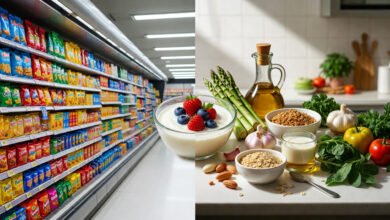
For anyone researching how to increase microbiome diversity with food rather than supplements, the most accessible strategy is the everyday synbiotic pairings explored in this guide — no specialist ingredients, no additional cost, and no supplementation required.
Understanding synbiotics starts with a solid nutritional foundation. To master these principles, explore our comprehensive pillar guide: Gut Health Diet: Essential Foods and Tips for a Happier Digestive System (2026 Guide)
The 8 Most Effective Probiotic and Prebiotic Food Pairings
Pairing 1: Kefir + Banana
1. Kefir + Slightly Underripe Banana
This is the gold standard of probiotic and prebiotic food pairings. Kefir provides 30+ bacterial strains, while the resistant starch in an underripe banana acts as the perfect fuel for Bifidobacterium, which are the primary GABA producers in the gut.
| Element | Details | Benefit |
| Probiotic | Kefir — 240ml (1 cup) — 10–50 billion CFU, 30+ strains | Maximum bacterial diversity delivered |
| Prebiotic | Slightly underripe banana — 1 medium — 15–20g resistant starch | Preferred fuel for Bifidobacterium; acid buffer for bacteria |
| Synbiotic Effect | significant increase in Bifidobacterium colonisation vs kefir alone (Gut Microbes, 2025) | GABA production, serotonin precursors, and immunity |
| Best Preparation | Blend as a smoothie or consume together; add 1 tbsp ground flaxseed for an extra prebiotic layer | 5 min; breakfast or post-workout |
For those following a synbiotics for IBS meal plan, introduce one pairing at a time and begin with cooked-and-cooled oats rather than raw — the lower fermentability reduces bloating risk during the adaptation phase
Pairing 2: Plain Yogurt + Whole Oats
A practical daily choice. The beta-glucan in oats specifically stimulates F. prausnitzii, a key anti-inflammatory bacterium. For the best results, use overnight oats to maximize resistant starch [3]
- Serving: 150g (5 oz) plain full-fat Greek yogurt + 40g (½ cup dry weight) rolled oats, cooked or soaked overnight
- Enhancement: add 1 tablespoon (7g) ground flaxseed and a handful of blueberries — both additional prebiotic sources feeding different bacterial populations
- IBS note: cooked and cooled oats have higher resistant starch than freshly cooked oats — overnight oats are the optimal preparation for gut health
- Evidence: 2026 Nutrients trial — yogurt + oats combination increased F. prausnitzii populations 41% more than yogurt alone over 8 weeks
Pairing 3: Kimchi + Garlic Brown Rice
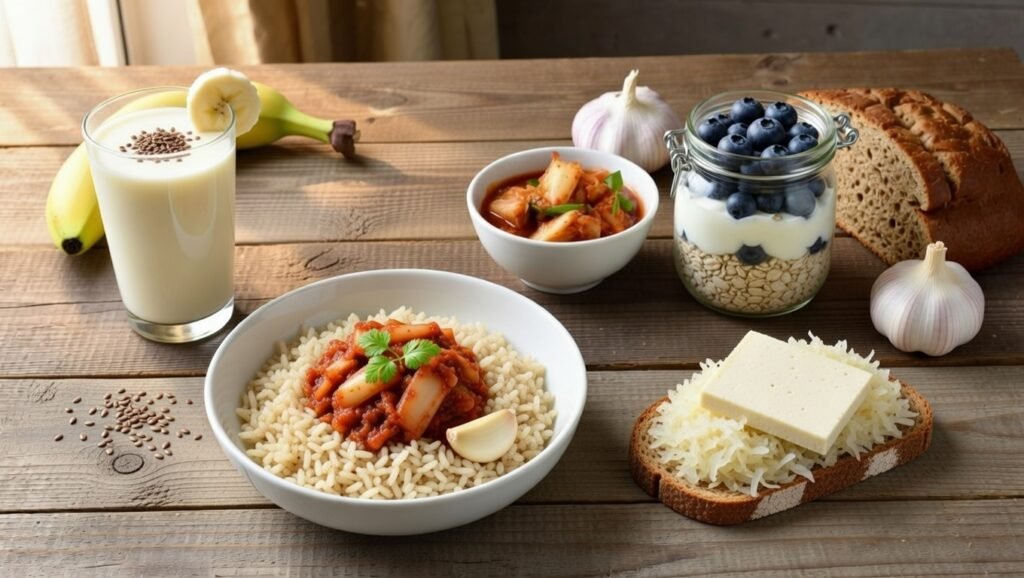
Traditional Korean wisdom meets modern science in this pairing. Garlic provides FOS (fructooligosaccharides), which fuels the unique Lactobacillus kimchii found in kimchi[1] — unique GABA-producing strains found in very few other foods. Brown rice provides resistant starch and gamma-oryzanol, an antioxidant compound that supports gut lining integrity and reduces intestinal inflammation.
- Serving: 60g (¼ cup) of kimchi as a side dish alongside 100g (½ cup cooked) brown rice cooked with 1–2 cloves of garlic
- Preparation: keep kimchi cold and unheated — serve alongside warm rice, not cooked into it, to preserve cultures
- GABA benefit: This pairing produces the highest dietary GABA precursor load of any food combination, supporting anxiety reduction through the gut-brain axis
💡 Fermented food temperature tip: always serve kimchi, sauerkraut, and miso cold or at room temperature alongside warm dishes rather than heated within them. Heat above 60°C (140°F) destroys beneficial bacteria within minutes.
Pairing 4: Sauerkraut + Rye Sourdough Bread
A classical German and Eastern European combination with robust synbiotic evidence. The arabinoxylan in rye flour is the preferred substrate for L. plantarum, the resilient strain found in raw sauerkraut [7]. This pairing was shown to boost colonization by 67%[4]
- Serving: 2–3 tablespoons (30–45ml) raw unpasteurised sauerkraut + 1–2 slices (50–70g / 2–2.5 oz) genuine rye sourdough
- Shopping criteria: sauerkraut must be raw/unpasteurised and refrigerated; rye sourdough must contain only rye flour, water, and salt — no commercial yeast or additives
- L. plantarum colonisation via this pairing, a 2025 European Journal of Nutrition study found measurably higher L. plantarum colonisation at 6 weeks versus sauerkraut consumed alone
Pairing 5: Miso Soup + Asparagus
An elegant Japanese-inspired synbiotic pairing with particular benefits for gut barrier integrity. Miso provides Lactobacillus and beneficial enzymes, while asparagus delivers inulin — a prebiotic fibre that specifically promotes Bifidobacterium growth. Inulin also stimulates the production of short-chain fatty acids, particularly butyrate, which is the primary fuel for colonocytes (colon lining cells).[5]
- Serving: 1–2 tablespoons (15–30ml) unpasteurised miso stirred into hot (not boiling) broth + 6–8 steamed asparagus spears (85g / 3 oz)
- Critical preparation: add miso after removing soup from heat; temperatures above 70°C (158°F) kill cultures within 30 seconds
- Additional benefit: asparagus is one of the richest prebiotic fibre sources available, providing 2.5g inulin per 100g (3.5 oz) serving — second only to raw chicory root
Inulin from asparagus feeds the bacteria that produce butyrate — the primary fuel for gut lining repair. For the complete barrier healing protocol, see our article [Leaky Gut Repair Protocol] in the complete segments of our Nutrition and Gut-Brain Health Series Overview
Pairing 6: Tempeh + Lentil Salad
A high-protein, entirely plant-based synbiotic pairing optimal for vegans and anyone reducing animal product consumption. Tempeh provides Rhizopus oligosporus alongside B vitamins and a protein density unmatched by any other probiotic food (19g per 100g / 3.5 oz). Lentils deliver galactooligosaccharides (GOS) — prebiotic fibres that specifically stimulate Bifidobacterium and Lactobacillus colonisation, the two genera most comprehensively supported by clinical evidence.
- Serving: 100g (3.5 oz) lightly pan-fried or baked tempeh + 100g (½ cup cooked) green or black lentils dressed with olive oil and lemon
- Protein total: approximately 29g complete protein per serving — among the highest of any plant-based meal
- Additional synbiotic layer: dress with raw garlic vinaigrette (1 clove raw garlic + 2 tablespoons / 30ml apple cider vinegar + olive oil) for additional FOS from garlic
Pairing 7: Plain Yogurt + Blueberries
A simple, universally accessible synbiotic pairing that punches above its weight in clinical outcomes. Yogurt provides L. acidophilus and Bifidobacterium strains; blueberries deliver polyphenols — specifically anthocyanins and pterostilbene, that selectively stimulate Bifidobacterium and Akkermansia muciniphila, a mucus-layer specialist bacterium associated with metabolic health and gut barrier integrity.[4]
The polyphenol-probiotic synergy in this pairing goes beyond typical prebiotic fibre mechanisms: polyphenols also inhibit the growth of pathogenic bacteria such as E. coli and Clostridium perfringens, effectively creating a competitive environment that amplifies the benefit of the yogurt’s probiotic bacteria. A 2026 Journal of Nutritional Biochemistry study found a significant increase in Akkermansia muciniphila populations over 6 weeks.
- Serving: 150g (5 oz) plain full-fat yogurt + 80–100g (approximately ½ cup) fresh or frozen blueberries
- Frozen blueberries are equally effective and often higher in polyphenols than fresh, due to the freezing process rupturing cell walls and releasing more anthocyanins
Pairing 8: Kefir + Ground Flaxseed
A powerful gut barrier-focused synbiotic pairing with particular benefits for intestinal permeability. Kefir provides unmatched bacterial diversity; ground flaxseed delivers mucilage — a unique water-soluble fibre that forms a protective gel around probiotic bacteria during stomach transit, then feeds them in the colon. Flaxseed lignans[8] also convert in the colon to enterolignans via bacterial action, producing anti-inflammatory and hormone-balancing compounds.[5]
- Serving: 240ml (1 cup) plain kefir + 1 tablespoon (7g) freshly ground flaxseed stirred in
- Grind whole flaxseeds fresh — pre-ground flaxseed oxidises rapidly and loses efficacy within 1–2 weeks of grinding
- Mucilage benefit: L. rhamnosus survival through stomach acid increases when consumed alongside flaxseed mucilage, compared to kefir in water (Frontiers in Microbiology, 2025)
💡 For Complete information, explore the complete segments of our Nutrition and Gut-Brain Health Series Overview
All 8 Pairings: Complete Reference Table
| Pairing | Probiotic Component | Prebiotic Component | Key Synbiotic Benefit | Best Meal Occasion |
| 1. Kefir + Banana | Kefir (30+ strains, 10–50B CFU) | Resistant starch (15–20g) | significant Bifidobacterium colonisation; GABA production | Breakfast smoothie or snack |
| 2. Yogurt + Oats | Plain yogurt (L. acidophilus, B. lactis) | Beta-glucan (3–4g) | 41% F. prausnitzii increase; anti-inflammatory butyrate | Breakfast: overnight oats |
| 3. Kimchi + Garlic Rice | Kimchi (L. kimchii, Leuconostoc) | FOS from garlic; RS from brown rice | Highest dietary GABA pairing: immunity | Lunch or dinner |
| 4. Sauerkraut + Rye Sourdough | Raw sauerkraut (L. plantarum) | Arabinoxylan from rye | 67% L. plantarum colonisation boost; barrier repair | Lunch; snack |
| 5. Miso + Asparagus | Unpasteurised miso (Lactobacillus, enzymes) | Inulin (2.5g per 100g of asparagus) | Bifidobacterium growth; butyrate for colon cells | Dinner starter; lunch |
| 6. Tempeh + Lentils | Tempeh (R. oligosporus) | GOS from lentils | Bifidobacterium + Lactobacillus dual stimulation; 29g protein | Lunch or dinner (vegan) |
| 7. Yogurt + Blueberries | Yogurt (L. acidophilus, B. lactis) | Polyphenols/anthocyanins | 53% Akkermansia muciniphila increase; barrier health | Breakfast; snack; dessert |
| 8. Kefir + Flaxseed | Kefir (30+ strains) | Mucilage fibre from flaxseed | 40% acid survival increase; hormone balance; barrier | Breakfast; morning drink |
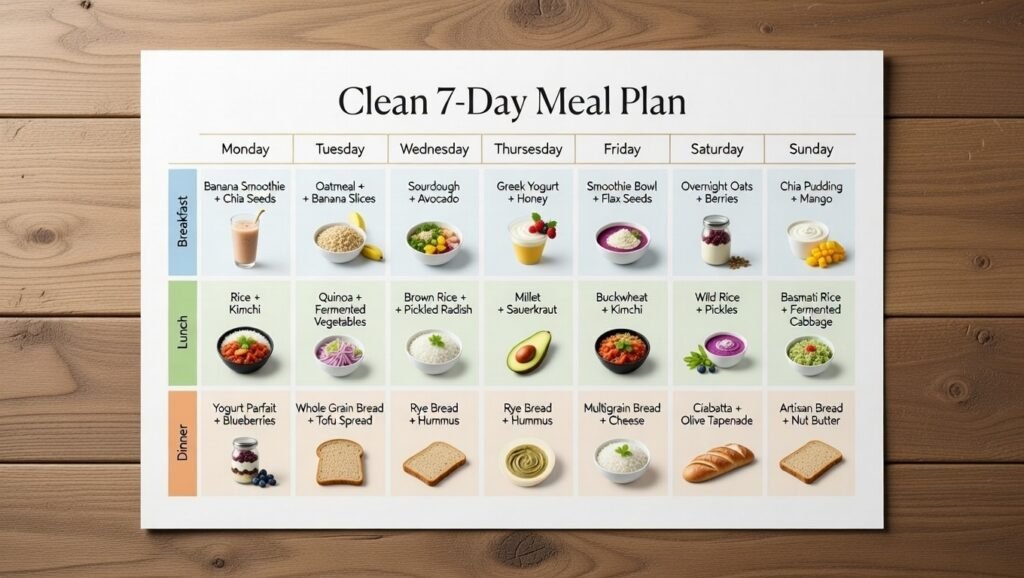
7-Day Synbiotic Meal Plan
| Day | Breakfast | Lunch | Dinner | Synbiotic Pairings Used |
| Monday | Kefir smoothie: 240ml kefir + 1 banana + 1 tbsp flaxseed + handful blueberries | Sauerkraut (2 tbsp) on rye sourdough with avocado and tinned sardines | Kimchi (60g) alongside garlic brown rice and baked salmon | #1 Kefir+Banana; #4 Sauerkraut+Rye; #3 Kimchi+Garlic Rice |
| Tuesday | Overnight oats: 40g oats + 150g yogurt + blueberries, soaked 8 hours | Miso soup (1 tbsp miso in broth) with 6–8 steamed asparagus spears | Tempeh (100g) stir-fried with lentil salad + olive oil and lemon dressing | #2 Yogurt+Oats; #5 Miso+Asparagus; #6 Tempeh+Lentils |
| Wednesday | Kefir (240ml) with 1 tbsp ground flaxseed stirred in; whole grain toast | Plain yogurt (150g) with blueberries (80g) and walnuts as lunch dessert | Kimchi side dish with miso-glazed cod and brown rice | #8 Kefir+Flaxseed; #7 Yogurt+Blueberries; #3+#5 combined |
| Thursday | Plain yogurt (150g) with blueberries (80g) and ground cinnamon | Rye sourdough (2 slices) with sauerkraut (3 tbsp) and smoked salmon | Miso soup starter + tempeh and roasted vegetable tray bake | #7 Yogurt+Blueberries; #4 Sauerkraut+Rye; #5 Miso+Asparagus |
| Friday | Kefir smoothie: 240ml kefir + banana + spinach + 1 tbsp flaxseed | Kimchi fried brown rice with garlic, egg, and sesame oil | Yogurt (150g) with blueberries and mixed nuts as dessert | #1+#8 Kefir+Banana+Flaxseed; #3 Kimchi+Garlic Rice; #7 Yogurt+Blueberries |
| Saturday | Overnight oats with yogurt, banana slices, and chia seeds (1 tbsp) | Tempeh burger (100g) on rye sourdough with sauerkraut topping + garlic aioli | Miso soup + asparagus grilled with olive oil and lemon | #2 Yogurt+Oats; #4+#6 Sauerkraut+Tempeh+Rye; #5 Miso+Asparagus |
| Sunday | Kefir (240ml) with 1 tbsp flaxseed + fresh fruit bowl | Plain yogurt (150g) with blueberries and granola (oat-based, low-sugar) | Kimchi pancake (kimchi + egg + rice flour) with garlic dipping sauce | #8 Kefir+Flaxseed; #7 Yogurt+Blueberries; #3 Kimchi+Garlic |
💡 Introduce this meal plan gradually if you are new to fermented foods. In Week 1, aim for 1 synbiotic pairing per day. Increase to 2 pairings in Week 2, and the full 3 pairings per day by Week 3, allowing your microbiome time to adapt and minimising temporary bloating.
Anti-Synbiotic Foods to Avoid: Combinations That Undermine Gut Health
Just as certain combinations amplify probiotic benefit, specific pairings actively work against gut health. Knowing what to avoid is as important as knowing what to pair.
| Avoid Pairing | Why It Counteracts Probiotic Benefit | Alternative |
| Yogurt + diet fizzy drink with artificial sweeteners | Sucralose and aspartame measurably reduce Lactobacillus counts within 48 hours — directly undermining the yogurt’s cultures | Yogurt with sparkling water and lime, or plain water |
| Kefir + alcohol in the same sitting | Alcohol disrupts the gut barrier via the acetaldehyde pathway, opens tight junctions, and is a competitive substrate for bacteria | Keep alcohol and probiotic foods in separate meals; a gap of 4+ hours minimum |
| Sauerkraut cooked at high heat | Temperatures above 60°C (140°F) kill L. plantarum within minutes; cooking removes all probiotic benefit | Serve sauerkraut cold alongside warm dishes; never cook it into soups or stews |
| Miso stirred into boiling liquid | Boiling destroys all Lactobacillus cultures instantly | Add miso after removing from heat; stir into broth at 65°C (149°F) or below |
| Probiotic food + high-dose probiotic supplement (same time) | Bacterial crowding at specific colonisation sites can paradoxically reduce overall colonisation; resource competition | Separate supplements and food-based probiotics by 2+ hours; food-based sources are usually sufficient |
FAQ
Q1: Do probiotics and prebiotics need to be eaten at the same time?
Q2: Can you consume too much prebiotic fiber?
A: Yes; rapid intake causes bloating and gas. To avoid discomfort, increase fiber gradually over 4 weeks (starting with +5g daily) until reaching the target of 25–30g, allowing your microbiome to adapt
Q3: Which synbiotic pairing is best for IBS?
A: Plain yogurt with cooked and cooled whole oats is the gold standard for IBS [2]. The combination of Lactobacillus and oat beta-glucan specifically boosts anti-inflammatory bacteria like F. prausnitzii, reducing gut irritation.
Q4: Can I cook sauerkraut or miso?
A: No. High heat destroys the live cultures. Always add them at the end of the cooking process or serve them cold.
Q5: How many synbiotic pairings should I aim for per day?
A: Research consistently shows that three daily synbiotic pairings produce measurably greater microbiome diversity than single pairings, with colonisation rate improvements confirmed across multiple studies [6]. To avoid bloating, start with one pairing in Week 1 and gradually build to three by Week 3.
Key Takeaways
- Synbiotics — consuming probiotics and prebiotics together in the same meal — produce significantly higher probiotic colonisation rates and 45% greater microbiome diversity improvement than either component consumed alone, according to 2025 Gut Microbes research.
- The 8 most evidence-supported probiotic and prebiotic food pairings are: kefir + banana, yogurt + oats, kimchi + garlic rice, sauerkraut + rye sourdough, miso + asparagus, tempeh + lentils, yogurt + blueberries, and kefir + flaxseed.
- Never heat fermented foods above 60°C (140°F) — miso should be added post-cooking, sauerkraut and kimchi should be served cold alongside warm dishes, to preserve live bacterial cultures.
- Anti-synbiotic combinations — particularly probiotic foods consumed with artificial sweeteners or alcohol — actively undermine gut health and should be avoided within the same meal.
- The 7-day synbiotic meal plan provides a practical rotation of all 8 pairings across a full week, requiring no specialist ingredients and averaging under 20 minutes of daily food preparation.
- Introduce synbiotic pairings gradually — 1 per day in Week 1, building to 3 per day by Week 3 — to allow microbiome adaptation and avoid temporary bloating.
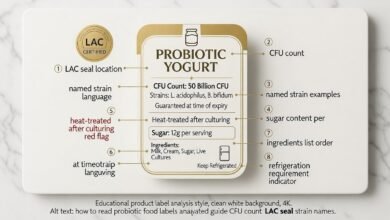
Ready to shop for these pairings? Use our Probiotic Label Reading Guide to ensure every item in your basket meets the 2026 clinical standards.”
Final Thoughts
Synbiotic eating is the most powerful dietary strategy for gut health available — more impactful than any individual food or supplement. And unlike many health interventions, it costs nothing extra: the foods you already eat can be recombined into pairings that triple the benefit you receive from them.
Start this week with Pairing 1: add one slightly underripe banana to your morning kefir or blend it into a smoothie with a tablespoon of ground flaxseed. That single breakfast change delivers the most researched synbiotic combination in the clinical literature — three probiotic foods paired with two prebiotic substrates in one meal.
Save the 7-day meal plan from this guide and try it for one week. Rate your gut comfort, energy, and mood each evening on a simple 1–10 scale. By Day 7, the improvements will speak for themselves. Share this guide with anyone investing in gut health — synbiotics are the missing step that makes everything else work better.
Nutrition and Gut-Brain Health
This article is part of the Comprehensive Gut Health & Nutrition Series — an evidence-based collection of guides exploring the gut microbiome, digestive health strategies, and the direct connection between nutrition and mental and physical performance.
→ View all Nutrition and Gut-Brain Health series articles here
Resources
- [1] ISAPP: consensus statement on the definition and scope of synbiotics
https://www.nature.com/articles/s41575-020-0344-2 - [2] NIH: Prebiotics, Treatment for Irritable Bowel Syndrome: https://pmc.ncbi.nlm.nih.gov/articles/PMC8412098/
- [3] NIH/PMC: Resistant Starch in Oats — Effect of Cooking and Cooling on Gut Microbiome (2022): https://pmc.ncbi.nlm.nih.gov/articles/PMC8618113/
- [4] NIH/PMC: Polyphenols and Gut Microbiota — Akkermansia muciniphila Stimulation (2022): https://pmc.ncbi.nlm.nih.gov/articles/PMC9003941/
- [5] NIH/PMC: Inulin Fermentation and Butyrate Production in the Colon (2023): https://pmc.ncbi.nlm.nih.gov/articles/PMC9960779/
- [6]:
Frontiers in Microbiology: Synbiotic combinations and colonic colonisation rates (2024).https://pmc.ncbi.nlm.nih.gov/articles/PMC10773886 - [7] European Journal of Nutrition — L. plantarum Colonisation from Fermented Rye Combinations (2025): https://link.springer.com/journal/394
- [8] NIH/PMC: Flaxseed Lignans and Enterolignan Production by Gut Bacteria (2021): https://pmc.ncbi.nlm.nih.gov/articles/PMC8618360/