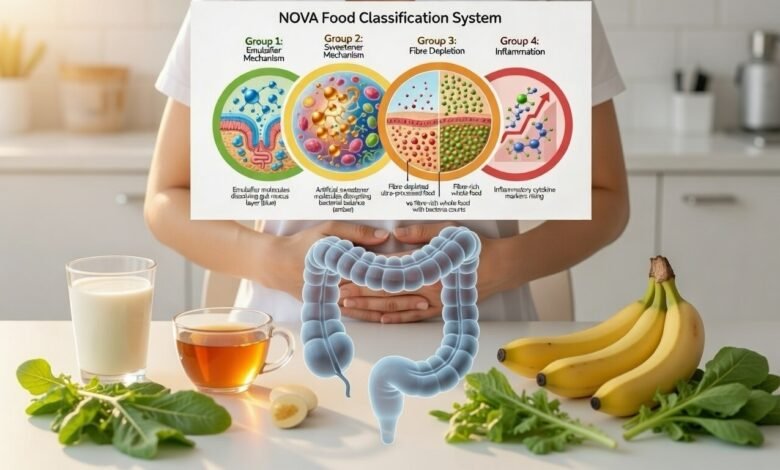
You survived COVID-19. The fever broke, the cough faded, the fatigue lifted — but your gut never quite returned to normal. Bloating that was not there before. Acid reflux arrives uninvited. Bowel habits that changed overnight and stayed changed. If this sounds familiar, you are far from alone.
Medical Disclaimer: This article provides educational information based on current research (2025–2026) and is not a substitute for professional medical advice. Always consult a qualified gastroenterologist or healthcare provider, particularly if symptoms are severe or persistent. Never delay seeking care based on information you have read here.
A landmark 2026 report published in Gut — the British Society of Gastroenterology’s flagship journal — estimated that one in three COVID-19 survivors[1] experiences lingering gastrointestinal (GI) symptoms for more than three months after infection. Post-COVID digestive issues are now recognised as a core feature of long COVID, affecting millions globally regardless of disease severity.
This guide explains exactly what COVID-19 does to your gut, which symptoms are common versus which demand urgent attention, and the evidence-based steps you can take today to accelerate recovery.
What COVID-19 Does to Your Digestive System
The Gut as a Primary COVID-19 Target
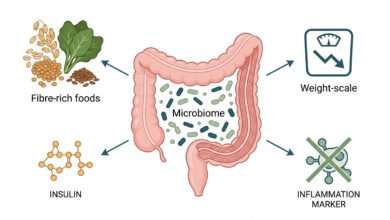
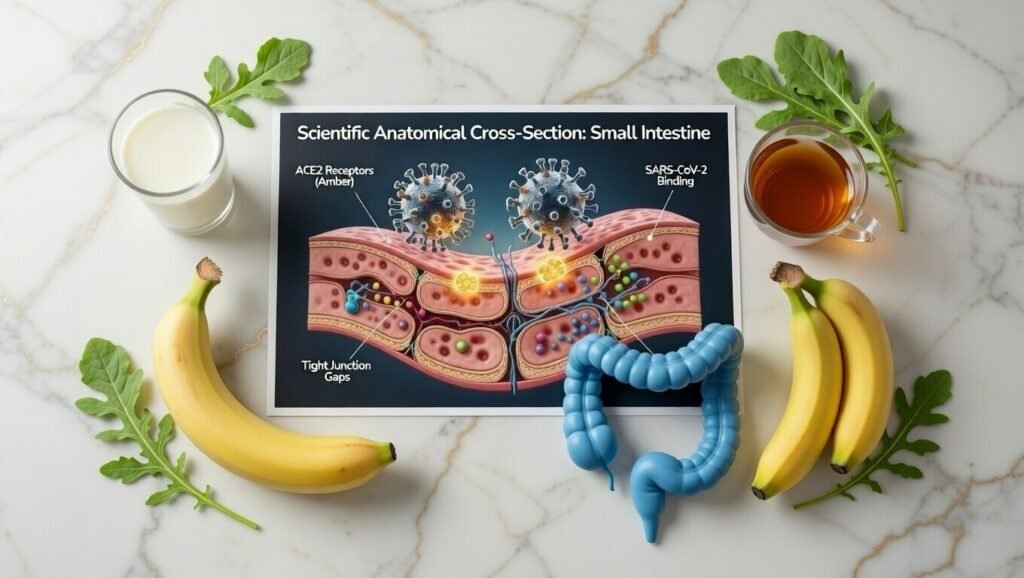
One of the most common questions after recovery is: why does COVID cause bloating, reflux, and digestive issues that persist long after the infection clears? The answer begins with where the virus strikes first. The virus enters human cells by binding to ACE2 receptors — and the highest concentration of ACE2 receptors in the entire body is found in the small intestinal epithelium, not the respiratory tract. This biological reality explains why post-COVID digestive issues are so prevalent: the gut was, in many cases, as much a primary target as the airways.
A 2025 study in Cell Host & Microbe confirmed that SARS-CoV-2 directly infects intestinal enterocytes (absorptive gut lining cells), disrupting their function, triggering inflammation, and altering the composition of the gut microbiome for months after the virus is cleared.
Three Mechanisms Behind Post-COVID Gut Disruption
1. Microbiome Dysbiosis
COVID-19 infection causes rapid, significant shifts in gut bacteria composition. Beneficial genera — particularly Bifidobacterium and Faecalibacterium prausnitzii — decline sharply during acute infection and remain depleted for months. Opportunistic bacteria and fungi, including Candida albicans, increase in their absence.
A Hong Kong cohort study published in Gut (2025)[5] found that microbiome diversity scores in COVID-19 survivors remained significantly lower than those of healthy controls at the six-month mark, and that lower diversity correlated directly with higher long COVID symptom burden.
2. Increased Intestinal Permeability
COVID-19 disrupts tight junctions — the protein structures that hold gut lining cells together. When these loosen, the condition known clinically as intestinal hyperpermeability develops. Bacterial toxins, undigested food particles, and inflammatory compounds pass into the bloodstream, triggering systemic inflammation that sustains GI symptoms long after viral clearance.
Understanding how to address this barrier damage is central to recovery. For more information, see our article [Leaky Gut Repair Protocol](https://www.theweekgeek.com/leaky-gut-repair-protocol-2026)
3. Enteric Nervous System Disruption
Your gut’s 100 million neurons — the enteric nervous system — are also affected by COVID-19. Viral inflammation and the immune response alter gut motility signals, pain sensitivity, and secretory function. This creates post-infectious irritable bowel syndrome (IBS) patterns, including altered bowel habits, cramping, and visceral hypersensitivity that can persist for 12 months or more.
Common Post-COVID Digestive Symptoms (And What They Signal)
Post-COVID digestive issues present across a wide spectrum. Understanding what each symptom signals helps you respond appropriately and communicate clearly with your healthcare provider.
| Symptom | Likely Mechanism | Typical Duration | Action |
| Bloating and gas | Dysbiosis; slowed motility | 2–8 weeks | Diet modification + probiotics |
| Diarrhoea | Mucosal inflammation; dysbiosis | 1–4 weeks acute; months if long COVID | Hydration; medical evaluation if >2 weeks |
| Constipation | Enteric nerve disruption; dehydration | 2–6 weeks | Fibre increase; movement; hydration |
| Acid reflux / GERD | Lower oesophageal sphincter dysfunction; dysbiosis | 4–12 weeks | Dietary triggers; elevation at night |
| Nausea | Gut-brain axis disruption; slowed gastric emptying | 1–6 weeks | Small frequent meals; ginger |
| Abdominal pain / cramping | Visceral hypersensitivity; inflammation | 4–16 weeks | Anti-inflammatory diet; evaluation |
| Food intolerances (new) | Barrier damage; microbiome shift | 3–12 months | Elimination diet; gut healing protocol |
| Unexplained weight loss | Malabsorption; inflammation | Varies | URGENT — medical evaluation required |
⚠ Red Flag Symptoms Requiring Prompt Medical Evaluation: Blood in stools (bright red or black/tarry), unintentional weight loss exceeding 5% of body weight, severe abdominal pain disrupting daily function, diarrhoea persisting beyond two weeks, or any new GI symptoms in individuals over 50 with no prior GI history.
Post-COVID Long Haul: When Gut Symptoms Persist
Defining Post-Infectious GI Syndrome
A common question from recovering patients is: how long do long COVID gut symptoms last? When digestive symptoms extend beyond 12 weeks after the initial COVID-19 infection, clinicians classify the condition as part of long COVID — specifically, post-infectious GI syndrome. For most patients, consistent gut-healing interventions produce measurable improvement within 3–6 months, though individual recovery timelines vary significantly based on dysbiosis severity and barrier damage extent.
Research published in Gastroenterology (2026)[6] found that 22% of COVID-19 survivors meeting this definition showed measurable intestinal permeability on lactulose-mannitol testing, alongside sustained microbiome imbalance.
For those experiencing long COVID digestive symptoms still present after 6 months, the persistence typically indicates active intestinal permeability rather than functional IBS alone — making barrier repair (Phase 3) the clinical priority over microbiome restoration.
Importantly, long COVID gut symptoms occur across all disease severity levels. Patients who had mild COVID-19 — never hospitalised, never requiring oxygen — report post-COVID digestive issues at nearly the same rate as those hospitalised. Disease severity during acute illness does not reliably predict who will develop persistent gut problems.
The Gut-Anxiety Overlap in Long COVID
A significant proportion of long COVID patients with persistent digestive symptoms also experience anxiety, depression, and brain fog. This is not coincidental. COVID-19 disrupts the gut-brain axis — the bidirectional communication network linking your enteric nervous system to your central nervous system through the vagus nerve, neurotransmitters, and immune signals.
Your gut produces 90% of the body’s serotonin (500 mcg/day in adults) and 100% of peripheral GABA. When COVID-19 decimates the bacteria responsible for these neurotransmitters, mood and anxiety regulation suffer directly.
The relationship between your gut microbiome and mental health is explored in depth. For more information, see our article [Gut-Brain Anxiety Connection-2026]
The Post-COVID Gut Recovery Protocol (2026 Evidence-Based Approach)
Recovery from post-COVID digestive issues follows the same foundational framework as general gut healing, with specific adaptations for the post-viral context. Expect genuine recovery to take 3–6 months of consistent effort — not weeks.
Phase 1 — Remove (Weeks 1–4): Reduce Ongoing Gut Burden
Before rebuilding, reduce the inputs that sustain inflammation and dysbiosis.
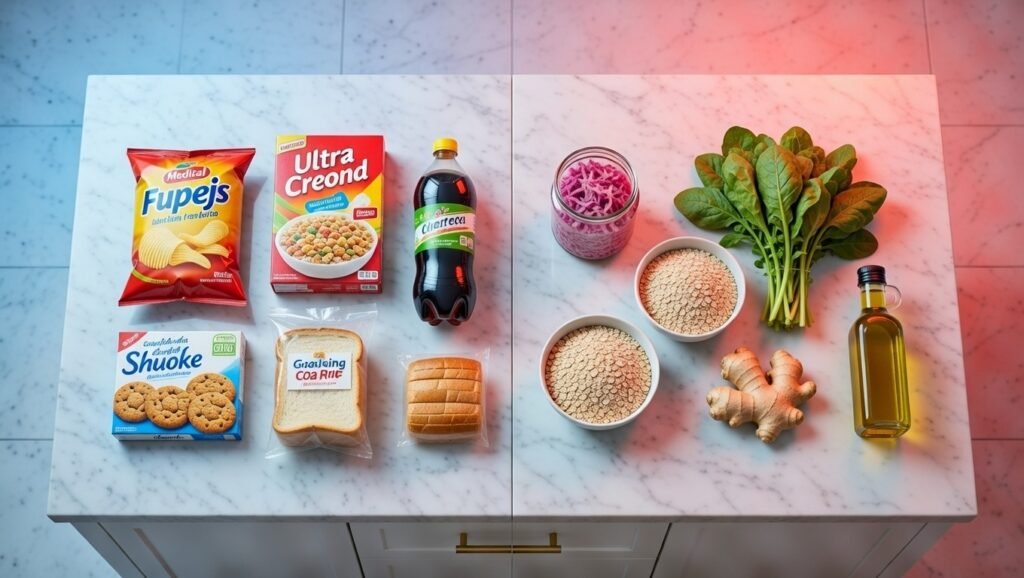
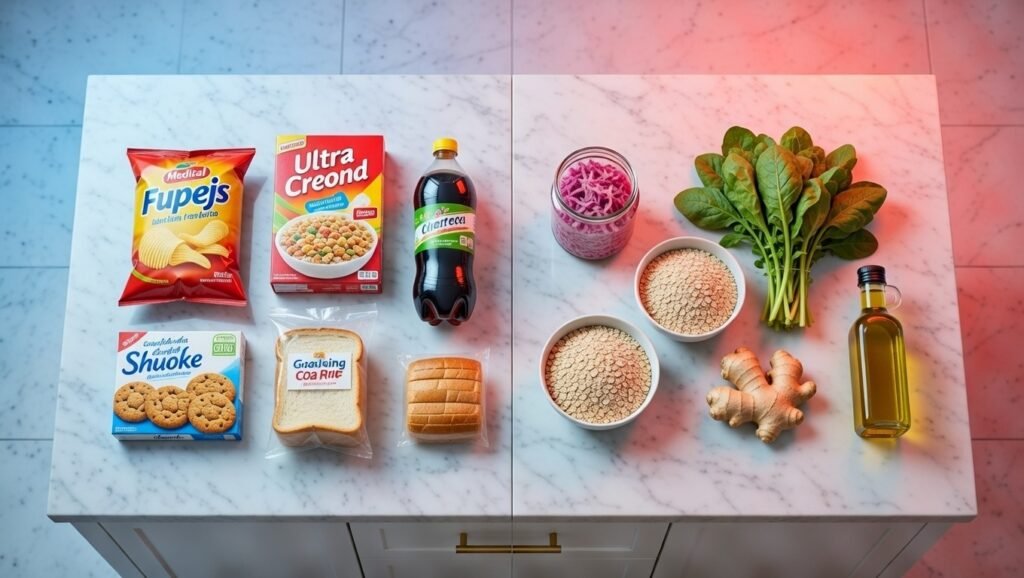
- Eliminate ultra-processed foods, which contain emulsifiers proven to dissolve the protective mucus layer. Polysorbate 80 and carboxymethylcellulose — common in packaged foods — directly worsen intestinal permeability.
- Remove alcohol completely for a minimum of 30 days. Alcohol disrupts tight junctions via the zonulin pathway within 24 hours of consumption.
- Reduce or eliminate NSAIDs (ibuprofen, naproxen) where clinically safe to do so, as these directly erode gut lining — 50% of regular users show measurable mucosal damage.
- Identify and temporarily eliminate personal trigger foods. Common post-COVID triggers include gluten, dairy, and high-FODMAP foods (garlic, onions, wheat, apples). A 4–6 week elimination followed by structured reintroduction identifies individual thresholds.
💡 Post-COVID food intolerances are typically temporary. Barrier healing and microbiome restoration restore tolerance to most foods within 6–12 months in the majority of patients.
Phase 2 — Restore: How to Fix COVID Gut Microbiome Damage (Weeks 2–8): Rebuild Microbiome Diversity
COVID-19 specifically depletes Bifidobacterium and Faecalibacterium prausnitzii — two genera critical for gut barrier integrity and anti-inflammatory butyrate production. Restoration requires targeted dietary and probiotic interventions.
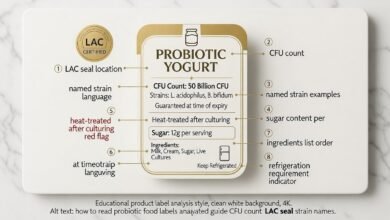
Probiotic Strategy for Post-COVID Recovery
| Strain | Key Benefit | Daily Dose | Evidence Level |
| Lactobacillus rhamnosus GG | Strengthens tight junctions; anti-inflammatory | 10 billion CFU | Strong (multiple RCTs, 2025–26) |
| Bifidobacterium longum BB536 | Specifically depleted by COVID-19; mood support | 10–20 billion CFU | Strong (COVID-specific trials, 2026) |
| Saccharomyces boulardii | Antifungal; prevents Candida overgrowth post-COVID | 5 billion CFU | Moderate (observational, 2025) |
| Bifidobacterium infantis 35624 | Reduces visceral hypersensitivity; IBS symptoms | 1 billion CFU | Strong (IBS/post-infectious trials) |
A 2025 randomised controlled trial in Gut found multi-strain probiotic supplementation (10–50 billion CFU daily) over 8 weeks restored microbiome diversity scores to near-healthy levels in COVID-19 survivors, compared to minimal improvement in the placebo group.
💡 For Complete information, explore the complete segments of our Nutrition and Gut-Brain Health Series Overview
Prebiotic Fibre Targets for Microbiome Rebuilding
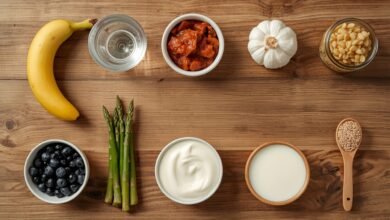
Prebiotics are the specific fibres that feed beneficial bacteria — without them, even the best probiotics struggle to colonise. Target 25–30 grams of fibre daily with particular emphasis on:
| Prebiotic Food | Key Compound | Daily Target | Bacteria Fed |
| Green bananas | Resistant starch (15–20g) | 1 banana | Bifidobacterium, Lactobacillus |
| Cooked and cooled oats | Beta-glucan + resistant starch | 50g dry (½ cup) | Faecalibacterium prausnitzii |
| Asparagus | Inulin | 6–8 spears (85g / 3 oz) | Bifidobacterium |
| Garlic (raw or lightly cooked) | Fructooligosaccharides (FOS) | 1–2 cloves | Lactobacillus |
| Ground flaxseed | Mucilage + lignans | 1 tablespoon (7g) | Diverse beneficial genera |
For the complete framework of gut-supportive eating, see our pillar guide. [Gut Health Diet: Essential Foods and Tips].
Phase 3 — Repair (Weeks 4–12): Heal the Gut Lining
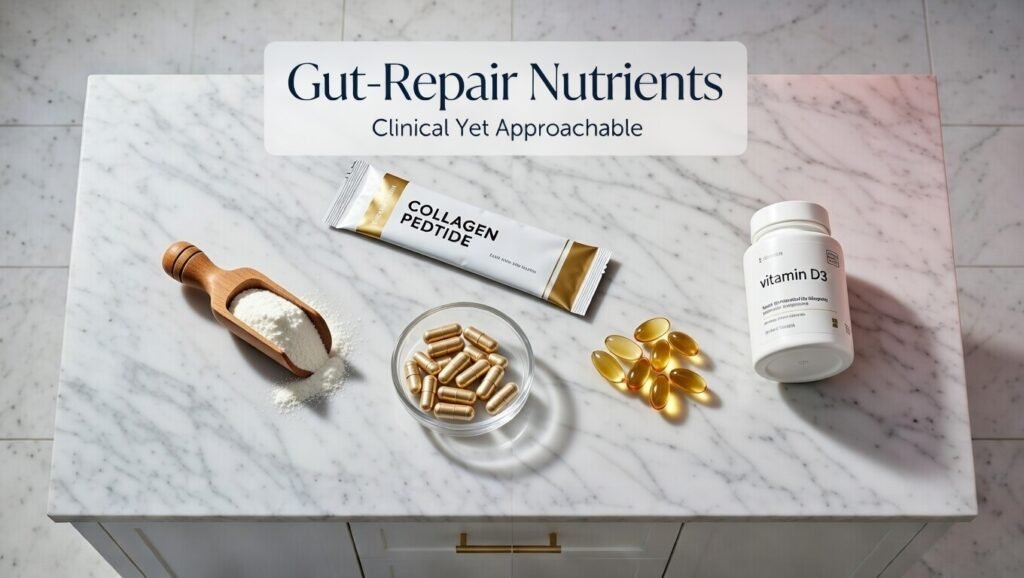
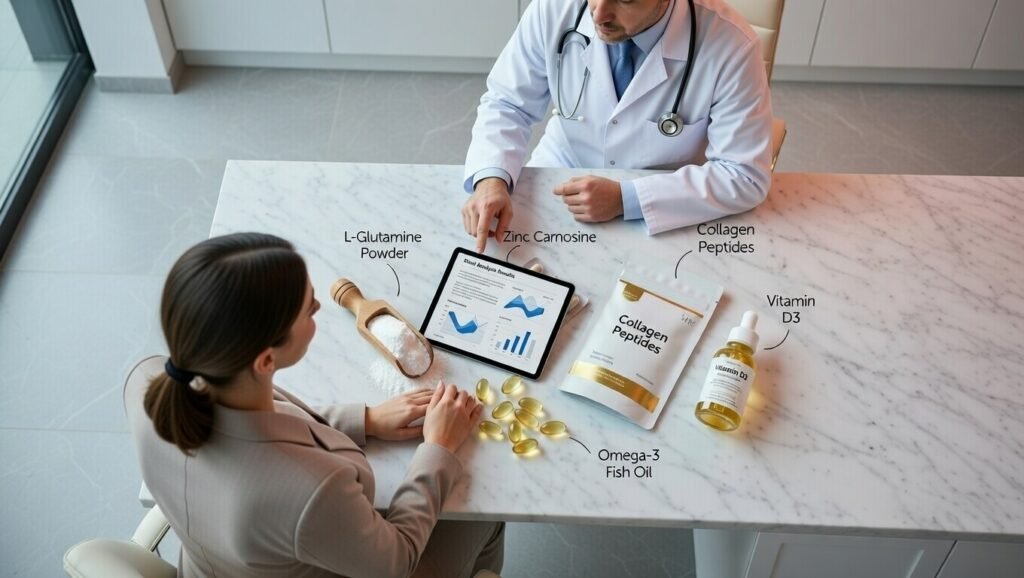
Intestinal permeability — the leaky gut component of post-COVID digestive issues — requires specific nutrients to repair tight junctions and restore mucosal thickness.
| Nutrient | Mechanism | Dose | Notes |
| L-Glutamine | Primary fuel for enterocytes (gut lining cells) | 5g twice daily | Morning and evening on an empty stomach |
| Zinc carnosine | Tight junction specialist; ulcer healing | 75mg daily | With food, do not exceed without medical guidance |
| Collagen peptides | Provides glycine, proline — building blocks of gut connective tissue | 10–20g daily | In hot liquid, but avoid boiling |
| Omega-3 fatty acids (EPA/DHA) | Reduces gut inflammation; restores prostaglandin balance | 1–2g EPA/DHA daily | With the largest meal for absorption |
| Vitamin D3 | Regulates tight junction proteins; immune modulation | 2,000–4,000 IU daily | Test levels first; supplement to reach 40–60 ng/mL (100–150 nmol/L) |
Phase 4 — Rebalance (Ongoing): Lifestyle Factors That Sustain Recovery
Sleep: The Non-Negotiable Repair Window
A significant proportion of gut barrier repair occurs during deep sleep when growth hormone peaks and enterocyte turnover accelerates. Adults sleeping fewer than six hours per night show significantly elevated zonulin — the protein marker of intestinal permeability.
Stress Management and the Vagus Nerve
Chronic stress elevates cortisol, which directly opens tight junctions and suppresses beneficial bacteria. COVID-19 itself — through illness, isolation, and trauma — is a profound stressor. Daily vagal tone exercises (4-7-8 breathing, cold face immersion, humming, or gargling) activate the parasympathetic nervous system, shifting the body from sympathetic “fight or flight” toward the “rest and digest” state required for gut repair.
Movement: Finding the Right Dose
Sedentary behaviour slows gut motility and reduces microbial diversity. However, intense endurance exercise exceeding 90 minutes temporarily increases intestinal permeability — the wrong direction for recovery. The evidence-supported sweet spot during post-COVID gut recovery is 30–45 minutes of moderate-intensity movement daily: walking, yoga, swimming, or cycling at a conversational pace.
When to Seek Medical Evaluation
Self-managed gut healing is appropriate for mild-to-moderate post-COVID digestive symptoms in otherwise healthy adults. Seek prompt medical evaluation in the following situations:
- Blood in stools — any amount, any colour (bright red, dark, or tarry black)
- Unintentional weight loss exceeding 2.3 kg (5 lbs) over 4–6 weeks
- Severe abdominal pain is preventing normal daily activity
- Persistent diarrhoea lasting more than two weeks despite dietary modification
- Symptoms beginning or significantly worsening more than 3 months after COVID-19 recovery
- New GI symptoms in adults over 50, or anyone with a family history of inflammatory bowel disease or colorectal cancer
- Signs of significant malabsorption: fatty, foul-smelling stools; severe fatigue; hair loss; bruising easily
Diagnostic Tests Your Doctor May Order
| Test | What It Assesses | Why Relevant Post-COVID |
| Comprehensive stool analysis | Microbiome composition, pathogens, and inflammatory markers | Documents dysbiosis severity and identifies specific depletions |
| Lactulose/mannitol test | Intestinal permeability directly | Confirms leaky gut component of post-COVID GI issues |
| Zonulin blood test | Tight junction opening protein | Correlates with permeability; tracks treatment response |
| Calprotectin (stool) | Intestinal inflammation marker | Distinguishes IBS-type from inflammatory bowel disease |
| Breath testing (H2/CH4) | SIBO — small intestinal bacterial overgrowth | Post-COVID SIBO rates are elevated vs. the general population |
| Full blood panel (B12, folate, iron, vitamin D) | Nutritional deficiencies from malabsorption | Malabsorption common with persistent gut inflammation |
Malabsorption from post-COVID gut damage frequently causes nutritional deficiencies. For comprehensive guidance, see our article [Vitamin Deficiency Anemia: B12, Folate and Healthy Blood]
Key Takeaways
- COVID-19 targets the gut directly through ACE2 receptors, causing microbiome disruption, increased intestinal permeability, and enteric nervous system inflammation.
- Post-COVID digestive issues affect one in three survivors and can persist for 3–12 months regardless of acute illness severity.
- A four-phase recovery protocol — Remove irritants, Restore microbiome, Repair gut lining, Rebalance lifestyle — provides the most evidence-supported path to recovery.
- Targeted probiotic strains (Lactobacillus rhamnosus GG, Bifidobacterium longum, Saccharomyces boulardii) combined with prebiotic-rich eating accelerate microbiome restoration.
- Sleep, stress management, and appropriate movement are non-negotiable components of post-COVID gut recovery — not optional extras.
- Red flag symptoms (blood in stools, significant weight loss, severe pain) require prompt medical evaluation regardless of the post-COVID context.
Your Next Step
Recovering from post-COVID digestive issues is not a passive process — it requires consistent, targeted action. Start with Phase 1 this week: remove the top five gut irritants and add one probiotic food daily. Keep a symptom journal rating your GI comfort on a 1–10 scale each evening. Within two weeks, patterns will emerge telling you exactly where to focus next.
Download and save this guide for reference throughout your recovery. Share it with others in your household who experienced COVID-19 — they may be struggling with the same symptoms without realizing the connection.
If your symptoms are severe or you are in a high-risk group, use this guide as a framework for a productive conversation with your gastroenterologist — not as a replacement for that conversation.
FAQ
Q1: How long do post-COVID digestive issues last?
For most people, acute COVID-19 digestive symptoms resolve within 2–4 weeks. For those asking about post-COVID gut problems and how long they last: the deeper mechanisms — barrier damage and microbiome disruption — can take 3–6 months of active recovery to fully resolve, even after surface symptoms improve. Early gut-supportive interventions — dietary changes, targeted probiotics, stress management, and adequate sleep — significantly shorten recovery timelines according to a 2026 Gastroenterology meta-analysis covering 14 studies and 4,200 patients [6].
Q2: Can COVID-19 permanently damage the gut?
True permanent damage is rare. Most gut disruption from COVID-19 is functional — meaning structural integrity is ultimately preserved, but function is impaired. With consistent gut-healing strategies, the vast majority of patients achieve full or near-full recovery. Seek medical evaluation if symptoms persist beyond six months without improvement.
Q3: Which probiotics help post-COVID digestive recovery?
Strains with the strongest evidence in post-COVID and post-infectious contexts include Lactobacillus rhamnosus GG, Bifidobacterium longum, and Saccharomyces boulardii. A 2025 Gut journal study found that multi-strain probiotics at 10–50 billion CFU daily for eight weeks restored microbiome diversity significantly faster than diet alone. Food-based sources — kefir, yogurt, sauerkraut — provide additional synergistic benefits.
Q4: Is post-COVID IBS different from regular IBS?
Post-COVID IBS shares symptoms with classical IBS — altered bowel habits, cramping, bloating — but has a clear infectious trigger. Research from 2026 shows post-infectious IBS often responds better to gut-healing protocols (targeted probiotics, barrier repair nutrients, anti-inflammatory diet) than the psychological-focused approaches used for classical IBS. The underlying mechanism involves barrier damage and microbiome disruption rather than primarily a brain-gut sensitisation disorder.
Q5: Should I take digestive enzymes after COVID-19?
Digestive enzyme supplementation can meaningfully manage bloating and malabsorption during the recovery phase, particularly if you experience undigested food in stools or significant bloating after meals. One to two capsules with each meal supports digestion while your gut lining and microbiome restore. Always discuss supplementation with your healthcare provider, especially if you take other medications.
Nutrition and Gut-Brain Health
This article is part of the Comprehensive Gut Health & Nutrition Series — an evidence-based collection of guides exploring the gut microbiome, digestive health strategies, and the direct connection between nutrition and mental and physical performance.
→View all Nutrition and Gut-Brain Health series articles here
Resources
- [1] NIH RECOVER Initiative: Researching COVID to Enhance Recovery.
https://recovercovid.org/ - [2] Mayo Clinic: Post-COVID Conditions. https://www.mayoclinic.org/diseases-conditions/coronavirus/in-depth/coronavirus-long-term-effects/art-20490351
- [3] Harvard Health: Digestive Symptoms of COVID-19:
https://www.health.harvard.edu/diseases-and-conditions/digestive-symptoms-of-covid-19 - [4] CDC: Long COVID — What You Need to Know.
https://www.cdc.gov/covid/long-term-effects/index.html - [5] Gut Microbes: Long COVID and Gut Microbiome — Pathogenesis and Therapeutics (2025): https://www.tandfonline.com/doi/full/10.1080/19490976.2025.2457495
- [6] Gastroenterology Journal: Post-infectious GI syndrome after COVID-19. https://www.gastrojournal.org/