The Ultimate Burnout Recovery Guide: Proven Strategies for High-Functioning Anxiety


The Cruel Irony of Burnout and High-Functioning Anxiety: A Hidden Crisis:
Burnout is not depression, though they frequently co-occur…Burnout recovery is the most critical process for modern high achievers. Navigating the complexities of modern work-life balance often leads to a hidden crisis. Understanding the science of burnout recovery is no longer optional for high achievers; it is the foundation of long-term mental resilience.
⚠️ MEDICAL DISCLAIMER: This article provides educational information about burnout, chronic stress, and high-functioning anxiety based on current research (2025–2026) and is NOT a substitute for professional medical or mental health advice, diagnosis, or treatment. If you are experiencing severe psychological distress, chronic exhaustion, or symptoms of clinical depression, consult a qualified physician or mental health professional promptly. Burnout and anxiety disorders require individualized clinical assessment. Crisis resources: 988 Suicide & Crisis Lifeline (call or text 988, available 24/7, free and confidential).[7]
How Chronic Stress Rewires Your Nervous System
Those who suffer most are often those who appear to be doing best. By the time the crisis becomes visible—a panic attack in a meeting, a complete inability to get out of bed, a sudden resignation from a successful career—the underlying nervous system collapse has been building for years.
According to the American Institute of Stress, A large number of U.S. workers experience work-related stress, with the majority reporting burnout symptoms — yet most never discuss this with a healthcare provider (AIS, 2024). The primary barrier is not shame—it is identity. When your competence and productivity are central to your self-concept, acknowledging burnout feels like admitting fundamental failure.[1] It is not. It is physiology.
High Functioning Anxiety vs. Clinical Anxiety: What’s the Difference?

| Feature | Clinical Anxiety Disorder | High-Functioning Anxiety |
| Visibility | Often impacts function noticeably; others may observe visible distress | Hidden beneath productivity, achievement, and sustained competence |
| Diagnosis | Meets DSM-5 criteria; diagnosed by a mental health professional | Rarely diagnosed; frequently normalized as “Type A” personality |
| Typical presentation | Avoidance, paralysis, and visible panic episodes | Overpreparation, people-pleasing, inability to delegate or rest |
| Self-perception | Usually aware that something is seriously wrong | Often believes anxiety is what makes them successful |
| Risk trajectory | May seek help due to evident daily impairment | May not seek help until physical collapse forces intervention |
The dangerous myth of high functioning anxiety: Many high performers believe their anxiety is their competitive advantage—the engine that drives excellence. Research consistently shows this is false. Chronic anxiety impairs decision quality, creative problem-solving, and interpersonal effectiveness. What feels like anxiety-driven performance is performance happening despite anxiety, not because of it.
Burnout Decoded: More Than Just Being Tired
The World Health Organization classifies burnout as an occupational phenomenon characterized by three core dimensions — exhaustion, increased mental detachment from one’s job, and reduced professional efficacy (WHO, 2019)[4].
| Burnout Dimension | What It Feels Like | Commonly Misidentified As |
| Emotional exhaustion | Drained by interactions that once energized you; empathy feels completely depleted | Introversion, misanthropy, and clinical depression |
| Cynicism / Depersonalization | Detachment from work, colleagues, patients, family; pervasive emotional numbness | Maturity, professionalism, “not caring what others think” |
| Reduced efficacy | Competent tasks feel impossibly difficult; previously automatic skills require effort | Laziness, poor time management, and cognitive aging |
| Physical collapse | Frequent illness, chronic pain, sleep disruption, and heart palpitations | Need for more exercise, poor diet, and general stress |
Critical distinction: Burnout is not depression, though they frequently co-occur and reinforce each other. The core difference: burnout typically improves meaningfully with genuine rest and removal from the primary stressor; clinical depression persists relatively independently of circumstances. If two weeks of genuine rest produce no improvement, a formal evaluation for depression is strongly warranted.
💡 For more information, explore the complete segments of our Mental Wellness Series Overview
The Neuroscience of Chronic Stress: What’s Happening in Your Brain
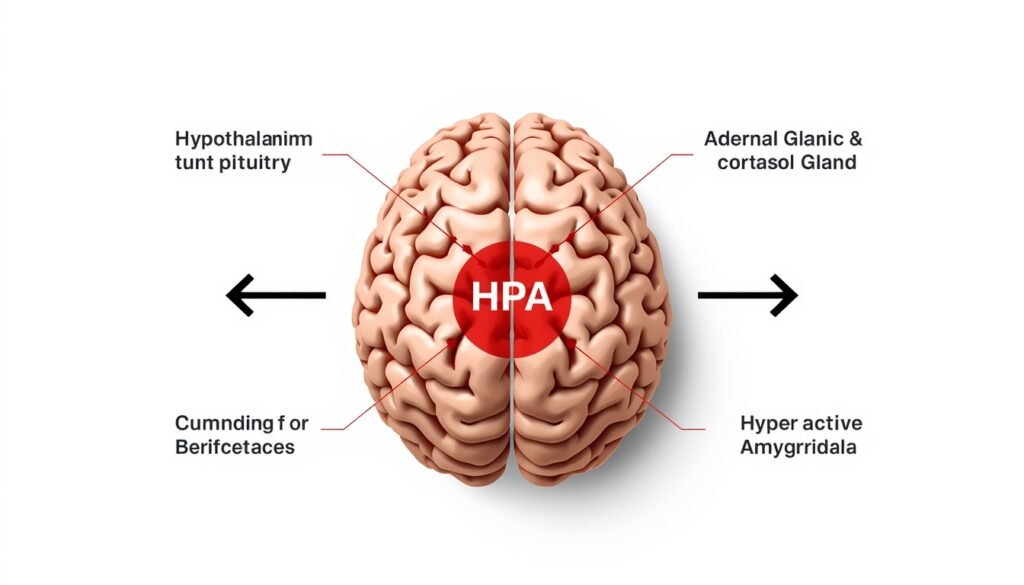
Chronic stress activates the hypothalamic-pituitary-adrenal (HPA) axis—your body’s central stress response system. When this system operates continuously without adequate recovery periods, measurable and concerning brain changes occur:
Mastering burnout recovery requires a deep understanding of your biological limits. When you implement a proven protocol to downregulate your nervous system, you aren’t just resting; you are actively repairing the cellular damage caused by years of high-functioning anxiety. This biological reset is the only way to ensure that your return to peak performance is both safe and permanent.
Hippocampal Shrinkage
Chronic cortisol exposure is consistently associated with reduced hippocampal volume — a finding replicated across numerous neuroimaging studies of depression and PTSD (Sapolsky, 2000; McKinnon et al., 2009). The hippocampus regulates memory, emotional context, and the calibration of stress responses. Damage here creates a vicious cycle: impaired stress regulation leads to greater cortisol exposure, which leads to further hippocampal damage. This is why burned-out individuals frequently report memory problems and difficulty regulating even minor stressors.[3] [9]
Amygdala Hyperactivity
The brain’s threat-detection center becomes increasingly reactive, generating alarm responses to stimuli that would not register for someone with a regulated nervous system. This is why burned-out individuals often describe disproportionate reactions to minor frustrations—”I completely lost it because someone put the wrong cup in the dishwasher.”
Prefrontal Cortex Suppression
Executive function, impulse control, and rational decision-making become measurably impaired—precisely when they are most urgently needed. The capacity to think clearly degrades exactly when clarity matters most.
The hopeful reality: These changes are largely reversible. Neuroplasticity research demonstrates that with adequate recovery, the hippocampus can regenerate volume.
Additionally, amygdala reactivity tends to normalize, and prefrontal function is restored—typically over 3–12 months of genuine, sustained recovery.
The 6 Physical Signals Your Body Is Sending
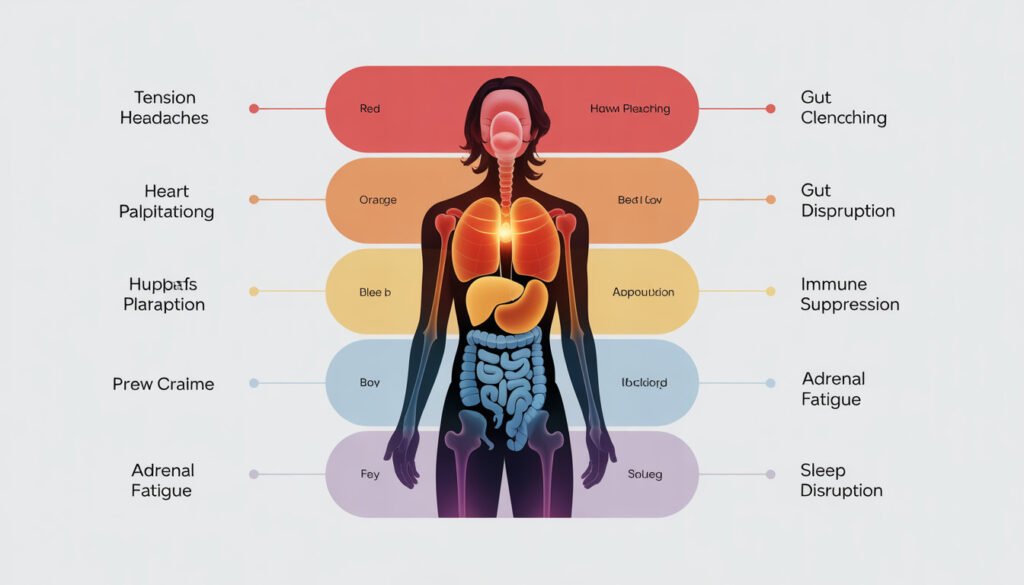
Your nervous system communicates distress through the body long before conscious recognition occurs. These six signals deserve serious medical and psychological attention:
| Physical Signal | What It Indicates | When to Seek Medical Evaluation |
| Jaw clenching/bruxism | Chronic sympathetic nervous system activation; unconscious tension during sleep | Waking headaches; visible tooth damage; persistent jaw pain |
| Heart palpitations | Cortisol and adrenaline dysregulation; anxiety activating cardiac awareness | Always rule out cardiac causes first; irregular rhythm needs immediate evaluation |
| Frequent illness | Chronic cortisol suppresses immune function; NK cell activity is reduced 40–60% | Sick more than 6 times per year or illnesses lasting unusually long |
| IBS / Digestive disruption | Gut-brain axis disruption; stress redirects blood flow away from the digestive system | Blood in stool, unintentional weight loss, or worsening symptoms despite dietary changes |
| Hair loss (telogen effluvium) | Acute or chronic stress pushes hair follicles into the resting phase 2–3 months prior | Sudden significant shedding; patchy loss; accompanied by other hormonal symptoms |
| Loss of libido | HPA axis cortisol production competes directly with sex hormone production | Causing relationship distress or accompanied by other hormonal or mood symptoms |
The most effective approach to burnout recovery involves more than just a schedule change. It demands a fundamental shift in how you perceive achievement. For those living with high-functioning anxiety, the hardest part of the journey is often the first step: admitting that your current pace is unsustainable. However, once you embrace the ultimate recovery framework, you unlock a level of clarity and energy that you haven’t felt in years.
Risk Factors: Who Is Most Vulnerable in 2026
Structural and identity factors significantly increase susceptibility to burnout in the current environment. High-vulnerability profiles include:
- Caregivers (professional and family) who habitually prioritize others’ needs over their own physiological and emotional regulation—often without recognizing the cost
- Perfectionism as identity: any performance below a self-defined standard triggers shame and intensified effort rather than healthy recalibration
- Boundary deficiency: particularly among those whose professional identity involves always being available—physicians, attorneys, executives, teachers, and social workers
- Workplace cultures that explicitly or implicitly reward overwork and pathologize setting limits as weakness or lack of commitment
- Life transitions involving simultaneous stressors: new parenthood combined with career demands; caregiving alongside grief; relocation combined with relationship strain.
For clinical definitions and treatment options for anxiety disorders, see NIMH (2024). [8]
💡 For more information, explore the complete segments of our Mental Wellness Series Overview
The 5-Stage Burnout Recovery Framework
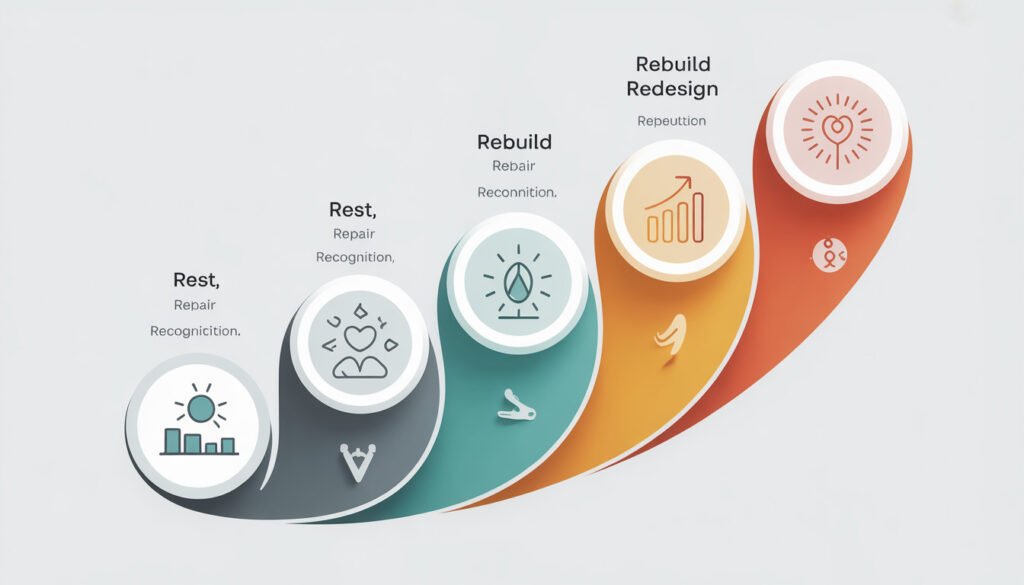
Stage 1 — Recognition (Weeks 1–2)
Acknowledgment is the hardest stage for high achievers because it directly confronts the identity narrative. Practical first step: Complete validated burnout assessment tools such as the Maslach Burnout Inventory (Maslach & Leiter, 2016) [5]. Objective scores bypass self-deception or the Oldenburg Burnout Inventory. Share results with your physician or therapist—externalizing the data removes ego from the equation and opens the door to honest help-seeking.
Stage 2 — Genuine Rest (Weeks 2–6)
Not vacation. Not passive scrolling. Genuine nervous system downregulation through activities that engage the parasympathetic system without performance pressure: nature immersion, body-based practices (yoga, swimming, walking without headphones), and unstructured, agenda-free time. For many high achievers, genuine rest requires deliberate learning—it does not come naturally to systems conditioned for constant productivity.
Stage 3 — Physiological Repair (Months 2–3)
Address the physical substrates of recovery: sleep architecture restoration, nutritional support for neurotransmitter production, and graduated physical activity designed to reduce cortisol rather than add additional physiological stress. This is not the time for intense HIIT training. It is the time for walking, swimming, gentle strength work, and body-based somatic practices.
Stage 4 — Structural Rebuild (Months 3–6)
With physiological stability restored, address the structures that permitted burnout to develop: boundaries, values alignment, and workload calibration. This stage often requires professional support—therapy, coaching, or mentorship from someone who has navigated similar terrain. The goal is not to return to the previous system at lower intensity; it is to fundamentally redesign the system itself.
Stage 5 — Sustainable Redesign (Ongoing)
The final stage integrates what the burnout experience revealed about your values, actual limits, and the genuine non-negotiables of sustainable performance. Recovery from burnout without redesign reliably produces relapse. With redesign, the experience can become a profound turning point that produces a more aligned and genuinely sustainable professional and personal life.[5]Practice Method Evidence-Based Benefit Vagal toning through breathwork 4-7-8 breathing; box breathing; or simply extending exhale to twice the length of inhale Activates parasympathetic system; reduces cortisol; improves heart rate variability Cold exposure 30–60 seconds of cold water at the shower’s end, 3–5 times weekly Increases vagal tone; reduces inflammatory markers; builds stress tolerance Social co-regulation Regular time with calm, emotionally regulated people you trust Nervous systems synchronize through co-regulation; reduces threat activation Nature exposure Minimum 120 minutes per week outdoors, preferably in green spaces Consistently reduces cortisol and amygdala reactivity across multiple studies (White et al., 2019)[6]
During the initial stages of burnout recovery, your primary focus should be on physiological stability. This means prioritizing sleep and nutrition to combat the effects of high-functioning anxiety on your gut-brain axis. As you progress through these powerful stages, you will notice a significant reduction in the brain fog and emotional exhaustion that once defined your daily life.
Building a Nervous System That Can Handle Modern Life
Nervous system regulation is a trainable skill, not a fixed trait. These evidence-based practices build measurable resilience over time:
Effective burnout recovery is deeply linked to other lifestyle pillars. For instance, integrating a strict sleep optimization routine can accelerate your burnout recovery process by resetting your cortisol rhythms and repairing neural pathways damaged by chronic stress.
FAQ
Q1: How do I know if I have burnout or clinical depression?
Burnout typically improves meaningfully with extended rest and removal from the primary stressor. Depression persists relatively independently of circumstances and does not respond to rest alone. Both conditions can and frequently do co-occur. If two weeks of genuine rest and reduced obligations produce no measurable improvement in your functioning or mood, formal evaluation by a mental health professional is strongly recommended—the distinction matters significantly for treatment.
Q2: Can I recover from burnout without taking time off work?
Partial recovery is possible through within-work changes—better boundaries, meaningful delegation, reducing discretionary commitments, and building intentional recovery rituals. Full recovery from severe burnout typically requires a reduced workload period. Attempting to “push through” advanced burnout consistently worsens outcomes and significantly extends the ultimate recovery timeline.
Q3: Is high-functioning anxiety a real clinical diagnosis?
It is not a formal DSM-5 diagnostic category, but it describes a clinically recognized and well-researched presentation pattern. Clinically, it may be captured as Generalized Anxiety Disorder, persistent depressive disorder (dysthymia), or subclinical anxiety. The specific label matters less than recognition and appropriate treatment.
Q4: What is the single fastest evidence-based burnout recovery tool?
Sleep. Adequate, quality sleep is the fastest recovery intervention available—it directly resets disrupted cortisol rhythms, restores emotional regulation capacity, and begins hippocampal volume repair. If only one change is immediately possible, prioritize sleep quality above every other intervention.
Q5: The Timeline: How Long Does Burnout Recovery Take?
Research suggests 3–12 months for full recovery of the nervous system, depending on severity and how long burnout was allowed to progress before intervention began. Stage 2 genuine rest typically shows results within 2–6 weeks. Structural redesign (Stage 4–5) is ongoing and represents a permanent, positive shift in how you relate to work and self-care.
Starting your burnout recovery journey today is the best investment you can make for your future health.
Final Thoughts: Your Journey Toward Sustainable Resilience
Burnout recovery is not a sign of weakness; it is a strategic recalibration for the long-term high achiever. While the hidden struggle of high-functioning anxiety often makes us believe that slowing down is failing, Neuroscience proves otherwise. By honoring your nervous system’s need for physiological repair and structural rebuilding, you are not just escaping exhaustion—you are redesigning a life that you don’t need to escape from.
Remember, the goal of a successful burnout recovery process is not to return to the same person you were before the collapse. It is to emerge as a more self-aware, resilient, and balanced version of yourself, equipped with the boundaries and tools needed to thrive in the modern world. Your well-being is the engine of your success; treat it with the respect it deserves.
Mental Wellness Series Overview
This article is part of the Mental Wellness Series — an evidence-based collection of guides exploring psychological resilience, mental health strategies, and the science behind sustainable wellbeing in 2026.
REFERENCES
- [1] American Institute of Stress. (2024). Workplace Stress: Statistics and Impact. AIS. / American Psychological Association. (2025). Stress in America 2025: A Crisis of Connection. APA Annual Survey. https://www.stress.org/workplace-stress / https://www.apa.org/pubs/reports/stress-in-america/2025/full-report.pdf
- [2] Bianchi, R., Schonfeld, I. S., & Laurent, E. (2019). Burnout or depression: Both individual and social issues. Lancet, 394(10209), 1654. doi:10.1016/S0140-6736(19)32316-9. Also: Bianchi, R., et al. (2021). Burnout: Fifty years later. PMC.
https://pmc.ncbi.nlm.nih.gov/articles/PMC11323411/ - [3] Sapolsky, R. M. (2000). Glucocorticoids and hippocampal atrophy in neuropsychiatric disorders. Archives of General Psychiatry, 57(10), 925–935. doi:10.1001/archpsyc.57.10.925. Available at: https://pubmed.ncbi.nlm.nih.gov/11018108/
- [4] World Health Organization. (2019). Burn-out: An Occupational Phenomenon: ICD-11 Classification and Guidance. WHO International Classification of Diseases, 11th Revision. https://www.who.int/news/item/28-05-2019-burn-out-an-occupational-phenomenon-international-classification-of-diseases
- [5] Maslach, C., & Leiter, M. P. (2016). Understanding the burnout experience: Recent research and its implications for psychiatry. World Psychiatry, 15(2), 103-111. doi:10.1002/wps.20311 https://pmc.ncbi.nlm.nih.gov/articles/PMC4911781/
- [6] White, M. P., et al. (2019). Spending at least 120 minutes a week in nature is associated with good health and well-being. Scientific Reports, 9, 7730. doi:10.1038/s41598-019-44097-3 https://www.nature.com/articles/s41598-019-44097-3
[7] 988 Suicide and Crisis Lifeline. (2024). Crisis Intervention Resources and Data. SAMHSA.
https://www.988lifeline.org/ - [8] National Institute of Mental Health. (2024). Anxiety Disorders: Statistics and Treatment Options. NIMH, U.S. Department of Health and Human Services.
https://www.nimh.nih.gov/health/topics/anxiety-disorders - [9] McKinnon, M. C., Yucel, K., Nazarov, A., & MacQueen, G. M. (2009). A meta‑analysis of hippocampal volume in major depressive disorder. Psychological Medicine, 39(9), 1441–1451. doi:10.1017/S0033291709005833. Available at:
https://pubmed.ncbi.nlm.nih.gov/19519820/