
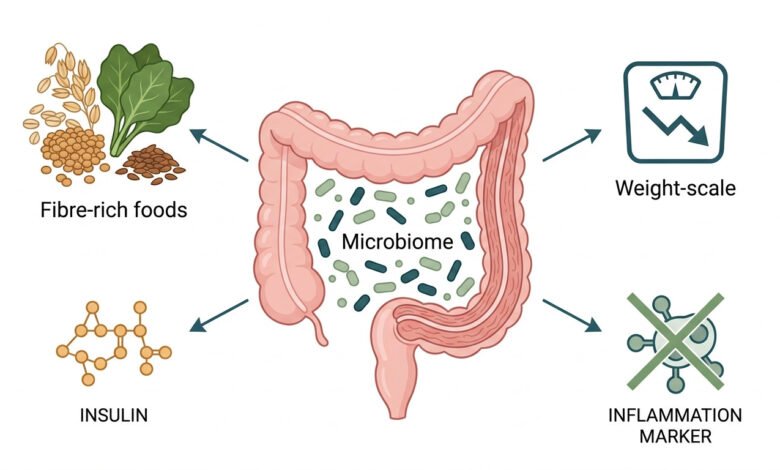
If you have spent years managing your weight without lasting results, the answer may reside not in calorie arithmetic but in your gut. Fibermaxxing & metabolic health have emerged as one of the most clinically discussed nutritional intersections of 2026, as researchers increasingly document how strategic, high-fibre dietary patterns may reshape gut microbiome composition, regulate insulin response, and support sustainable weight management.
⚠ MEDICAL DISCLAIMER This article is for educational and informational purposes only. It does not constitute medical advice, a clinical diagnosis, or a treatment recommendation. Always consult a qualified healthcare professional before making changes to your diet, medication, or treatment plan. If you or someone you know is in crisis: US: 988 Suicide and Crisis Lifeline | UK: Samaritans 116 123
The term fibermaxxing refers to the practice of deliberately maximising dietary fibre intake, in both soluble and insoluble forms, to achieve measurable metabolic benefits. This guide translates the current evidence base into clear, actionable insight grounded in peer-reviewed science.
What Is Fibermaxxing? Defining the Practice and Its Metabolic Rationale
The concept of fibermaxxing originated in wellness communities but has since attracted the attention of registered dietitians and metabolic researchers. A common question is: how much fiber per day for metabolic health benefits? Current evidence points to 35–50 grams daily as the range associated with measurable improvements in insulin sensitivity, microbiome diversity, and visceral fat — roughly double the average Western intake. At its core, it describes the intentional prioritisation of dietary fibre — targeting intakes well above the US Dietary Guidelines baseline of 25–38 grams per day — with the specific aim of optimising metabolic health outcomes, including body weight, blood glucose regulation, and inflammatory burden [1].
Soluble vs Insoluble Fibre: Why Both Matter
Soluble fibre — found in oats, legumes, apples, and psyllium — dissolves in water to form a viscous gel that slows gastric emptying and blunts postprandial blood glucose spikes. Insoluble fibre — present in whole wheat, vegetables, and nuts — adds bulk to stool, accelerates intestinal transit time, and serves as mechanical scaffolding for a diverse gut microbiome. Both fibre types contribute to metabolic health, but through distinct and complementary mechanisms. Effective fibermaxxing strategies incorporate both forms rather than privileging one over the other.
6 Proven Biological Links Between Fibermaxxing & Metabolic Health
Current evidence from population cohorts, randomised trials, and microbiome studies identifies at least six distinct biological mechanisms through which fibermaxxing & metabolic health interact. Each is outlined below.
Link 1: Short-Chain Fatty Acid Production and Energy Regulation
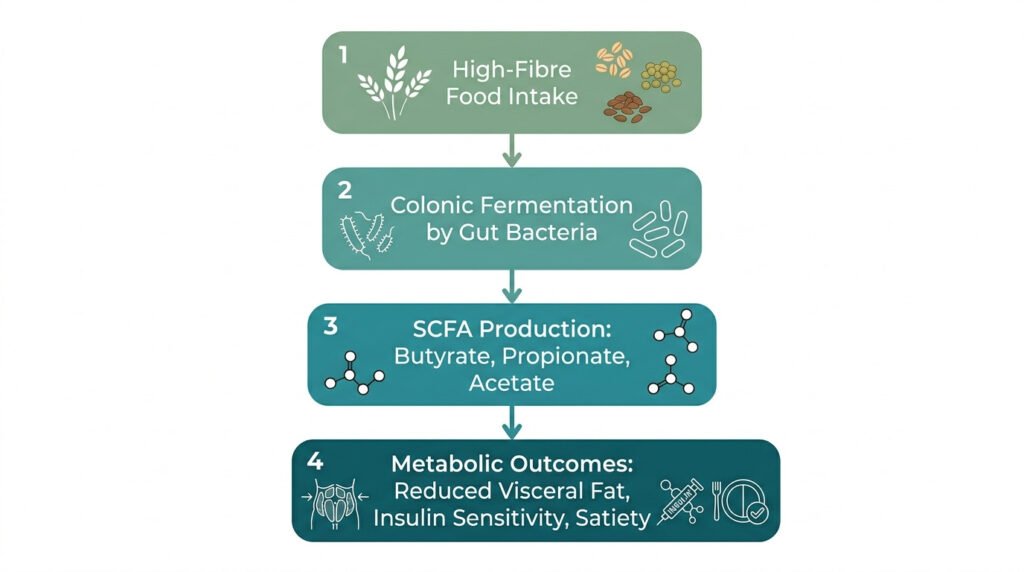
When soluble fibre reaches the colon undigested, resident bacteria ferment it into short-chain fatty acids (SCFAs) — primarily butyrate, propionate, and acetate. Research published in Cell Host & Microbe suggests that propionate may signal the liver to reduce glucose production. At the same time, butyrate activates intestinal L-cells to secrete glucagon-like peptide-1 (GLP-1), a hormone associated with satiety and reduced caloric intake [2]. This SCFA-mediated pathway represents a direct mechanistic link between dietary fibre metabolism and sustainable weight management.
Link 2: Fibermaxxing, Gut Microbiome Diversity, and Visceral Fat Reduction
Higher dietary fibre intake is consistently associated with greater gut microbiome diversity in large-scale population studies, including the American Gut Project [3]. A more diverse microbiome is, in turn, associated with lower levels of visceral fat — the metabolically active adipose tissue surrounding abdominal organs — compared with microbiome profiles observed in individuals consuming low-fibre diets. The postulated mechanism involves SCFA-mediated inhibition of adipogenesis and reduced intestinal lipopolysaccharide (LPS) translocation, which otherwise drives inflammatory fat deposition.
Link 3: Fibre and Insulin Resistance
The relationship between fibre and insulin resistance is among the most robustly documented in nutritional epidemiology. Viscous soluble fibres reduce the glycaemic index of meals by slowing glucose absorption across the intestinal brush border, attenuating postprandial insulin demand[4]. Over time, chronically lower insulin secretion may reduce peripheral insulin resistance — a central metabolic defect in type 2 diabetes and obesity. A 2025 meta-analysis in The Lancet found that increased dietary fibre intake was associated with clinically meaningful reductions in fasting insulin across diverse adult populations.
Link 4: Appetite Regulation via Gut Hormones
High-fibre meals stimulate the release of satiety hormones — including GLP-1, peptide YY (PYY), and cholecystokinin (CCK) — from enteroendocrine cells lining the gastrointestinal tract. These hormonal signals communicate with the hypothalamus to reduce appetite and delay the return of hunger. Evidence consistently indicates that individuals consuming diets meeting fibre targets of 35 grams or more per day report significantly lower energy intake over 24-hour periods without deliberate caloric restriction [5][4]
Link 5: Chronic Inflammation Reduction
Systemic low-grade inflammation is a recognised driver of metabolic disease, including insulin resistance, non-alcoholic fatty liver disease, and cardiovascular risk. High dietary fibre intake is associated with measurable reductions in circulating inflammatory biomarkers — including C-reactive protein, interleukin-6, and tumour necrosis factor-alpha — in both observational and interventional studies[6]. The proposed mechanisms involve SCFA-driven regulatory T-cell induction and a reduction in intestinal permeability, which limits systemic exposure to pro-inflammatory bacterial endotoxins. This anti-inflammatory dimension of metabolic health nutrition is a key reason why fibermaxxing extends beyond weight loss to comprehensive cardiometabolic protection.
Link 6: Bile Acid Sequestration and Lipid Regulation
Soluble fibre binds bile acids in the small intestine, interrupting their enterohepatic recirculation. The liver must then synthesise new bile acids from circulating cholesterol, thereby reducing serum LDL cholesterol levels. This mechanism is well-established for beta-glucan (found in oats and barley) and pectin (found in apples and citrus), and is recognised by both the US Food and Drug Administration and the European Food Safety Authority as a health claim-qualifying dietary effect. Lower LDL cholesterol is a direct contributor to improved cardiovascular metabolic health.
Counter-Arguments: Four Important Caveats to the Fibermaxxing Narrative
A balanced scientific review requires honest engagement with the limitations of current evidence. The following four counter-arguments represent legitimate challenges to an uncritical adoption of fibermaxxing as a universal metabolic solution.
- 1. Risk of gastrointestinal distress with rapid fibre escalation. Dramatically increasing fibre intake without adequate fluid intake and a gradual escalation schedule commonly produces bloating, abdominal cramping, and changes in stool consistency. Individuals with pre-existing gastrointestinal conditions — including irritable bowel syndrome, inflammatory bowel disease, or small intestinal bacterial overgrowth — may find that high-fibre protocols worsen symptoms rather than improve them. Professional dietary supervision is strongly advised before undertaking aggressive fibermaxxing protocols.
- 2. Confounding in observational research. Much of the evidence linking high fibre intake to improved metabolic outcomes derives from observational cohort studies, in which individuals who consume more fibre also tend to exercise more, smoke less, and maintain broadly healthier dietary patterns. The independent contribution of dietary fibre, isolated from these co-occurring behaviours, is difficult to quantify precisely from observational data alone. For those concerned about fibermaxxing side effects like bloating, the solution is not less fibre but slower escalation — adding no more than 3–5g per week while maintaining adequate hydration throughout the adaptation phase.
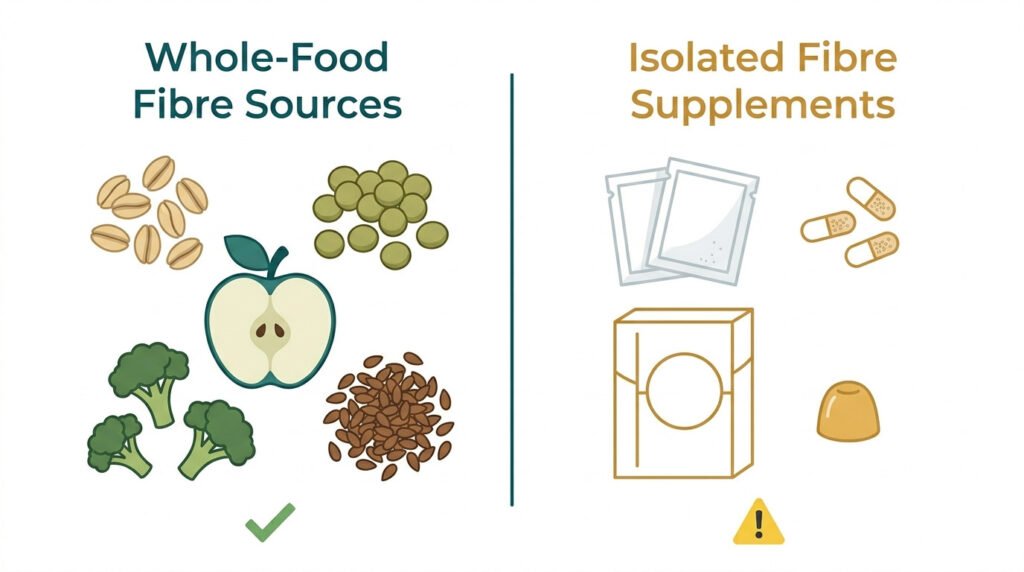
- 3. Fibre type and source specificity. Not all dietary fibre carries equivalent metabolic benefit. Isolated fibre supplements — such as powdered inulin or fibre-enriched ultra-processed products — do not replicate the full metabolic and microbiome-modulating effects of intact whole-food fibre sources. Whole-food fibre comes embedded in a nutritional matrix of phytonutrients, polyphenols, and micronutrients that may be as important as the fibre fraction itself.
- 4. Individual microbiome variability. The fermentation capacity of the gut microbiome varies substantially between individuals. A fibre source that produces robust SCFA output in one person may generate minimal benefit — or even produce excess gas — in another, depending on their resident microbial communities, genetic background, and prior dietary history. Personalised dietary approaches, guided by emerging gut microbiome testing, may ultimately outperform standardised fibermaxxing protocols.
science.
📅 Sample 7-Day “Gradual Escalation” Protocol (Phase 1)
To operationalize the Gradual Escalation Protocol mentioned above, use this foundational week to prime your gut microbiome for higher fiber loads.
The Golden Rule: Increase water intake by 500ml–1L for every 5g of additional fiber to ensure proper bolus transit and prevent fermentation-induced bloating.
Pro-Tip: If you experience significant GI distress, stay at the Day 1-2 level for a full week before progressing. Consistency is more metabolically rewarding than speed.
Practical Fibermaxxing & Metabolic Health Strategies for 2026
Bridging Research to Plate: The 7-Day Adaptation Protocol:
To translate the SCFA-mediated pathways identified in Cell Host & Microbe into daily habits, a strategic entry point is required. The following 7-day meal plan is engineered to facilitate ‘microbiome priming’—gradually introducing diverse prebiotic substrates to stimulate GLP-1 and PYY secretion without overwhelming the intestinal barrier.[2] By prioritizing intact whole-food matrices over isolated supplements, this protocol ensures you receive the synergistic polyphenols necessary for optimal metabolic signaling.
| Day | Breakfast (Soluble Fiber Focus) | Lunch (Plant Diversity Boost) | Dinner (Digestive Rest) |
| 1 – 2 | Steel-cut oats with 1 tbsp chia seeds and ½ green apple. | Large leafy green salad with lean protein and 2 tbsp chickpeas. | Vegetable medley soup (zucchini/carrots) with 1 slice of sprouted grain bread. |
| 3 – 4 | Greek yogurt with 1 tbsp ground flaxseeds and a handful of blueberries. | Quinoa bowl with roasted Mediterranean vegetables and ¼ cup black beans. | Grilled wild-caught fish with steamed broccoli and a small skin-on sweet potato. |
| 5 – 7 | Scrambled eggs with sautéed spinach, mushrooms, and ½ avocado. | Lentil dahl or hearty lentil soup with a side of fermented cabbage (sauerkraut). | Lean protein with a “Rainbow Salad” (at least 5 different colored vegetables). |
The following evidence-aligned recommendations are consistent with current nutritional guidance from the British Dietetic Association and the American College of Gastroenterology. They are informational in nature and should be discussed with a registered dietitian before implementation, particularly for individuals with gastrointestinal conditions.
Gradual Escalation Protocol
Increase total daily fibre by no more than 3–5 grams per week to allow gut microbiome adaptation and minimise digestive discomfort. Adequate hydration — a minimum of 2 litres of water daily — is essential to enable fibre to perform its bulking and gel-forming functions without causing constipation.
Diversity of Fibre Sources
Targeting 30 or more distinct plant food sources per week — a threshold associated with measurably greater gut microbiome diversity in clinical research — provides exposure to a range of prebiotic substrates, polyphenols, and fermentable fibre types that single-source approaches cannot replicate.
Prioritise Legumes, Seeds, and Intact Whole Grains
Lentils, chickpeas, split peas, chia seeds, flaxseed, rolled oats, and barley represent some of the most fibre-dense and SCFA-generating food sources available. Including two to three servings of legumes per week and one serving of beta-glucan-rich whole grains daily aligns with the evidence base for both weight and lipid outcomes.
SELF-AWARENESS QUIZ: Are You Ready to Maximise Your Fibre for Metabolic Health?
Non-Diagnostic Self-Awareness Assessment Disclaimer: This quiz is for self-awareness only and does not constitute a clinical assessment. Consult a qualified healthcare professional before making dietary changes.
Q1: How many grams of dietary fibre do you estimate you consume daily?
A) More than 35 g
B) 25–35 g
C) 15–24 g
D) Fewer than 15 g
Q2: How often do you include legumes (lentils, chickpeas, beans) in your meals?
A) 4 or more times per week
B) 2–3 times per week
C) Once per week
D) Rarely or never
Q3: Do you experience bloating or discomfort when you increase vegetable or bean intake?
A) Never
B) Occasionally
C) Frequently
D) Almost always
Q4: How many distinct plant food types do you consume in a typical week?
A) 30 or more
B) 15–29
C) 7–14
D) Fewer than 7
Q5: Have you noticed any changes in energy levels, blood sugar, or weight since increasing your fibre intake?
A) Yes — clear positive changes
B) Possibly — I have not tracked it carefully
C) No noticeable change yet
D) I have not tried increasing fibre
Score Interpretation:
Mostly A answers:
Your current dietary pattern is well-aligned with the principles of fibermaxxing & metabolic health optimisation. Continue tracking and consider consulting a dietitian for fine-tuning.
.Mostly B answers:
You have a solid foundation. Modest increases in legume and whole grain intake may produce measurable metabolic improvements. A food diary is a useful next step.
.Mostly C/D answers:
Your current fibre intake may be limiting your metabolic health outcomes. A gradual escalation protocol under dietitian supervision is recommended before undertaking significant dietary changes.
Related Research and Further Reading
For a comprehensive dietary framework covering all aspects of gut health and nutrition, see the Nutrition and Gut-Brain Health Series
For context on the impact of highly processed dietary products on gut function, see the previous cluster article: Ultra-Processed Foods and IBS: The Ultimate 2026 Research Guide.
Final Thoughts
Fibermaxxing & metabolic health represent a genuinely evidence-rich intersection of nutritional science. Through six distinct biological pathways — SCFA production, gut microbiome modulation, insulin sensitisation, appetite hormone regulation, inflammation reduction, and bile acid sequestration — high-fibre dietary practices offer measurable, multi-system metabolic benefit. The evidence base is not without limitations: individual variability, confounding in observational research, and the meaningful distinction between whole-food and supplement fibre sources all warrant careful consideration.
As with any dietary intervention, fibermaxxing achieves its greatest benefit when implemented gradually, under professional guidance, and as part of a broadly diverse whole-food dietary pattern. Consult a registered dietitian to establish a fibre escalation plan appropriate for your individual health status, gut tolerance, and metabolic health goals.
FAQ
Q1: What exactly does fibermaxxing mean, and how does it differ from standard dietary advice?
A1: Fibermaxxing refers to the deliberate, systematic maximisation of dietary fibre intake across both soluble and insoluble forms, typically targeting intakes above 35 grams per day. It differs from standard advice by emphasising fibre diversity, whole-food sources, and intentional tracking of plant-food variety. Fibermaxxing & metabolic health outcomes are most pronounced when both fibre types are included consistently.
Q2: How quickly can fibermaxxing improve metabolic health markers?
A2: Gut microbiome composition may begin shifting within days of a significant dietary change, but measurable metabolic markers — such as fasting insulin, LDL cholesterol, and body weight — typically require four to twelve weeks of consistent high-fibre eating to show clinically meaningful changes.
Q3: Is fibermaxxing safe for people with IBS?
A3: Not necessarily without professional guidance. Soluble fibre from low-FODMAP sources — such as psyllium husk and carrots — may be well-tolerated, while high-FODMAP soluble fibres (such as inulin and chicory root) commonly provoke symptoms. A dietitian experienced in both IBS and metabolic health nutrition should guide fibre escalation in this population.
Q4: Can fibre supplements replace whole-food fibre for metabolic benefit?
A4: The evidence suggests they cannot fully replicate the effects of whole-food fibre. Isolated fibre supplements lack the accompanying phytonutrients, polyphenols, and micronutrient density of whole plant foods. Whole-food fibre sources are strongly preferred for gut microbiome diversity and comprehensive metabolic benefit.
Q5: What are the best fibre-rich foods for targeting visceral fat specifically?
A5: Foods with the strongest evidence for visceral fat reduction include beta-glucan-rich oats and barley, legumes (lentils, chickpeas, black beans), and a broad range of non-starchy vegetables. Propionate in particular is associated with reduced hepatic lipid synthesis and lower visceral fat accumulation in intervention studies.
Q6: Does fibermaxxing interact with any common medications?
A6: Yes — this is an important clinical consideration. High fibre intake may slow the absorption of certain medications, including levothyroxine, metformin, and some cholesterol-lowering agents. Individuals taking regular prescription medications should discuss fibre escalation plans with their prescribing physician or pharmacist before implementing significant dietary changes.
Nutrition and Gut-Brain Health
This article is part of the Comprehensive Gut Health & Nutrition Series — an evidence-based collection of guides exploring the gut microbiome, digestive health strategies, and the direct connection between nutrition and mental and physical performance.
→View all Nutrition and Gut-Brain Health series articles here
References
- [1] US Dietary Guidelines- Dietary Guidelines for Americans 2020–2025.
https://asphn.org/wp-content/uploads/2021/03/Dietary-Guidelines-for-Americans-2020-2025.pdf - [2] Tan J, et al. (2014). The Role of Short-Chain Fatty Acids in Health and Disease. Advances in Immunology.
https://pubmed.ncbi.nlm.nih.gov/25173408/ - [3] McDonald D, et al. (2018). American Gut: an Open Platform for Citizen Science Microbiome Research. Cell Host & Microbe.
https://www.ncbi.nlm.nih.gov/pmc/articles/PMC6219990/ - [4] Weickert MO, Pfeiffer AFH. (2018). Impact of Dietary Fibre Consumption on Insulin Resistance. Journal of Nutrition.
https://pubmed.ncbi.nlm.nih.gov/29378044/ - [5] Harvard T.H. Chan School of Public Health: Fiber — The Nutrition Source. https://nutritionsource.hsph.harvard.edu/carbohydrates/fiber/
- [6] Zhu Y, et al. (2022). Dietary Fibre Intake and Inflammation Biomarkers: A Systematic Review and Meta-Analysis
- Nutrients.
https://www.ncbi.nlm.nih.gov/pmc/articles/PMC9104680/