Cryptographic Inventory 2026: The Step-by-Step Enterprise Guide to Finding Vulnerable Encryption

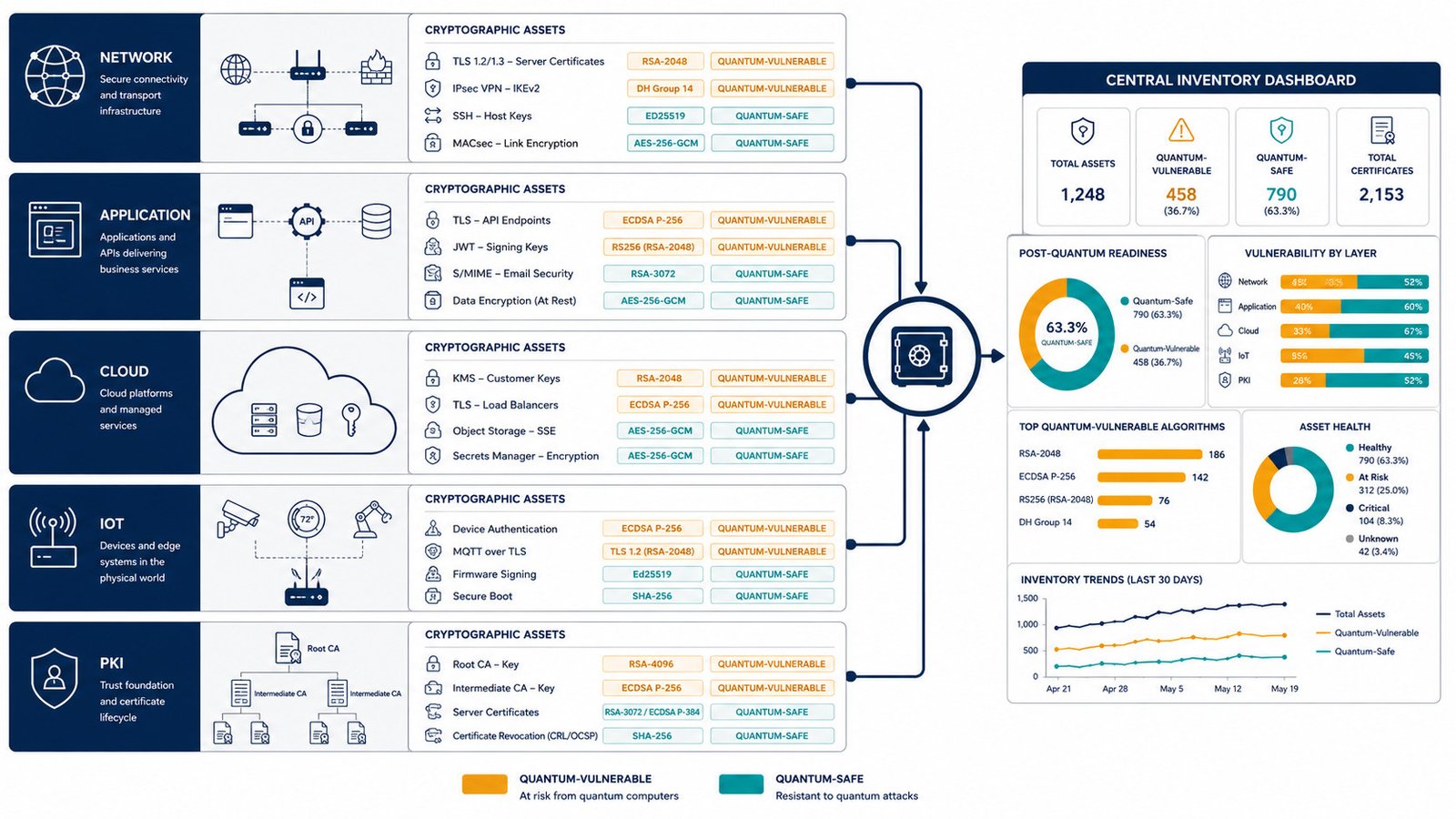
A cryptographic inventory is the mandatory first step of every PQC migration program — and for large enterprises, the discovery phase alone takes 12 to 24 months. This step-by-step guide covers the four discovery methods, the CBOM output standard, and the prioritization framework that converts raw data into an actionable migration roadmap.
You cannot migrate what you cannot find. That single constraint makes the cryptographic inventory the most consequential — and most underestimated — phase of any post-quantum cryptography migration program. Every NIST guidance document, every regulatory roadmap, and every practitioner framework converges on the same starting point: before an organization can replace vulnerable algorithms, it must first locate all the places those algorithms are deployed.
Why Cryptographic Inventory Takes Longer Than Most Organizations Expect
The challenge is not conceptual — it is operational. Cryptography in a large enterprise is pervasive, heterogeneous, and poorly documented. Algorithms are embedded in operating system libraries, hardcoded into legacy application code, negotiated dynamically by network protocols, and managed by third-party SaaS providers whose implementations may not be visible to the customer at all.
The NIST National Cybersecurity Center of Excellence (NCCoE) characterizes crypto discovery as a long-term program rather than a one-time project. Even after a complete initial inventory is built, new systems are deployed, new dependencies introduced, and vendors release updates that alter the cryptographic profile of existing modules. A cryptographic inventory is not a completed deliverable — it is a continuously maintained operational capability.
Table 1: Why Cryptographic Discovery Takes 12–24 Months — Common Bottlenecks
| Discovery Bottleneck | Root Cause | Impact on Timeline | Mitigation Approach |
| Legacy application code | Hardcoded crypto in undocumented systems | Months per application stack | Static code scanning with SAST tools + CBOM generation |
| Shadow IT and unmanaged SaaS | Crypto implementations not visible centrally | Ongoing blind spots | Network traffic analysis + vendor questionnaires |
| Embedded / IoT devices | Firmware-level crypto not accessible to standard scanners | Months per device class | Hardware inventory + vendor firmware audit |
| Third-party dependencies | Vendor crypto libraries opaque to customers | Dependent on vendor response | PQC roadmap requests + contractual requirements |
| Dynamic protocol negotiation | TLS cipher suites negotiated at runtime | Requires active traffic capture | Passive network monitoring + TLS inspection |
| Multi-cloud environments | Different discovery tools per cloud provider | Parallel workstreams required | Platform-native discovery tools + SIEM integration |
The Four Discovery Methods Every Enterprise Must Deploy
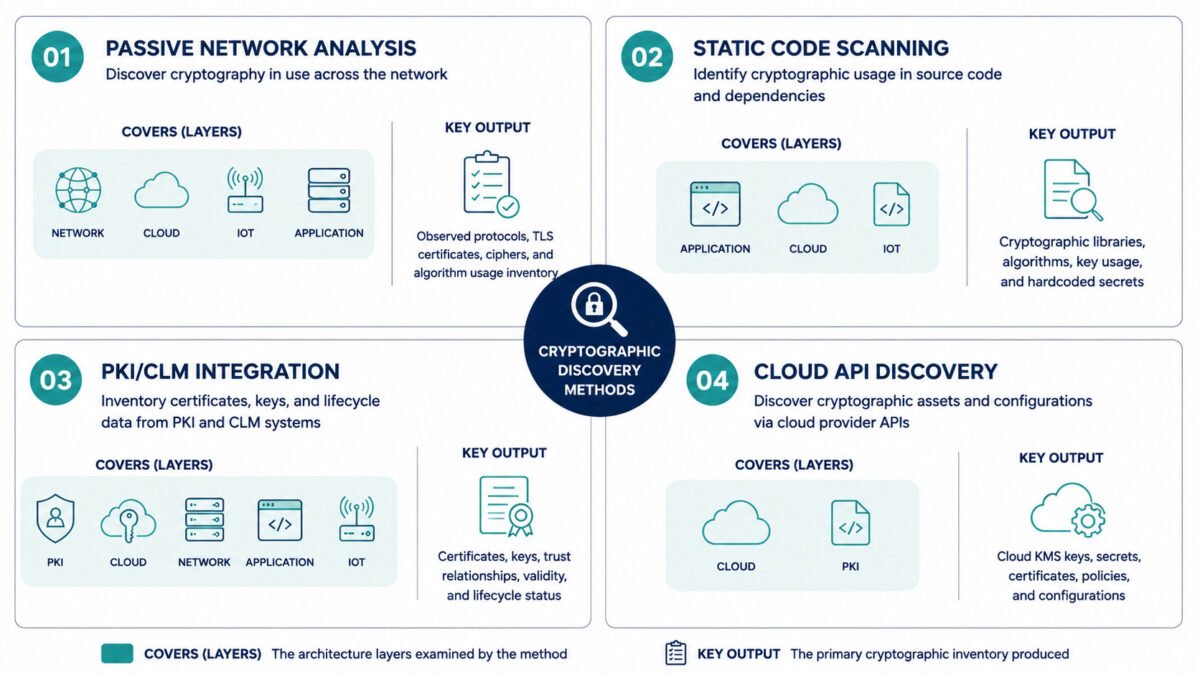
No single discovery method covers the full cryptographic surface of a large enterprise. Effective discovery combines passive and active approaches across network, application, infrastructure, and supply chain layers.
Method 1: Passive Network Traffic Analysis
Passive network monitoring captures cryptographic handshakes and protocol negotiations as they occur across the enterprise network without modifying or interrupting traffic. This method identifies TLS versions, cipher suites, certificate details, and key sizes across all observed connections — including connections to external services and shadow IT deployments.
Method 2: Static Code and Filesystem Scanning
Static scanning examines source code repositories, compiled binaries, configuration files, and filesystems for cryptographic function calls, algorithm references, certificate files, key material, and cryptographic library dependencies. This method is essential for finding cryptography embedded in application code — the category most likely to contain unplanned, undocumented, or legacy implementations.
Method 3: PKI and Certificate Lifecycle Management Integration
Certificate lifecycle management (CLM) platforms maintain structured records of every TLS certificate, code-signing certificate, and authentication certificate in the organization’s PKI infrastructure. This data is typically the most immediately actionable layer: certificates have known expiration dates, owners, and renewal workflows.
Method 4: Application-Level and Cloud API Discovery
Many cloud platforms expose APIs that inventory cryptographic configurations directly. Azure Key Vault APIs enumerate secrets, keys, and certificates with algorithm metadata. AWS Certificate Manager provides certificate inventory with algorithm details. Google Cloud KMS exposes key ring and key version configurations.
The Cryptographic Bill of Materials: What It Is and Why It Matters
The structured output of a complete cryptographic inventory program is a Cryptographic Bill of Materials (CBOM). A CBOM is a machine-readable catalog of all cryptographic assets — algorithms and their parameters, cryptographic libraries and module versions, digital certificates, key material metadata, and the protocols that invoke them. The CBOM format was standardized through CycloneDX 1.6.
The CBOM serves three distinct functions: it provides the data foundation for risk prioritization; it enables compliance reporting (OMB M-23-02 required federal agencies to submit a prioritized cryptographic inventory); and it supports crypto-agility — the capability to replace cryptographic implementations without redesigning dependent systems.
Table 2: CBOM Components and Their Role in PQC Migration Planning
| CBOM Component | What It Documents | PQC Migration Use | Data Source |
| Algorithms | Algorithm name, key size, mode of operation | Flag quantum-vulnerable vs. quantum-safe | Static scanning, network capture, runtime agents |
| Cryptographic libraries | Library name, version, dependency chain | Identify upgrade or replacement scope | SBOM integration, package manager audit |
| Digital certificates | Algorithm, key size, expiry, issuing CA | PKI migration sequencing, expiry risk | CLM platform, certificate transparency logs |
| Key material metadata | Key type, size, storage location | Identify HSM replacement needs for PQC key sizes | Key management system audit |
| Protocols in use | TLS version, cipher suites, SSH algorithms | Prioritize TLS and VPN migration | Passive network monitoring, config audit |
| Component dependencies | Which systems invoke which crypto libraries | Scope change impact before migration | Dependency graph analysis, SBOM cross-reference |
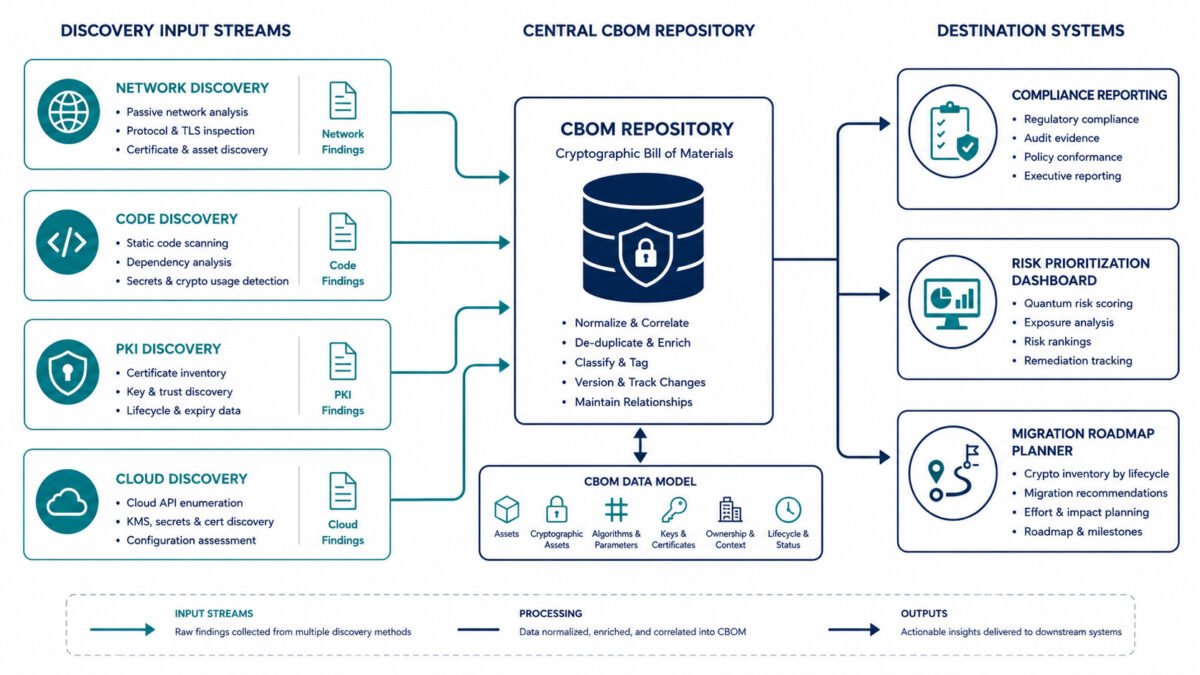
Step-by-Step Enterprise Cryptographic Inventory Framework
The following six-phase framework synthesizes guidance from NIST NCCoE, CISA, the ISACA PQC playbook, and practitioner experience. Organizations beginning in 2026 have sufficient lead time to complete the inventory phase before 2030 federal deprecation deadlines — provided they treat discovery as a program, not a project.
Phase 1: Establish Governance and Scope (Weeks 1–8)
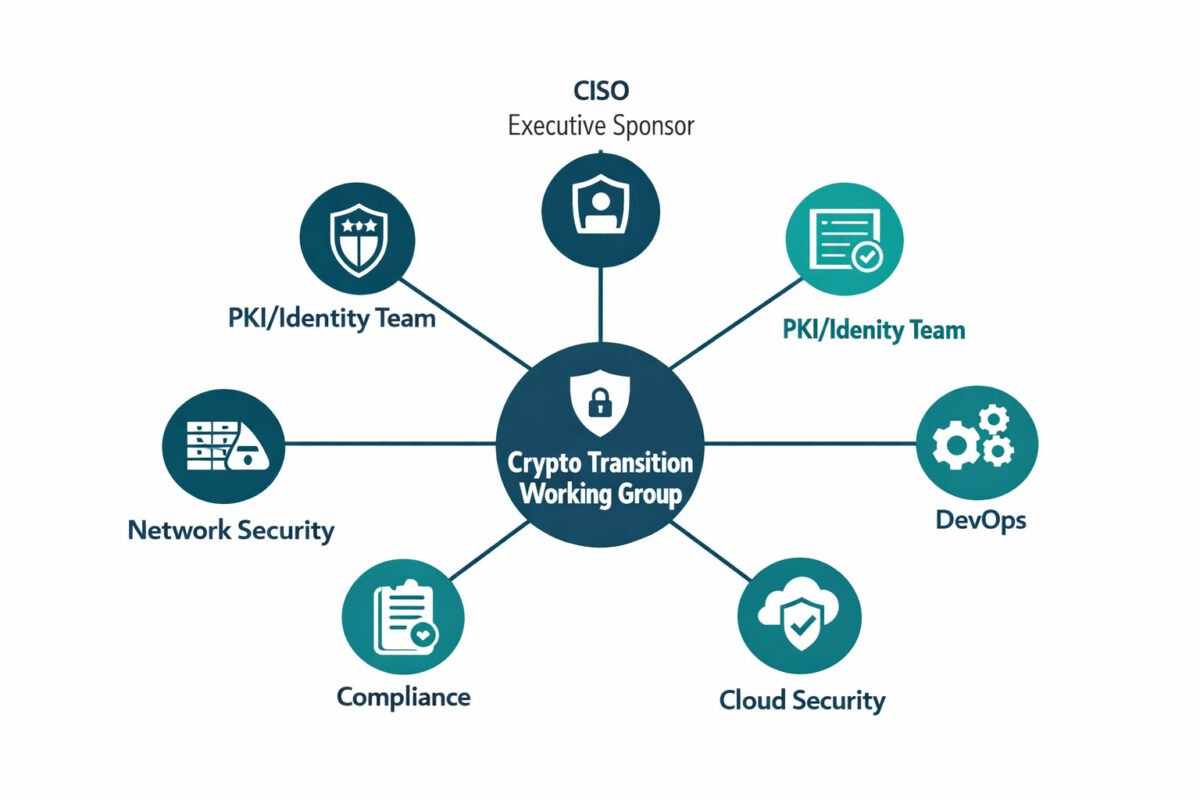
Before deploying any discovery tool, establish the governance structure that will own and maintain the inventory. Assign executive sponsorship at the CISO or CTO level; form a crypto transition working group including security architecture, PKI owners, identity, networking, DevOps, and compliance; and add a formal quantum risk entry to the organizational risk register.
Phase 2: Deploy Passive Network Monitoring (Months 2–6)
Deploy passive network monitoring across all major network segments to capture TLS handshakes, cipher suite negotiations, certificate metadata, and protocol versions. This phase typically produces the first structured data on TLS certificate algorithms, key sizes, and cipher suites in production use.
Phase 3: Static Code and Configuration Scanning (Months 3–12)
Launch static scanning across source code repositories, configuration files, and filesystem inventories. Prioritize scanning by data sensitivity: systems handling regulated data first, then customer-facing applications, then internal systems with long-lived sensitive data.
Phase 4: PKI and Certificate Inventory Integration (Months 4–8)
Integrate certificate lifecycle management data into the central cryptographic inventory. Audit all certificates for algorithm type, key size, expiration date, and issuing authority. Flag certificates using RSA below 2048 bits, SHA-1, or ECC curves outside approved NIST parameters for immediate replacement.
Phase 5: Cloud and Third-Party Discovery (Months 6–18)
Use cloud-native APIs and cryptographic asset management tools to inventory key vaults, HSMs, encryption configurations, and certificate stores across each cloud platform. Issue PQC readiness questionnaires to critical vendors and third-party service providers.
Phase 6: Centralize, Score, and Maintain (Ongoing from Month 8)
Aggregate all discovery outputs into a centralized inventory platform. Apply a risk-scoring methodology weighted by: algorithm quantum-vulnerability; data sensitivity and confidentiality horizon; system criticality; and proximity to compliance deadlines.
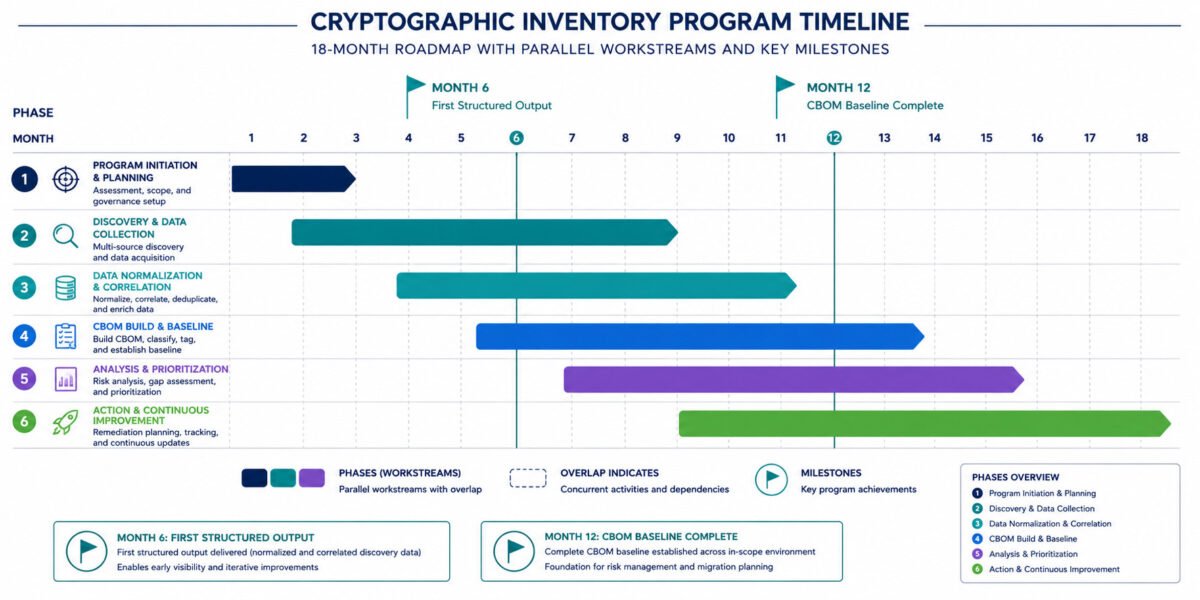
Table 3: Enterprise Cryptographic Inventory Timeline and Resource Estimates
| Phase | Duration | Primary Activity | Key Output | Resource Estimate |
| 1. Governance & Scope | Weeks 1–8 | Working group formation, risk register | Governance charter, scope document | 0.5 FTE security architect |
| 2. Passive Network Monitoring | Months 2–6 | Deploy network sensors, capture TLS data | Cipher suite and certificate baseline | 1 FTE network security, tooling cost |
| 3. Static Code Scanning | Months 3–12 | SAST scanning, CBOM generation per app | Per-application CBOMs | 2–4 FTE AppSec, 20–40 apps/month |
| 4. PKI & CLM Integration | Months 4–8 | Certificate inventory, PKI hierarchy mapping | Full certificate register | 1 FTE PKI/identity |
| 5. Cloud & Third-Party | Months 6–18 | Cloud API discovery, vendor questionnaires | Cloud crypto inventory, vendor roadmaps | 1 FTE cloud security + vendor engagement |
| 6. Centralize & Maintain | Month 8 onward | Risk scoring, CMDB integration, CI/CD hooks | Living CBOM, risk dashboard | 0.5–1 FTE ongoing program management |
Counter-Arguments
Objection 1: We already know where our cryptography is — we manage our PKI.
PKI documentation covers issued certificates but typically misses three major cryptographic surface areas: hardcoded keys and algorithm calls in application code; cryptographic implementations in legacy or shadow IT systems never enrolled in PKI; and third-party and SaaS provider cryptography the organization does not directly observe. Organizations that begin discovery programs consistently find significant crypto usage their PKI documentation did not account for.
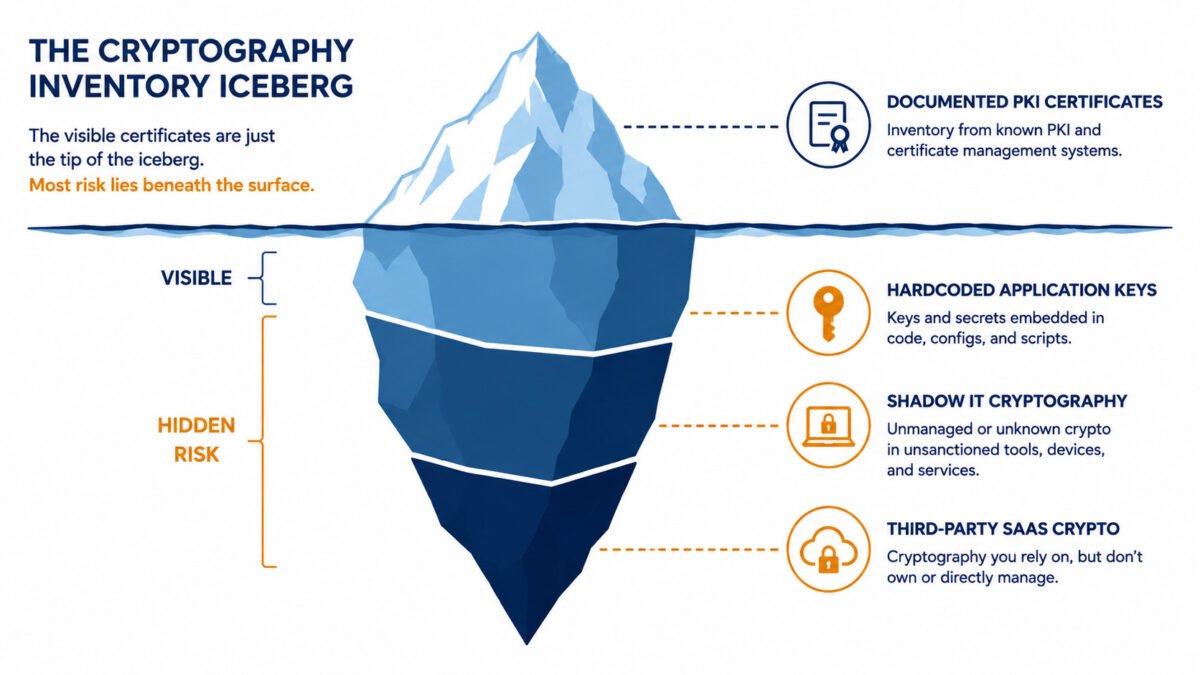
Objection 2: 12–24 months is too long. We can run a scan and get the inventory in weeks.
Automated scanning tools can complete an initial pass in weeks and produce valuable data. What takes 12–24 months is not the scanning itself — it is the triage, documentation, owner assignment, false-positive resolution, third-party engagement, and continuous update discipline that converts raw scan output into a reliable CBOM that migration planning can actually use.
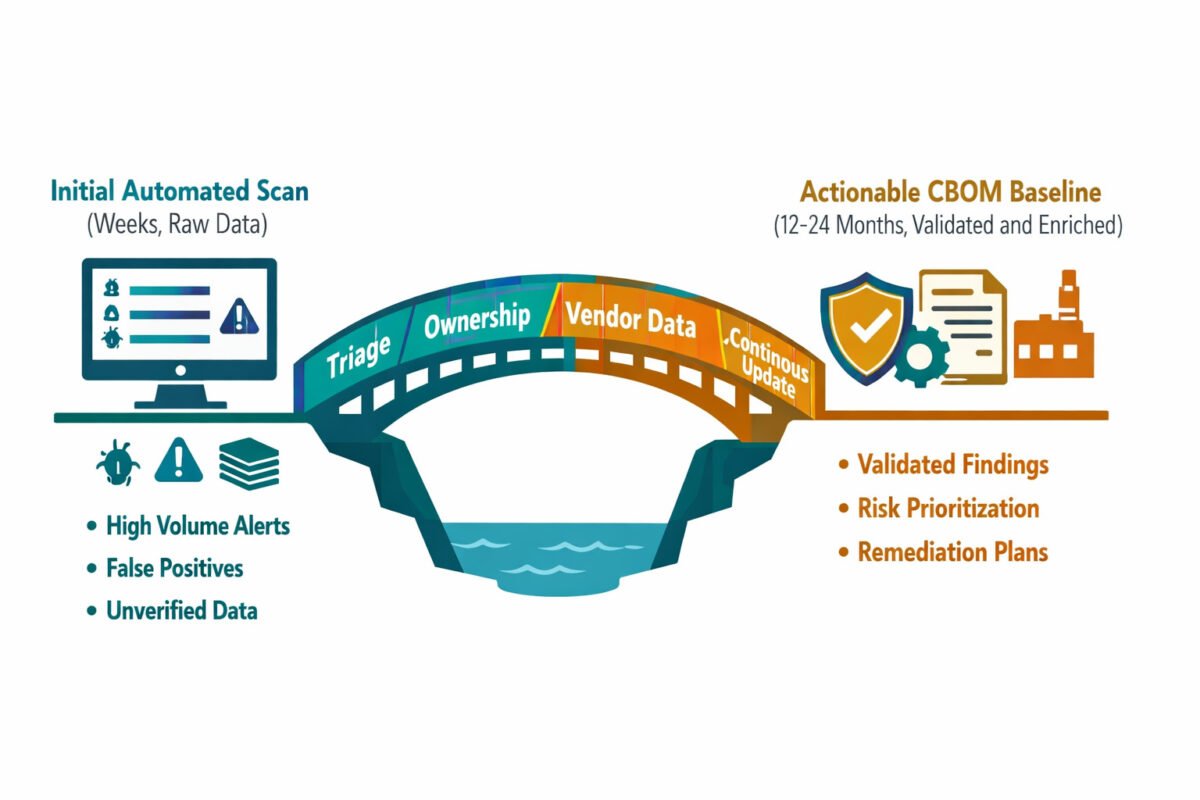
Objection 3: Leadership doesn’t need to be involved in a cryptographic inventory.
ISACA PQC playbook and NIST NCCoE guidance both explicitly call for executive sponsorship as a prerequisite. A crypto discovery program requires access to application source code, infrastructure configurations, vendor contracts, and third-party data that the security team alone cannot compel. Without executive authority, discovery stalls at the boundaries of the security team’s existing visibility.
Objection 4: We use a major cloud provider. Their inventory covers our environment.
Cloud provider crypto inventory tools cover platform-managed cryptographic services — key vaults, managed certificate stores, and platform-level TLS configurations. They do not cover the cryptographic implementations embedded in the applications your organization deploys on that platform. Cloud provider inventory tools are one input to a comprehensive CBOM, not a substitute for it.
.
Test Your Knowledge: Cryptographic Inventory & PQC Readiness
Answer these five questions to check your understanding of enterprise cryptographic inventory programs.
Q1: How long does the cryptographic discovery phase take for large enterprises?
- A) 1–3 weeks
- B) 3–6 months
- C) 12–24 months ✅
- D) 3–5 years
Large enterprises face a 12–24-month discovery phase due to pervasive, heterogeneous, and poorly documented cryptographic assets across all environments.
Q2: What is the structured output of a complete cryptographic inventory program?
- A) SBOM (Software Bill of Materials)
- B) CBOM (Cryptographic Bill of Materials) ✅
- C) PKI Hierarchy Report
- D) TLS Audit Log
The CBOM is a machine-readable catalog of all cryptographic assets — algorithms, certificates, libraries, keys, and protocols — standardized through CycloneDX 1.6.
Q3: Which of the following is NOT one of the four core discovery methods?
- A) Passive Network Traffic Analysis
- B) Static Code and Filesystem Scanning
- C) Penetration Testing ✅
- D) PKI and Certificate Lifecycle Management Integration
The four methods are: passive network analysis, static code scanning, PKI/CLM integration, and cloud API discovery. Penetration testing is a separate security function.
Q4: Why is executive sponsorship a technical prerequisite for a cryptographic inventory program?
- A) For budget approval only
- B) To satisfy regulatory optics
- C) Because security teams cannot compel cross-functional access alone ✅
- D) To manage vendor relationships
Without executive authority, discovery stalls at the boundaries of the security team’s existing visibility — access to application code, vendor contracts, and infrastructure configurations requires cross-functional authority.
Q5: Organizations beginning their cryptographic inventory in 2026 have adequate lead time to meet which deadline?
- A) 2027 NIST PQC mandatory adoption
- B) 2028 NSA CNSA 2.0 transition
- C) 2030 federal RSA/ECC deprecation deadline ✅
- D) 2033 exclusive quantum-safe requirement
The 2030 federal deprecation deadline for RSA and ECC gives organizations beginning discovery in 2026 adequate runway — provided discovery is treated as a program, not a one-time scan.
FAQ
Q1: What is a cryptographic inventory and why is it the first step of PQC migration?
A: A cryptographic inventory is a comprehensive catalog of all cryptographic assets in an organization — algorithms, keys, certificates, libraries, and protocols — documenting where each is used, what it protects, and which system depends on it. It is the mandatory first step of PQC migration because organizations cannot prioritize which systems to migrate, plan their replacement schedule, or measure migration progress without first knowing what cryptography they have and where it lives.
Q2: What is a CBOM, and how does it differ from an SBOM?
A: A Cryptographic Bill of Materials (CBOM) is a structured, machine-readable extension of the Software Bill of Materials (SBOM) that specifically documents cryptographic components — algorithms, key sizes, certificate metadata, cryptographic library versions, and the protocols that invoke them. NIST recommends augmenting SBOM with CBOM as part of PQC migration guidance. While an SBOM lists software dependencies, a CBOM maps which of those dependencies implement cryptographic functions and whether those functions are quantum-vulnerable.
Q3: How long does a cryptographic inventory take for a large enterprise?
A: The discovery phase alone — finding where cryptography lives across all systems — takes 12 to 24 months for large enterprises. Converting that raw discovery data into a validated, risk-scored CBOM that supports migration planning requires additional time for triage, owner assignment, vendor data collection, and continuous update processes. Organizations that began their crypto discovery programs in 2026 have adequate runway to complete the inventory phase before the 2030 federal deprecation deadline.
Q4: What four discovery methods should every enterprise use?
A: Effective cryptographic inventory programs combine: passive network traffic analysis (to capture TLS cipher suites and protocol negotiations in production); static code and filesystem scanning (to find hardcoded keys and algorithm calls in application code); PKI and certificate lifecycle management integration (to document the certificate estate with algorithm metadata); and cloud API and application-level discovery (to inventory cloud key vaults, managed services, and runtime cryptographic calls).
Q5: Does starting a cryptographic inventory in 2026 provide enough lead time?
A: Yes — organizations beginning their cryptographic inventory in 2026 have adequate runway to reach the 2030 federal deprecation deadline for RSA and ECC, provided discovery is treated as a program with dedicated resourcing rather than a one-time scan. Those starting in 2028 or later face compressed timelines that overlap with active migration execution, significantly increasing risk and cost.
Q6: What should happen after the cryptographic inventory is complete?
A: The completed CBOM becomes the foundation for risk prioritization: each cryptographic asset is scored by quantum vulnerability, data sensitivity, system criticality, and regulatory timeline. High-priority assets — PKI certificates, TLS on regulated data flows, VPN key exchange — are sequenced into migration pilots first. The inventory also feeds crypto-agility planning, ensuring that new systems are built with abstracted cryptographic dependencies that can be swapped without system redesign as NIST finalizes additional PQC standards.
Key Points
What Every Enterprise Needs to Know About Cryptographic Inventory in 2026
- Cryptographic inventory is the mandatory first step of every PQC migration program — and for large enterprises, the discovery phase alone takes 12 to 24 months.
- No single discovery method provides complete coverage. Effective crypto discovery requires passive network analysis, static code scanning, PKI/CLM integration, and cloud API discovery running in parallel.
- The Cryptographic Bill of Materials (CBOM) is the structured output of the inventory program — a machine-readable asset catalog that supports compliance reporting, risk scoring, and migration sequencing.
- Executive sponsorship is a technical prerequisite. Cross-functional access to application code, vendor contracts, and infrastructure configurations cannot be compelled by the security team alone.
- Organizations beginning their cryptographic inventory in 2026 have adequate lead time to reach the 2030 federal deprecation deadline — those who wait until 2028 will not.
Continue your PQC and cryptographic compliance research:
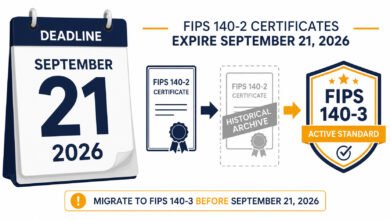
- Read the previous article: FIPS 140-2 Sunset September 2026: What Every Organization Must Do Before the Deadline
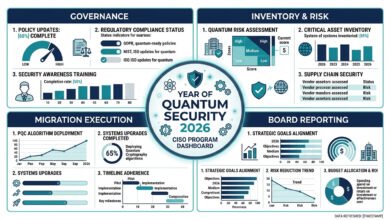
- Read the pillar article: Year of Quantum Security 2026: The Complete Action Plan for CISOs
PQC Series Overview
This article is part of the Post-Quantum Security Series — a technical collection of guides exploring cryptographic vulnerabilities exposed by quantum computing, migration strategies for organizations, and the steps required to protect sensitive data before quantum decryption becomes operationally viable.
References
- [1] AppViewX. (April 2026). Post-quantum cryptography PQC readiness in 2026. AppViewX Blog. https://www.appviewx.com/blogs/pqc-readiness-2026/
- [2] National Institute of Standards and Technology NCCoE. (2024). Migration to the post-quantum cryptography project. NIST NCCoE.
https://www.nccoe.nist.gov/applied-cryptography/migration-to-pqc - [3] Office of the National Cyber Director. (2024). Report on post-quantum cryptography migration and cryptographic inventory requirements. ONCD.
https://www.whitehouse.gov/oncd/ - [4] Encryption Consulting. (January 2026). A cryptographic inventory checklist for the post-quantum era. Encryption Consulting Blog.
https://www.encryptionconsulting.com/a-cryptographic-inventory-checklist-for-the-post-quantum-era/ - [5] QRAMM. (December 2024). Cryptographic inventory guide: Discover and document all crypto assets. QRAMM Learning.
https://qramm.org/learn/cryptographic-inventory-guide.html - [6] Microsoft Security Blog. (April 2026). Building your cryptographic inventory: A customer strategy for cryptographic posture management.
https://www.microsoft.com/en-us/security/blog/2026/04/16/building-your-cryptographic-inventory-a-customer-strategy-for-cryptographic-posture-management/ - [7] Encryption Consulting. (January 2026). Top reasons to audit your cryptographic asset inventory. Encryption Consulting Blog.
https://www.encryptionconsulting.com/audit-your-cryptographic-asset-inventory/ - [8] CycloneDX. (2024). Cryptography Bill of Materials (CBOM) specification and PQC readiness reference. CycloneDX.
https://cyclonedx.org/capabilities/cbom/ - [9] Masood, A. (April 2026). Enterprise blueprint for post-quantum cryptography migration. Medium — Quantum Sundays.
https://medium.com/@adnanmasood/quantum-sundays-62-enterprise-blueprint-for-post-quantum-cryptography-migration-3e75e9d85136