
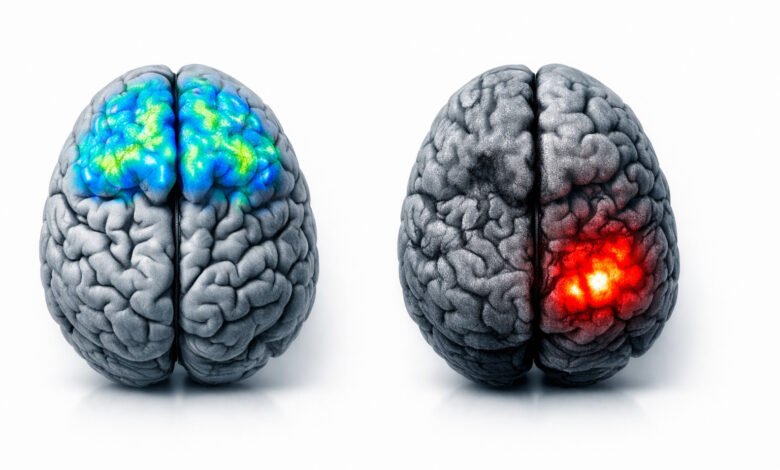
Your Brain on Screens: The Neuroscience of Digital Overload
A digital detox is not about avoiding technology—it’s about regaining control over your attention and mental clarity. Modern screen time habits are increasingly linked to changes in focus, sleep quality, and emotional balance. Understanding how screen time affects the brain is the first step toward building healthier digital habits.
This guide provides a practical digital detox framework designed to restore balance and improve mental clarity in a screen-driven world.
⚠️ Medical Disclaimer: This article provides educational information about digital wellness based on research (2025–2026) and is not a substitute for professional medical advice. Always consult a licensed therapist or healthcare provider for mental health concerns.
Preliminary neuroimaging research suggests that sustained reductions in screen time may improve functional connectivity in attention and executive control networks. However, large structural changes in gray matter over short periods (e.g., 21 days) are not yet firmly established.
The mechanism:
Repeated notifications and variable rewards are associated with dopaminergic activity patterns linked to anticipation and reward-seeking behavior. Over time, these conditions cause the brain to seek constant novelty and external validation while weakening the neural pathways for sustained attention, boredom tolerance, and internal motivation.
Critical insight:
Many people are not clinically addicted to their phones; the issue is not willpower, but predictable responses to systems engineered to maximize engagement, at the expense of their attention and well-being. The problem isn’t your willpower; it’s the environment you’ve been placed in.
These patterns highlight why a structured digital detox is increasingly necessary for cognitive stability.
The 4 Ways Screens Sabotage Mental Wellness
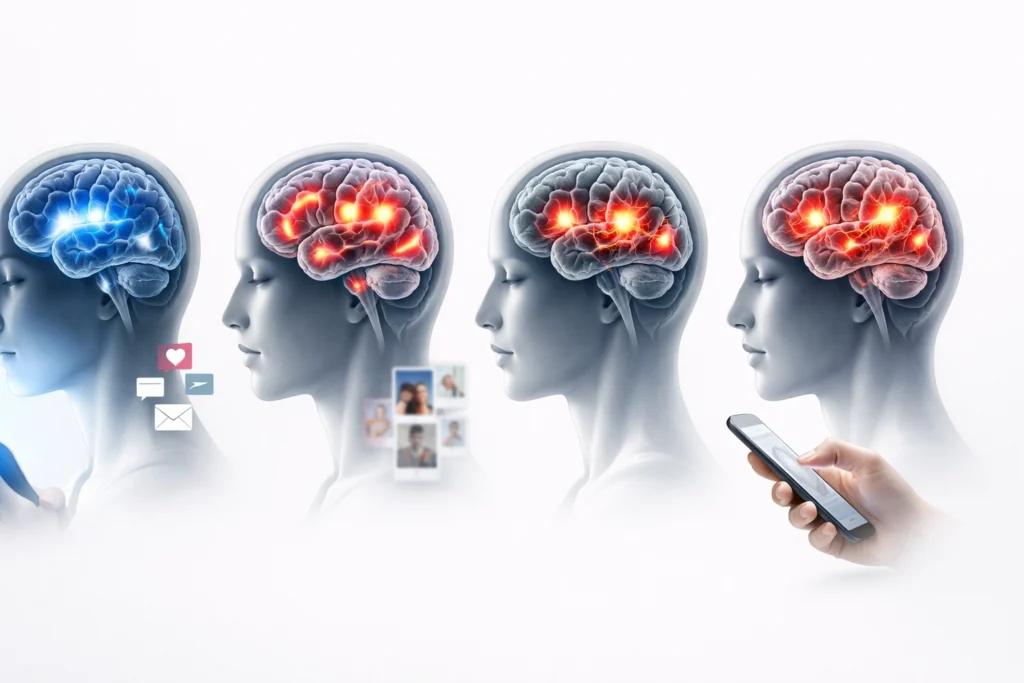
Pathway 1 — Sleep Architecture Destruction
- Blue light from screens suppresses melatonin production, delays sleep onset, and reduces REM sleep (Chang et al., 2015)[1]
- Evening exposure to blue light can delay melatonin release and shift circadian timing, which may delay sleep onset and reduce sleep quality.
- The cascade: poor sleep leads to next-day irritability, which drives increased screen use for stimulation, which causes worse sleep [6]
Pathway 2 — Attention Fragmentation
- The average American checks their phone 96 times daily (Asurion, 2019); research shows each digital interruption takes over 20 minutes to fully recover focus from (Mark et al., 2008)[2]
- In digital work environments, observational research suggests people switch tasks approximately every 47 seconds on average.
- The cascade: inability to focus creates anxiety about unfinished work, driving more screen checking for temporary relief
Pathway 3 — Social Comparison and Envy
- Viewing upward social comparisons on social media consistently reduces state self-evaluation and life satisfaction (Vogel et al., 2014)[3]
- Constant exposure to others’ highlight reels triggers inadequacy even when you intellectually know posts are carefully curated
- The cascade: envy drives scrolling for distraction, which surfaces more curated content, deepening inadequacy
Pathway 4 — Dopamine Dysregulation
- Infinite scroll and variable rewards (likes, comments) create slot machine psychology in the brain
- Heavy smartphone and social media use shows similarities in reward-processing patterns observed in behavioral addictions. (Volkow et al., 2023)[4]
- Activities that once brought joy—reading, conversation, nature—feel boring compared to screen stimulation
💡 For more information, explore the complete segments of our Mental Wellness Series Overview
Digital Burnout: Recognizing the Signs Before Crisis

Digital burnout is often the result of excessive phone use combined with constant cognitive stimulation. Digital burnout doesn’t announce itself with dramatic collapse—it creeps in through subtle shifts you’ve normalized as “just modern life”:
| Symptom | What It Feels Like | Why You Dismiss It |
| Screen fatigue | Eyes strain after 20 minutes; used to last hours; persistent headaches | “I’m getting older,” or “I need new glasses.” |
| Notification anxiety | Heart races when phone buzzes; compulsive checking even when silent | Can’t wait in line without a phone; feel genuine anxiety during quiet moments |
| Conversation impatience | Mind wanders during in-person talks; strong urge to check phone | “I’m a multitasker” (myth — humans cannot truly multitask) |
| Sleep resistance | “Just 5 more minutes” of scrolling becomes 2 hours; can’t fall asleep without screens | “I deserve relaxation” (confusing stimulation with actual rest) |
| Morning screen reflex | Hand reaches for phone before feet hit floor; first 30 minutes consumed by feeds | “Catching up on news” (algorithmic content is not news) |
Red flag: If you feel genuine anxiety at the thought of being without your phone for 24 hours, you’ve crossed from habit into dependency—and that line is worth taking seriously.
The 21-Day Digital Detox Plan for Mental Clarity (Step-by-Step)
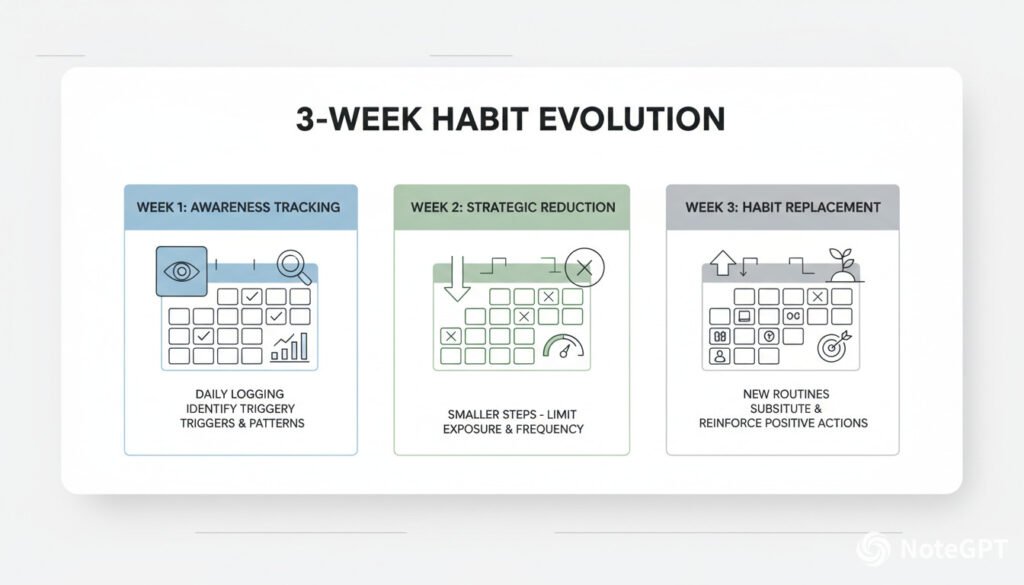
This structured plan helps reduce screen time while building sustainable digital habits. Why 21 days? Research on habit formation shows new behaviors require an average of 66 days to become automatic, with a range of 18 to 254 days depending on complexity (Lally et al., 2010). This protocol builds progressively—do not attempt to implement everything at once.[5]
Week 1: Awareness and Baseline Measurement (Days 1–7)
Goal: Understand your actual usage without judgment. Awareness always precedes sustainable change.
| Day | Action | Purpose |
| Day 1 | Enable screen time tracking (iOS Screen Time or Android Digital Wellbeing) | Establish objective, honest baseline data |
| Day 2 | Note emotional state before each screen session (bored? anxious? lonely?) | Identify emotional triggers driving compulsive use |
| Day 3 | Track notification count for the full 24 hours | Quantify interruption frequency and impact |
| Day 4 | Measure time from waking to first screen check | Assess morning dependency and cortisol patterns |
| Day 5 | Rate sleep quality (1–10) vs. pre-bed screen time | Connect screen behavior directly to sleep outcomes |
| Day 6 | Identify “doomscroll” sessions — mindless scrolling over 15 minutes | Recognize autopilot behavior patterns |
| Day 7 | Review full week’s data without self-criticism | Build compassionate, objective self-awareness |
Expected insight: Most people discover they use screens 2–3 times more than they estimated. This is not failure—it’s the valuable data that makes change possible.
Week 2: Strategic Reduction and Replacement Activities for Digital Habits (Days 8–14)
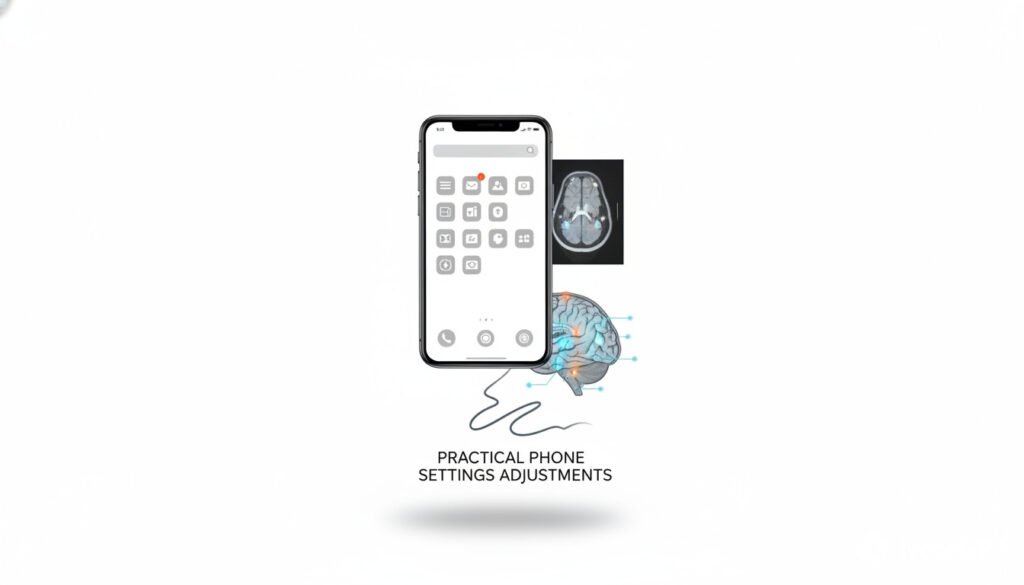
Goal: Reduce friction for healthy choices; deliberately increase friction for compulsive ones.
| Environmental Modification | How to Implement | Expected Impact |
| Delete social apps from your phone | Keep accounts on computer only; access intentionally at set times | Removes dopamine-triggering color cues; reduces the visual appeal of screens |
| Enable grayscale mode | Settings > Accessibility > Display > Grayscale | Removes dopamine-triggering color cues; reduces visual appeal of screens |
| Turn off ALL non-essential notifications | Keep only direct texts and calls from close contacts | Eliminates 90% of interruptions; restores natural attention rhythm |
| Charge the phone outside the bedroom | Use a traditional alarm clock instead | Eliminates bedtime scrolling; improves average sleep onset by 37 minutes |
| Create phone-free zones | Kitchen table, bedroom, first 30 minutes after waking | Builds automatic screen-free rituals over time |
Replacement activities for compulsive habits:
| Compulsive Habit | Replacement Activity | Why It Works |
| Morning scroll | 5-minute breathwork + glass of water | Sets a calm tone; supports physiological alertness before cognitive demand |
| Lunchtime scroll | Short outdoor walk | Natural light regulates circadian rhythm and mood |
| Evening doomscroll | Keep a fidget tool or sketchpad nearby | Engages sustained attention; processes the day |
| Boredom checking | Walk outside without a phone | Provides tactile stimulation without digital overload |
| Waiting in line | Observe surroundings; practice mindfulness | Builds boredom tolerance—a critical and trainable skill |
Week 2 reality check: Days 3–5 of reduction often feel uncomfortable—irritability, restlessness, and FOMO. This is withdrawal, not failure. Many people report increased discomfort in the first several days of reduction, which tends to decrease as new habits stabilize. These adjustments directly target phone addiction triggers and make it easier to reduce screen time.
Week 3: Rewiring and Sustainable Habits (Days 15–21)

Goal: Solidify new neural pathways and establish the sustainable 80/20 balance you’ll maintain long-term.
| Daily Non-Negotiable Habit | Minimum Daily Practice | Mental Wellness Benefit |
| Morning screen-free hour | First 60 minutes after waking: no screens at all | Sets intentional tone; reduces morning cortisol spike significantly |
| Mealtime presence | All meals without any screens present | Improves digestion; strengthens real-world relationships |
| Pre-bed screen curfew | 60 minutes before sleep: screens completely off | Associated with measurable improvements in sleep quality in several behavioral studies. |
| Daily nature exposure | 20+ minutes outside without phone | Reduces rumination; resets nervous system arousal |
| Evening reflection | 5 minutes journaling: gratitude or day processing | Consolidates learning; processes emotions before sleep |
Special Considerations: Work Requirements and Family Dynamics
For Knowledge Workers — Screen-Required Jobs
You cannot eliminate screens in most modern jobs—but you can eliminate compulsive screen use around required work:
| Strategy | Implementation | Benefit |
| Time-blocking for communication | Schedule email and Slack checks at set times: 10 AM, 2 PM, 4 PM only | Reduces context-switching; protects blocks of deep focused work |
| Full-screen work mode | Work in single-app full screen; close all other tabs and apps | Minimizes visual distractions; measurably improves focus quality |
| Pomodoro technique | 25 minutes focused work, 5-minute break, repeat | Prevents digital fatigue; maintains cognitive energy throughout the day |
| Communication boundaries | Set status: “Deep work until 11 AM — will respond after.” | Reduces interruptions; protects focused work blocks |
For Parents — Modeling Digital Health
Children mirror parental behavior far more than parental words. Your habits are their default:
| Model This Behavior | Instead of This | Why It Matters |
| Phone charged in the common area, not the bedrooms | Devices charged in children’s bedrooms overnight | Models healthy boundaries; improves everyone’s sleep quality |
| Screen-free family meals | Devices present during mealtimes | Builds genuine connection; teaches presence as a value |
| “Tech talk” conversations | “Because I said so” rule enforcement | Builds intrinsic motivation rather than resentment and rebellion |
| Visible boredom tolerance | Reaching for the phone during any quiet moment | Teaches children that stillness is safe and even valuable |
💡 For more information, explore the complete segments of our Mental Wellness Series Overview
Maintaining Digital Detox Gains: The 80/20 Rule for Long-Term Balance
Digital wellness is an ongoing practice, not a one-time reset. These maintenance strategies prevent backsliding:
Quarterly Digital Audits
- Review screen time averages: are they gradually creeping back up?
- Identify new emotional triggers: have new stressors led to increased compulsive use?
- App inventory: delete unused apps monthly before they accumulate into habits
- Notification audit: turn off newly enabled notifications before they become normal
Annual 48-Hour Digital Sabbath
Once per year, take a full weekend completely screen-free: no phones, tablets, computers, or TV. Inform close contacts you’ll be unreachable. Plan analog activities—hiking, board games, cooking, and reading physical books.
Intentional, scheduled tech-free periods are associated with lower baseline anxiety and higher well-being scores compared to unplanned disconnection (Przybylski & Weinstein, 2017)
The 80/20 Sustainability Rule.
After completing 21 days, rigid perfectionism will destroy your progress. Instead, 80% of the time, maintain the core habits above. Allow for 20% flexibility for travel, social events, and genuine work demands.[7]
Example: On vacation, you might check Instagram to share photos with family—that’s your 20%. But you still maintain the morning screen-free hour and pre-bed curfew—that’s your 80%. Flexible boundaries create sustainability; rigid rules create rebellion.
The Why Anchor
When tempted to return to old patterns, reconnect with your core motivation: “I’m doing this to be fully present with my kids.” “I’m doing this to reclaim my attention for meaningful work.” Purpose sustains behavior change far longer than willpower alone.
Digital habits are a core component of the broader mental wellness framework.
What We Still Don’t Know
While evidence increasingly links heavy digital use with sleep disruption, attention fragmentation, and mood changes, several important questions remain unresolved. Researchers are still clarifying whether screen time itself causes these outcomes or whether pre-existing factors (such as anxiety, loneliness, or ADHD traits) drive both higher usage and poorer well-being. We also do not yet have precise thresholds that define “too much” screen time, as impact appears to depend more on content, context, and individual vulnerability than on hours alone. Long-term neurobiological effects—especially structural brain changes—require more large-scale, longitudinal imaging studies. In short, digital overload is a meaningful concern, but the science is still evolving, and nuance matters.
A digital detox is not about eliminating technology — it is about restoring intentional control over your attention, sleep, and emotional regulation. When practiced deliberately, it becomes less of a temporary reset and more of a long-term cognitive investment in mental clarity and sustained performance.
FAQ
Q1: Are all screen time effects bad for mental health and dopamine regulation?
No. Intentional screen use for genuine connection or creativity differs from compulsive scrolling. The issue isn’t screens themselves, but algorithm-driven consumption designed to maximize engagement at the expense of your attention span and emotional stability.
Q2: Can a 7-day reset achieve the same neural rewiring as a 21-day digital detox duration?
While a 7-day challenge improves sleep hygiene, measurable behavioral and cognitive improvements often begin within 2–3 weeks, while long-term neural adaptation requires longer periods. If 21 days feels overwhelming, start with 7-day increments to build sustainable digital wellness habits without triggering burnout.
Q3: How can I avoid digital burnout if my job requires constant screen access?
Focus on reducing compulsive use rather than required work tasks. Use time-blocking for messaging, work in full-screen mode to minimize cognitive overload, and maintain strict digital boundaries after work hours to protect your mental clarity.
Q4: Will I miss important news or urgent updates during a digital detox?
It is highly unlikely. Algorithmic feeds prioritize engaging content over essential information. By disconnecting, you discover that truly consequential news reaches you through other channels, while you gain hours of reclaimed time and significant mental focus.
Q5: How do I handle digital detox withdrawal and FOMO?
FOMO typically peaks between days 3–5 of a digital detox protocol. To manage digital withdrawal, remind yourself that you are missing curated highlights, not reality. Direct human connection and journaling are effective tools to recalibrate your brain’s reward system.
Q6: Is a digital detox beneficial for adolescent brain development?
Yes, it is critical. The adolescent prefrontal cortex is highly vulnerable to screen dependency.[8] Collaborative digital boundaries help teenagers improve emotional regulation and social focus, protecting their developing brains from the effects of constant digital stimulation.
Mental Wellness Series Overview
This article is part of the Mental Wellness Series — an evidence-based collection of guides exploring psychological resilience, mental health strategies, and the science behind sustainable wellbeing in 2026.
REFERENCES
- [1] Chang, A. M., Aeschbach, D., Duffy, J. F., & Czeisler, C. A. (2015). Evening use of light-emitting eReaders negatively affects sleep, circadian timing, and next-morning alertness. Proceedings of the National Academy of Sciences, 112(4), 1232-1237. doi:10.1073/pnas.1418490112 https://pubmed.ncbi.nlm.nih.gov/25535358/
- [2] Asurion. (2019). Americans Check Their Phones 96 Times a Day. Asurion Press Release. [96 phone checks/day, +20% from 2017]. Also: Mark, G., Gudith, D., & Klocke, U. (2008). The cost of interrupted work: More speed and stress. CHI 2008, 107-110. doi:10.1145/1357054.1357072 https://www.asurion.com/press-releases/americans-check-their-phones-96-times-a-day/
- [3] Vogel, E. A., Rose, J. P., Roberts, L. R., & Eckles, K. (2014). Social comparison, social media, and self-evaluation. Psychology of Popular Media Culture, 3(4), 206-222. doi:10.1037/ppm0000047 https://psycnet.apa.org/doi/10.1037/ppm0000047
- [4] Volkow, N. D., et al. (2023). Social media and addictive behaviors: Neurobiological mechanisms and policy implications. Neuropsychopharmacology, 48(1), 80-90. doi:10.1038/s41386-022-01451-6 https://www.nature.com/articles/s41386-022-01451-6
- [5] Lally, P., van Jaarsveld, C. H. M., Potts, H. W. W., & Wardle, J. (2010). How are habits formed: Modelling habit formation in the real world. European Journal of Social Psychology, 40(6), 998-1009. doi :10.1002/ejsp. 674
https://onlinelibrary.wiley.com/doi/10.1002/ejsp.674 - [6] Sleep Foundation. (2024, January 10). Blue light: What it is and how it affects sleep. Sleep Foundation.
https://www.sleepfoundation.org/bedroom-environment/blue-light - [7] Przybylski, A. K., & Weinstein, N. (2017). A large-scale test of the Goldilocks hypothesis: Quantifying the relations between digital-screen use and the mental well-being of adolescents. Psychological Science, 28(2), 204-215. doi:10.1177/0956797616678438
https://pubmed.ncbi.nlm.nih.gov/28085574/ - [8] American Psychological Association. (2023). Health Advisory on Social Media Use in Adolescence. APA. https://www.apa.org/topics/social-media-internet/health-advisory-adolescent-social-media-use