Vitamin Deficiency Anemia: What You Need to Know About B12, Folate, and Healthy Blood (2026 Guide)

Tiredness that does not respond to sleep. A tongue that feels raw and smooth where it should be textured. Pins and needles in your hands and feet that come and go without explanation. These are not the dramatic symptoms that send people rushing to emergency rooms — they are the quiet, accumulating signs of Vitamin Deficiency anaemia, a condition that develops over months or years and is frequently misattributed to ageing, stress, or overwork.
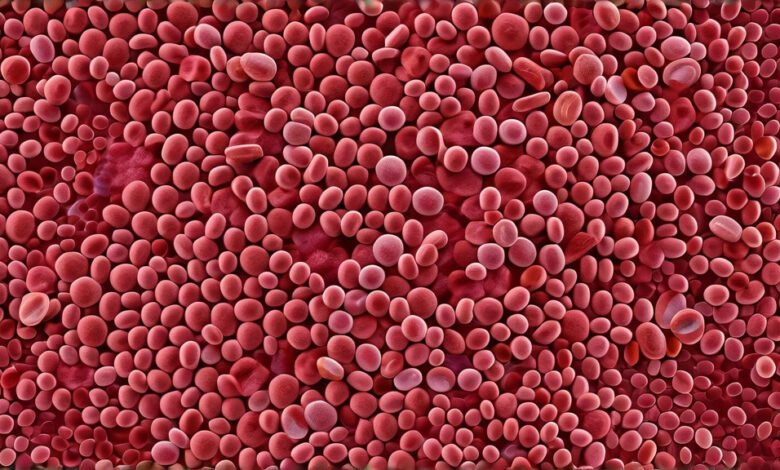
Vitamin deficiency anaemia occurs when your body lacks sufficient vitamin B12 or folate (vitamin B9) to manufacture healthy red blood cells. Unlike iron-deficiency anaemia, which creates small, pale cells, B12 and folate deficiency produce megaloblastic cells — abnormally large, structurally immature red blood cells that cannot transport oxygen efficiently. The result is tissue hypoxia: your organs and brain receive less oxygen than they need, producing the characteristic fatigue, cognitive impairment, and neurological symptoms of this condition.
This guide covers every dimension of vitamin deficiency anaemia — who is at risk, how to interpret your blood test results, when supplements are sufficient versus when injections are necessary, and which foods provide reliable daily protection.
⚠ Medical Disclaimer: This article provides educational information based on 2025–2026 research and is not a substitute for professional medical advice, diagnosis, or treatment. Always consult a qualified healthcare provider for your specific health needs. For our full legal terms, please read our Full Disclaimer & Terms of Use: https://theweekgeek.com/policy-disclaimer/
What Exactly Is Vitamin Deficiency Anaemia?
Anaemia is defined as a reduction in the number or quality of red blood cells sufficient to impair oxygen delivery to tissues. Vitamin deficiency anaemia specifically results from insufficient B12 or folate, both essential cofactors in DNA synthesis and red blood cell maturation. Without adequate quantities of either nutrient, red blood cell precursors in bone marrow cannot complete their maturation cycle, producing megaloblastic cells that are large, fragile, and functionally impaired.
A critical distinction: vitamin deficiency anaemia develops gradually over months to years, depending on body stores. B12 reserves in the liver last 2–5 years; folate stores deplete within 3–4 months of inadequate intake. This means folate deficiency typically presents clinically faster, while B12 deficiency may be severely advanced before symptoms appear, particularly the neurological damage, which can become irreversible if untreated beyond 6 months.
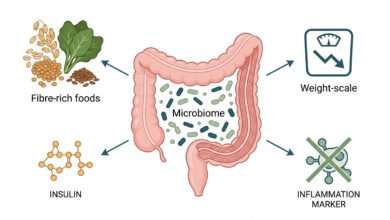
Nutrient absorption — including B12 and folate — depends fundamentally on gut health. For the complete framework of gut-supportive eating, see our [10101P] – Gut Health Diet: Essential Foods and Tips for a Happier Digestive System (2026 Guide)
B12 vs. Folate: Understanding the Critical Differences
| Factor | Vitamin B12 (Cobalamin) | Folate (Vitamin B9) |
| Primary dietary sources | Animal products only: meat, fish, eggs, dairy | Plant foods: leafy greens, legumes, citrus, fortified grains |
| Body storage reserves | 2–5 years in liver | 3–4 months only |
| Absorption mechanism | Requires intrinsic factor protein from the stomach | Does not require an intrinsic factor; direct intestinal absorption |
| Main deficiency causes | Pernicious anaemia, ageing, vegan diet, gastric surgery, and metformin use | Poor diet, excessive alcohol, pregnancy, malabsorption, and methotrexate use |
| Neurological damage risk | YES — can cause irreversible nerve damage if untreated | Rarely causes neurological symptoms in isolation |
| Recommended Daily Allowance | 2.4 mcg (adults); 2.6 mcg (pregnant) | 400 mcg DFE (adults); 600 mcg DFE (pregnant) |
The Critical B12 Absorption Insight
The most important clinical fact about B12 deficiency: it is frequently an absorption problem rather than a dietary one. Even meat-eaters consuming B12 daily can become severely deficient if their stomach produces insufficient intrinsic factor — a glycoprotein secreted by gastric parietal cells that is essential for B12 uptake in the terminal ileum. This autoimmune destruction of intrinsic factor-producing cells is called pernicious anaemia, affecting around 1 in 20 people aged 65 to 74 in the United Kingdom and the United States.[5]
This distinction matters profoundly for treatment: dietary correction alone cannot address absorption failure. Injections or high-dose oral supplements that exploit passive absorption (approximately 1% of any oral dose absorbs without intrinsic factor) are required.
High-Risk Groups for B12 Vitamin Deficiency
| Risk Group | Primary Mechanism | Estimated Deficiency Risk | Recommended Action |
| Adults over 50 | Stomach acid production declines 30–40% with age; atrophic gastritis is common | 10–30% of this age group | Annual B12 + MMA screening; supplement 500–1,000 mcg daily |
| Vegans and strict vegetarians | B12 exists naturally only in animal products | Up to 90% without supplementation | Supplement B12 without exception; 250 mcg daily minimum |
| Pernicious anaemia patients | Autoimmune destruction of intrinsic factor-producing cells | 100% deficient without treatment | Lifelong B12 injections or high-dose oral replacement |
| Post-bariatric surgery | Bypass/reduction of intrinsic factor-producing stomach regions and terminal ileum B12 absorption sites | Up to 30–40% within 2 years | 1,000 mcg B12 daily; quarterly monitoring first year |
| Long-term metformin users | Metformin reduces B12 absorption by 10–30% via a calcium-dependent mechanism | 19% combined low and borderline-low B12 after 5 years of use [Aroda et al., J Clin Endocrinol Metab, 2016; DOI: 10.1210/jc. 2015-3754] [7] | Annual B12 testing; supplement if levels decline |
| Chronic PPI users | Acid suppression impairs B12 release from food proteins | Moderate risk with long-term use | Monitor annually; consider B12 supplementation after 2+ years |
A common source of diagnostic confusion is distinguishing B12 deficiency anaemia from iron-deficiency anaemia, as both cause significant fatigue. The critical difference lies in red blood cell size: iron deficiency produces small, pale cells (microcytic anaemia, MCV below 80 fL), while B12 and folate deficiency produce abnormally large cells (macrocytic anaemia, MCV above 100 fL).
A full blood count with MCV measurement immediately separates the two conditions. For metformin users specifically, preventing B12 deficiency requires proactive supplementation rather than waiting for symptoms — B12 levels decline gradually and silently, often reaching deficiency before any clinical sign appears.
💡 For Complete information, explore the complete segments of our Nutrition and Gut-Brain Health Series Overview.
High-Risk Groups for Folate Deficiency
- Pregnant and breastfeeding women: folate requirements increase 50–100% during pregnancy; deficiency in early pregnancy is the primary preventable cause of neural tube defects
- Heavy alcohol consumers: alcohol directly interferes with folate absorption and increases urinary excretion
- Individuals with coeliac disease or Crohn’s disease: malabsorption disorders impair folate uptake across the small intestine
- Methotrexate users (rheumatoid arthritis, psoriasis, some cancers): methotrexate is a folate antagonist that depletes stores rapidly
- Individuals consuming very low vegetable and fruit intake: folate is concentrated almost entirely in plant foods
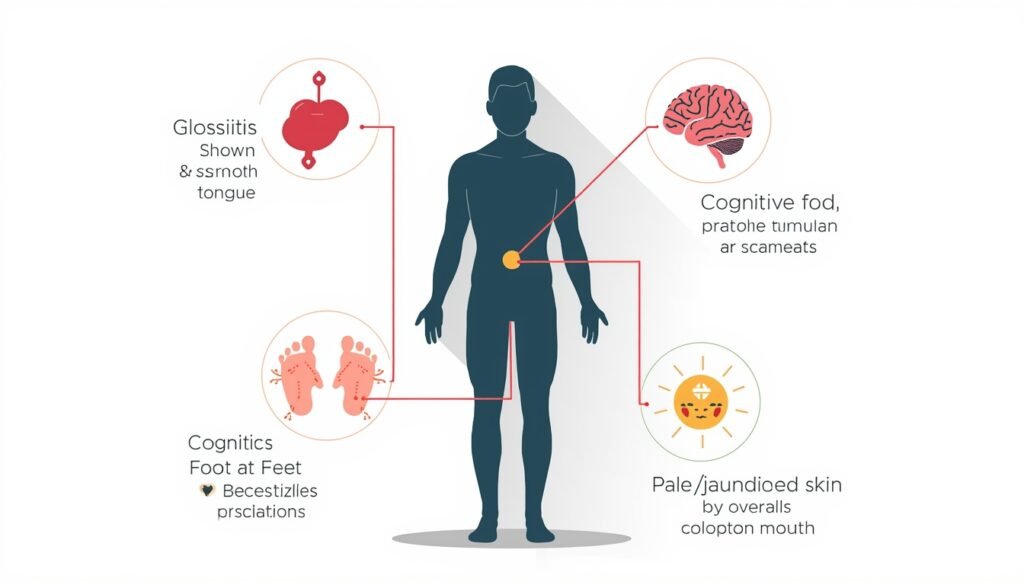
Fatigue is the most reported symptom of vitamin deficiency anaemia, but focusing on fatigue alone risks missing the condition’s full clinical picture — and in the case of B12 deficiency, delaying diagnosis of neurological damage that can become permanent.
Physical Symptoms
| Symptom | Why It Occurs | Commonly Mistaken For |
| Glossitis — smooth, red, sore tongue | Rapidly dividing tongue epithelial cells require B vitamins; deficiency causes atrophy of tongue papillae | Oral infection, allergic reaction, dental problem |
| Paresthesia — tingling or numbness in hands and feet | B12 deficiency damages the myelin sheath protecting peripheral nerves; demyelination causes abnormal sensations | Carpal tunnel syndrome, diabetic neuropathy, repetitive strain |
| Balance and coordination problems | Subacute combined degeneration of the spinal cord; posterior column demyelination | Inner ear dysfunction, vestibular disorder, and age-related decline |
| Pale or slightly jaundiced skin | Fragile megaloblastic cells break down prematurely; mild haemolysis releases bilirubin | Liver disease, Gilbert’s syndrome |
| Shortness of breath on exertion | Reduced oxygen-carrying capacity of megaloblastic red cells | Asthma, cardiac conditions, deconditioning |
| Mouth ulcers, angular cheilitis | Mucosal cell turnover is impaired by B12/folate deficiency | Stress-related ulcers, herpes simplex, nutritional deficiency (separate) |
Cognitive and Emotional Symptoms
Brain fog, memory lapses, and difficulty concentrating are well-documented in vitamin deficiency anaemia, particularly B12 deficiency. Clinical evidence confirms that B12 deficiency is a measurable contributor to treatment-resistant depression — B12 supplementation has been shown to improve antidepressant response and delay depression onset when used alongside standard treatment [Syed et al., Open Neurology Journal, 2013; DOI: 10.2174/1874205X01307010044] [9]
Irritability, mood instability, and in severe cases, paranoia or frank psychosis (“megaloblastic madness”) can occur — all reversible with adequate treatment if caught before permanent neurological change occurs.
Diagnosis: Understanding Your Blood Tests
Accurate diagnosis of vitamin deficiency anaemia requires more than a standard full blood count (FBC). The following tests provide a complete diagnostic picture:
| Test | What It Measures | Deficiency Indicator | Clinical Significance |
| FBC with MCV (mean corpuscular volume) | Red blood cell size and count | MCV >100 fL indicates macrocytosis | Suggests megaloblastic anaemia but does not confirm B12 vs folate causes |
| Serum B12 | Circulating B12 levels | <200 pg/mL (<148 pmol/L) = deficient; 200–300 pg/mL (148–221 pmol/L) = borderline | Misses 25–40% of true functional deficiencies[1]; borderline results require further testing |
| Methylmalonic acid (MMA) | Metabolic byproduct rise when B12 is low at the tissue level | Elevated MMA (>0.4 mcmol/L) confirms tissue B12 deficiency | Gold standard for functional B12 status; positive even when serum B12 appears borderline |
| Serum folate | Circulating folate levels | <3 ng/mL (<6.8 nmol/L) = deficient | Reflects recent dietary intake more than stores; red cell folate is more accurate for long-term status |
| Homocysteine | Amino acid elevated in both B12 and folate deficiency | Elevated >15 mcmol/L | Helps confirm deficiency; elevated in both conditions; a cardiovascular risk marker |
| Intrinsic factor antibodies | Autoimmune marker for pernicious anaemia | Positive result = pernicious anaemia confirmed | Approximately 60% sensitive; a negative result does not exclude pernicious anaemia |
⚠ Serum B12 alone misses 25–40% of true functional deficiencies[1]. If you have neurological symptoms, request MMA and homocysteine testing alongside standard B12 — particularly if you are over 50, vegan, or on long-term metformin. If your doctor orders only a FBC, advocate for the complete panel.
Treatment Options
B12 Vitamin Deficiency Treatment
| Severity | Treatment | Dose | Timeline |
| Mild to moderate (dietary cause) | High-dose oral B12 — works via passive absorption even without intrinsic factor | 1,000–2,000 mcg daily | 4–8 weeks to normalise serum levels; symptoms improve gradually |
| Severe (neurological symptoms present) | Intramuscular (IM) injections: hydroxocobalamin or cyanocobalamin | 1,000 mcg daily for 1 week, then weekly for 4 weeks, then monthly | Neurological improvement may take 3–6 months; start within days of diagnosis |
| Pernicious anaemia (absorption failure) | Lifelong IM injections OR very high-dose oral (1,000–2,000 mcg daily) | Every 3 months injection (UK NHS standard) OR 1,000–2,000 mcg daily oral | Ongoing maintenance; never discontinue; retest annually |
| Metformin-associated | Oral B12 supplement | 500–1,000 mcg daily | Monitor every 6–12 months; may not fully correct levels in some patients |
Folate Deficiency Treatment
- Standard dose: 400–1,000 mcg folic acid daily for 4 months to replenish stores
- Pregnancy: 600–800 mcg daily throughout the first trimester (neural tube protection); prenatal vitamins typically contain this amount
- Methotrexate users: 1–5 mg folic acid daily, prescribed separately to counteract drug-induced depletion
⚠ Critical safety rule — the folate trap: never treat presumed B12 deficiency with folate supplementation alone. High-dose folate corrects the anaemia component, normalising blood tests, while allowing undetected neurological damage from B12 deficiency to progress to irreversibility. Always confirm B12 status before initiating high-dose folate.
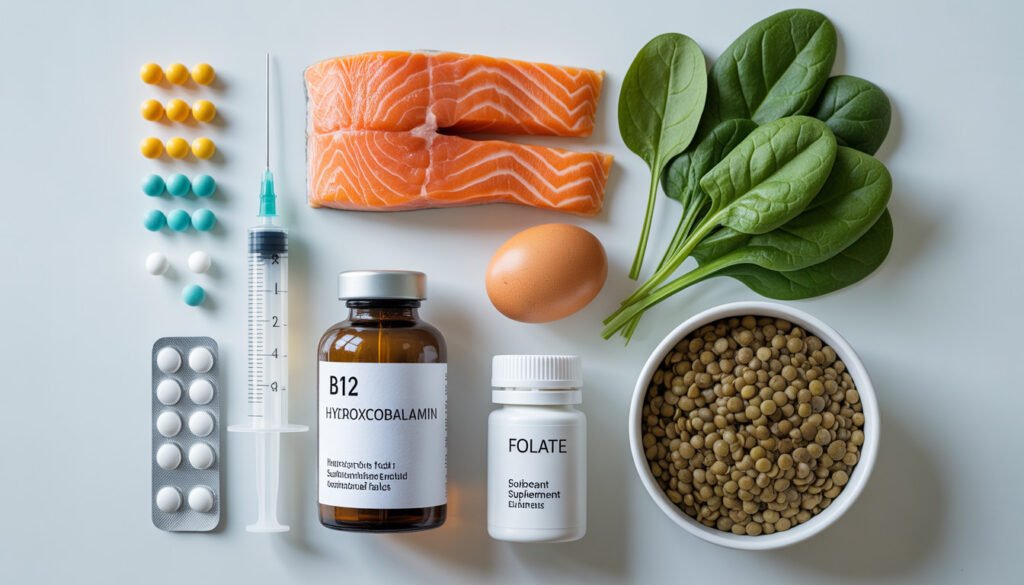
Food First: Best Dietary Sources
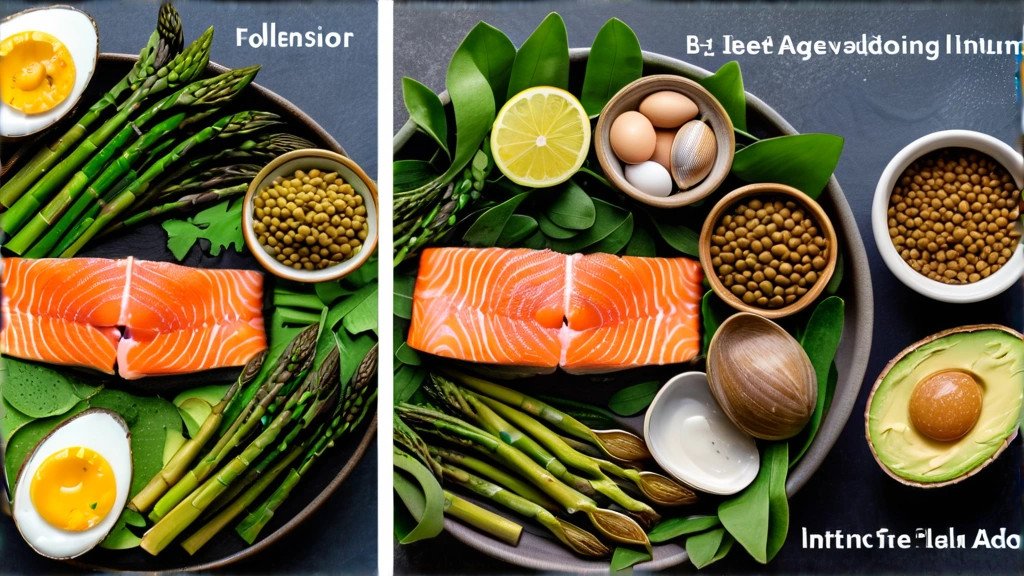
Top B12 Food Sources — Animal-Based
| Food | Serving | B12 Content | % Daily Value | Practical Tip |
| Clams (cooked) | 85g (3 oz) | 84 mcg | 3,500% DV | Canned clams work well in chowders and pasta; affordable and shelf-stable |
| Beef liver (cooked) | 85g (3 oz) | 70 mcg | 2,900% DV | Once monthly provides enormous B12 reserves; pair with onions and mustard |
| Wild-caught salmon (cooked) | 85g (3 oz) | 4.8 mcg | 200% DV | Bake with lemon and herbs; also provides omega-3s and vitamin D |
| Canned light tuna | 85g (3 oz) | 2.5 mcg | 100% DV | Affordable, convenient, excellent for salads and sandwiches |
| Plain Greek yogurt | 170g (6 oz) | 1.3 mcg | 55% DV | Choose plain, unsweetened; it also provides gut-healthy probiotics |
| Eggs (whole) | 2 large | 0.9 mcg | 35% DV | Most B12 is concentrated in the yolk; do not discard yolks |
💡 Vegan note: Nutritional yeast fortified with B12 (cyanocobalamin form, not analogues) provides 1–2 tablespoons (8–16g) delivering a reliable plant-compatible source. Always verify the label states “fortified with vitamin B12” and check the cyanocobalamin form specifically.
Top Folate Food Sources — Plant-Based
| Food | Serving | Folate Content | % Daily Value | Practical Tip |
| Cooked lentils | 240ml (1 cup) | 358 mcg | 90% DV | Add to soups, dals, and salads; also rich in iron and protein |
| Cooked spinach | 240ml (1 cup) | 263 mcg | 65% DV | Cooking concentrates folate per volume; sauté with garlic and olive oil |
| Asparagus (steamed) | 240ml (1 cup) | 268 mcg | 65% DV | Steam lightly 5–7 minutes; also a powerful prebiotic for gut health |
| Black-eyed peas (cooked) | 240ml (1 cup) | 210 mcg | 50% DV | Traditional with rice; economical and versatile |
| Avocado (medium) | 1 medium (200g / 7 oz) | 121 mcg | 30% DV | Add to salads, toast, and bowls; also provides healthy monounsaturated fats |
| Fortified breakfast cereal | 1 serving (varies) | 100–400 mcg | 25–100% DV | Check label carefully; look for ≥200 mcg per serving; pair with vitamin C food |
💡 Absorption booster: consuming folate-rich foods alongside vitamin C sources (citrus juice, bell peppers, strawberries) enhances folate bioavailability by approximately 30% through reducing oxidative degradation in the digestive tract.
Intestinal absorption of both B12 and folate depends on gut barrier integrity. If absorption is impaired, dietary sources alone may be insufficient.
💡 For more information, explore the complete segments of our Nutrition and Gut-Brain Health Series Overview.
Special Populations
Older Adults (65 and Over)
Adults over 65 represent the highest-risk demographic for B12 deficiency in developed countries. Between 10–30% of this age group have atrophic gastritis, chronic inflammation, reducing gastric acid and intrinsic factor output. Because crystalline B12 in supplements and fortified foods does not require stomach acid for absorption (unlike protein-bound B12 in meat), dietary supplementation is effective regardless of gastric status.
- Annual B12 and MMA screening is recommended for all adults over 65 at their regular health check
- Supplement dose: 500–1,000 mcg B12 daily regardless of dietary intake
- Cognitive decline association: Research from the Framingham Heart Study found that higher B12 status across mid-to-late life is associated with measurably slower rates of memory, executive function, and language decline in older adults [Marino et al., Alzheimer’s & Dementia, 2025; DOI: 10.1002/alz.70864][8]
Vegans and Strict Vegetarians
There are no reliable unfortified plant sources of vitamin B12. Fermented foods, seaweed, and spirulina contain B12 analogues that competitively inhibit genuine B12 absorption. Deficiency in vegans is not a theoretical risk — it is an empirical certainty without deliberate supplementation or fortified food consumption.
- Minimum protocol: 250 mcg B12 daily OR 2,500 mcg weekly (weekly high-dose works via saturation of passive absorption)
- Annual monitoring: serum B12 plus MMA — serum B12 alone is insufficient in vegans, where tissue-level deficiency can exist with “normal” serum values
Post-Bariatric Surgery Patients
Procedures including Roux-en-Y gastric bypass and sleeve gastrectomy bypass or reduce the stomach regions producing intrinsic factor and the terminal ileum sections absorbing B12. Without lifelong supplementation, deficiency is virtually universal.
- Protocol: 1,000 mcg B12 daily plus 1 mg folate, starting immediately post-surgery and continuing lifelong
- Monitoring: quarterly blood panel (B12, MMA, folate, iron, vitamin D) for the first year, then biannually for life
Pregnant Women
Folate is the most critical periconceptional nutrient. Neural tube defects — including spina bifida and anencephaly — develop in the first 28 days of pregnancy, often before pregnancy is confirmed. The UK NHS, US CDC, and Health Canada all recommend 400 mcg folic acid daily for all women of reproductive age capable of becoming pregnant, increasing to 600–800 mcg once pregnancy is confirmed.
- Start supplementation at least 3 months before planned conception
- High-risk women (previous neural tube defect pregnancy, coeliac disease, on antiepileptics): 5 mg daily folic acid — prescription dose, discuss with your doctor
When to See a Doctor
Seek medical evaluation promptly if you experience any of the following:
- Neurological symptoms: numbness, tingling, balance problems, memory loss, or coordination difficulties — these suggest B12 deficiency neurological involvement requiring urgent treatment
- Severe fatigue: unable to complete normal daily activities despite adequate sleep
- Cardiovascular symptoms: palpitations, shortness of breath on minimal exertion, chest tightness
- Oral signs: persistent glossitis (smooth, red, sore tongue) or recurrent mouth ulcers
- High-risk status without monitoring: vegan without supplementation for more than 6 months, gastric surgery history, age over 65 with unexplained fatigue, or long-term metformin use
⚠ B12 deficiency neurological damage can become permanent if untreated for more than 6 months. Do not wait for symptoms to become severe. If in doubt, request comprehensive blood testing, including MMA.
FAQ
Q1: Can I get enough B12 from plant foods like spirulina?
A: No. Spirulina, nori, tempeh, and other fermented plant foods contain B12 analogues — molecules structurally similar to true B12 that occupy B12 receptor sites, actively blocking absorption of genuine B12. Regular consumption of these foods as B12 sources may worsen the deficiency over time. Vegans must use fortified foods (nutritional yeast with cyanocobalamin, fortified plant milks) or supplements. There are no exceptions.
Q2: Does cooking destroy B12 or folate?
A: B12 is heat-stable — cooking at normal food preparation temperatures does not significantly reduce its content. Folate is heat-sensitive and water-soluble — boiling vegetables destroys up to 50% of their folate content, with the remainder leaching into cooking water. Steam folate-rich vegetables lightly for 3–5 minutes to preserve the majority of content, or consume them raw in salads and smoothies where food safety allows.
Q3: Why do I still feel tired after starting B12 supplements?
A: Red blood cell regeneration takes 6–8 weeks after B12 correction begins — bone marrow must produce a new population of healthy cells to replace the existing megaloblastic cells. Neurological symptoms may take 3–6 months to resolve, and some long-standing nerve damage may be incomplete. If no improvement appears after 3 months of verified adequate supplementation, request MMA retesting and consideration of additional causes, including iron deficiency, thyroid dysfunction, or sleep disorders.
Q4: Can high folate mask B12 deficiency?
A: This is the dangerous folate trap and one of the most clinically important interactions in nutritional medicine. The timeline for how long B12 deficiency takes to reverse depends on severity — haematological recovery requires 6–8 weeks, while neurological improvement may take 3–6 months. High-dose folate corrects the anaemia component of B12 deficiency, causing haematological blood markers to normalise. This masking allows the concurrent neurological damage from B12 deficiency to advance undetected, potentially reaching irreversibility before diagnosis. Always test and correct B12 status before starting high-dose folate, particularly if you are vegan, elderly, or in any high-risk category.
Q5: Are sublingual B12 supplements better than oral tablets?
A: No strong clinical evidence from randomised trials demonstrates superiority of sublingual over standard oral B12 when both are dosed at 1,000 mcg or above. Both exploit passive absorption (approximately 1% of any dose), which is sufficient to correct the deficiency regardless of intrinsic factor status. Intramuscular injections remain the gold standard specifically for pernicious anaemia and confirmed malabsorption conditions — not for dietary or absorption-intact deficiency.
Key Takeaways
- Vitamin deficiency anaemia from B12 or folate creates megaloblastic cells — large, structurally immature red blood cells that cannot transport oxygen efficiently, causing fatigue, cognitive impairment, and potentially irreversible neurological damage.
- B12 deficiency is frequently an absorption problem rather than a dietary one — even meat-eaters can become severely deficient if their stomach fails to produce adequate intrinsic factor.
- Serum B12 alone misses 25–40% of true functional deficiencies[1]. Request methylmalonic acid (MMA) testing for complete diagnosis, particularly with neurological symptoms.
- The folate trap is clinically dangerous: high-dose folate corrects anaemia but allows B12 deficiency neurological damage to progress undetected — always confirm B12 status first.
- Vegans must supplement B12 without exception — there are no reliable unfortified plant sources, and analogues in spirulina actively worsen deficiency.
- B12 deficiency neurological damage can become permanent after 6 months untreated — early diagnosis and treatment are essential.
CALL TO ACTION
Vitamin deficiency anaemia is one of the most treatable nutritional conditions in medicine — but only when diagnosed correctly and early. If you are in a high-risk group (vegan, over 65, post-bariatric surgery, on metformin, or experiencing unexplained fatigue and neurological symptoms), request a comprehensive blood panel at your next medical appointment: full blood count with MCV, serum B12, MMA, homocysteine, and serum folate.
Do not wait for symptoms to become severe. The neurological consequences of untreated B12 deficiency are preventable. The dietary measures to support folate status are simple and immediately actionable. Take one step today toward understanding your nutritional baseline.
Nutrition and Gut-Brain Health
This article is part of the Comprehensive Gut Health & Nutrition Series — an evidence-based collection of guides exploring the gut microbiome, digestive health strategies, and the direct connection between nutrition and mental and physical performance.
→ View all Nutrition and Gut-Brain Health series articles here
Resources
- [1] – NIH: Vitamin B12 — Health Professional Fact Sheet:
https://ods.od.nih.gov/factsheets/VitaminB12-HealthProfessional/ - [2] – NIH: Folate — Health Professional Fact Sheet:
https://ods.od.nih.gov/factsheets/Folate-HealthProfessional/ - [3] – Mayo Clinic: Vitamin Deficiency Anaemia:
https://www.mayoclinic.org/diseases-conditions/vitamin-deficiency-anemia/diagnosis-treatment/drc-20355031 - [4] – WHO: Anaemia Fact Sheet:
https://www.who.int/news-room/fact-sheets/detail/anaemia - [5] – NHS UK: Vitamin B12 or Folate Deficiency Anaemia:
https://www.nhs.uk/conditions/vitamin-b12-or-folate-deficiency-anaemia/ - [6] – Health Canada: Folic Acid and Neural Tube Defects:
https://www.canada.ca/en/public-health/services/pregnancy/folic-acid.html - [7] – Aroda et al., J Clin Endocrinol Metab, 2016; DOI: 10.1210/jc. 2015-3754:
https://pmc.ncbi.nlm.nih.gov/articles/PMC4880159/ - [8] – Marino et al., Alzheimer’s & Dementia, 2025; DOI: 10.1002/alz.70864
https://pmc.ncbi.nlm.nih.gov/articles/PMC12568389/ - [9] –
Syed et al., Open Neurology Journal, 2013; DOI: 10.2174/1874205X01307010044: https://pmc.ncbi.nlm.nih.gov/articles/PMC7688056/