Q-Day Timeline Compression: How Google’s 2026 Breakthrough Changed Post-Quantum Risk

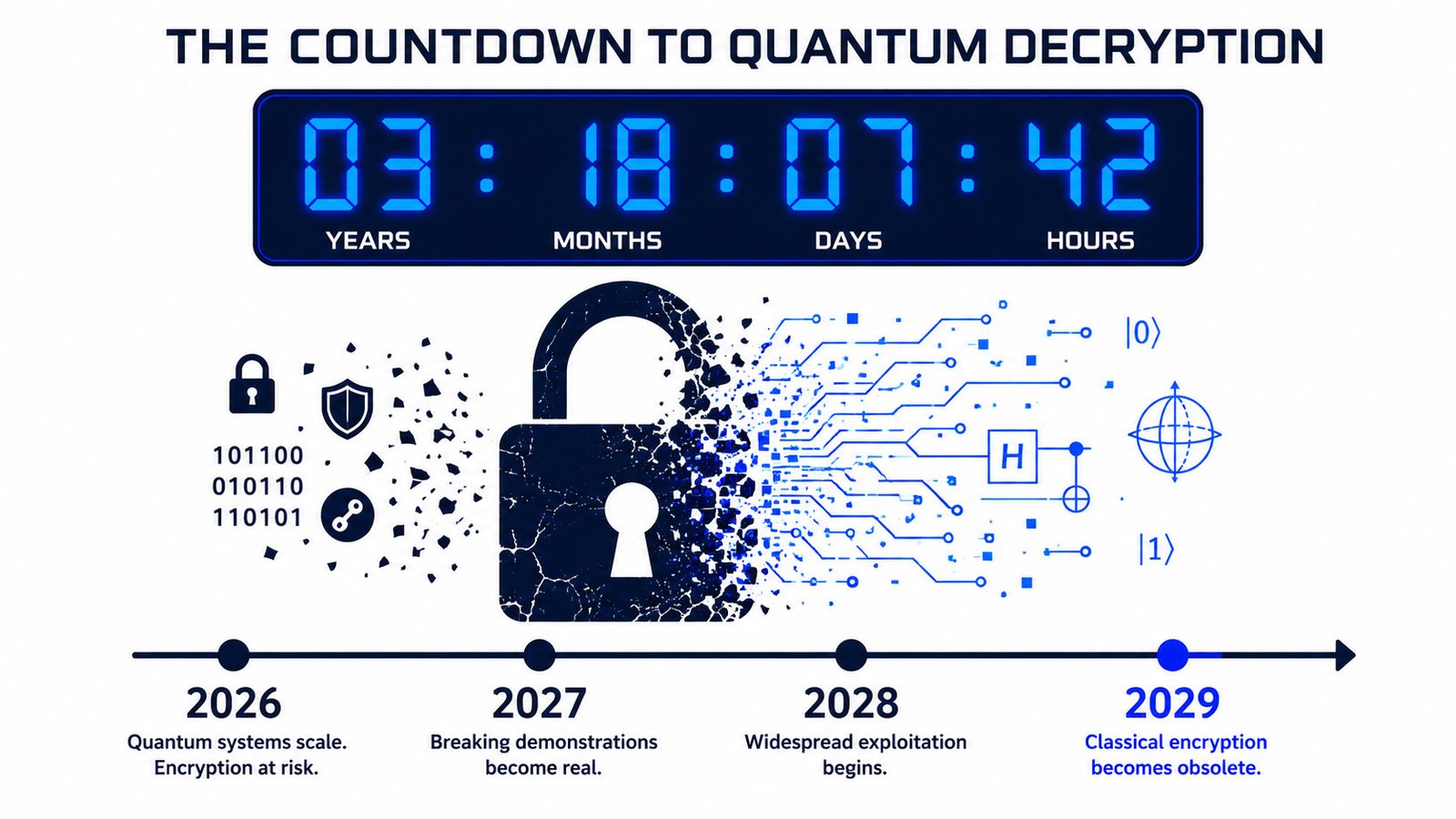
The long-standing assumption that Q-Day remained a distant, generational risk is now under serious reassessment. On March 30, 2026, Google’s Quantum AI team published a whitepaper demonstrating that breaking 256-bit elliptic curve cryptography — the algorithm protecting banking systems, government communications, and enterprise infrastructure worldwide — requires 20 times fewer quantum resources than every prior estimate assumed. The quantum threat is no longer a generational problem. It is a medium-term risk with a compliance deadline that organizations cannot afford to miss. This guide explains what changed, what it means for your organization, and the precise steps to take before the migration window closes. No cryptographically relevant quantum computer capable of breaking ECC-256 exists today.
TECHNICAL DISCLAIMER: This article is for educational and informational purposes only. It does not constitute professional cybersecurity, legal, or compliance advice. Organizations should engage qualified cryptography and security professionals before initiating post-quantum migration programs. Regulatory requirements vary by jurisdiction and industry sector.
What Is Q-Day 2026 and Why Did the Timeline Just Change?
Q-Day 2026 refers to the point at which a cryptographically relevant quantum computer (CRQC) becomes capable of breaking the public-key encryption standards that secure modern digital infrastructure. The term covers two widely deployed algorithms: RSA, which protects most web traffic and authentication systems, and ECC encryption, which secures financial transactions, mobile communications, and blockchain networks.
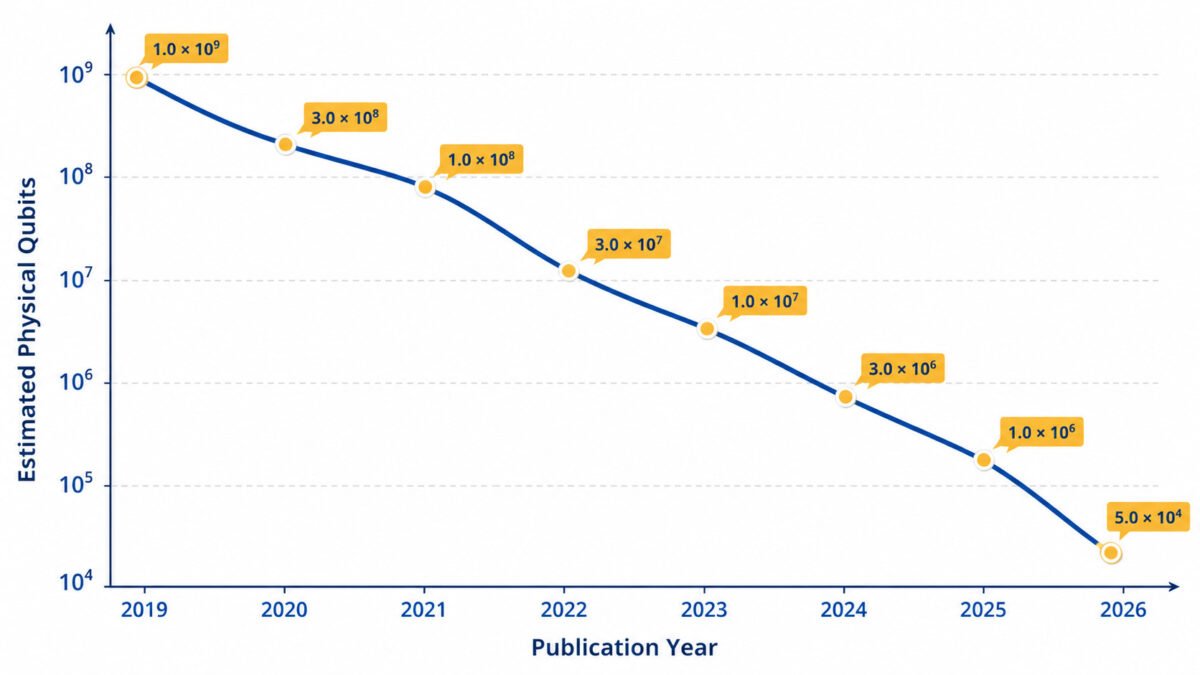
Until March 2026, the prevailing consensus placed the arrival of a CRQC somewhere between 2030 and 2040. That estimate rested on resource projections suggesting that breaking ECDSA-256 — the specific ECC variant most widely deployed — would require more than 10 million physical qubits. Building and operating a machine at that scale remained well beyond the engineering frontier. The threat was real but distant.
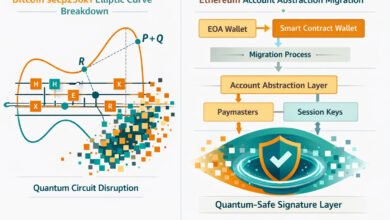
Google’s whitepaper, co-authored with researchers from the Ethereum Foundation and Stanford University, revised that threshold sharply. The research presented two optimized quantum circuits capable of solving the 256-bit elliptic curve discrete logarithm problem using fewer than 500,000 physical qubits — a 20-fold reduction from prior estimates. [1] One circuit variant requires fewer than 1,200 logical qubits and 90 million Toffoli gates. Under highly idealized fault-tolerant assumptions, the attack completes in approximately nine minutes. Bitcoin’s block confirmation window is ten minutes.
The compression reflects advances in error-correction efficiency and quantum circuit optimization rather than an entirely new algorithmic approach. Google’s engineers found a configuration that minimized the spacetime volume of the computation — the combined measure of qubit count and gate operations — to a degree that prior research had not achieved. As Google’s own researchers noted in the paper, ‘attacks always get better.’
Table 1: Physical Qubit Estimates for Breaking ECC-256 — Historical Progression
| Year | Source | Physical Qubit Estimate | Implied Timeline |
| 2019 | Gidney (Google) | ~10 million+ | Generational (2040+) |
| 2023 | Litinski | ~9 million (photonic) | Long-term (2035+) |
| 2025 | Chevignard et al. (EUROCRYPT) | ~1,100 logical qubits* | Medium-term |
| March 2026 | Google Quantum AI | <500,000 physical qubits | Compliance deadline: 2029-2030 |
| March 2026 | Caltech / Oratomic | ~10,000–20,000 neutral-atom qubits (theoretical model) [8] | Architecture-dependent |
Google’s estimate models a fast, real-time attack scenario using superconducting architectures, while the Caltech/Oratomic estimate reflects a slower, highly theoretical neutral-atom model with architecture-dependent assumptions.
*Logical qubits require many physical qubits for error correction. Conversion ratios vary by architecture.
The Harvest Now, Decrypt Later Threat Is Already Active
The most immediate consequence of the revised quantum threat timeline is not what happens in 2029. It is what is happening now. The harvest now, decrypt later (HNDL) strategy allows adversaries to capture encrypted data today and hold it until a CRQC exists to decrypt it. From a data security standpoint, the clock for long-lived sensitive information started running years ago.
Nation-state actors with the resources and motivation to stockpile encrypted data — including classified government communications, healthcare records, financial transaction histories, and intellectual property — have every incentive to operate HNDL campaigns at scale.[2] The data captured today under RSA or ECC-based cryptography may still carry confidentiality value a decade from now. The effective protection deadline for that data is not Q-Day itself but Q-Day minus the data’s required confidentiality horizon.
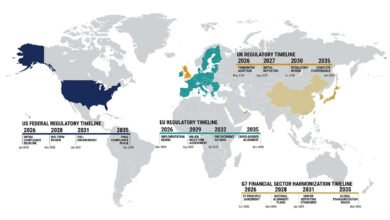
NSA’s Commercial National Security Algorithm Suite 2.0 (CNSA 2.0) requires quantum-resistant algorithms for new National Security System acquisitions by January 2027. [3] NIST’s draft IR 8547 deprecates RSA and ECC for federal systems by 2030 and disallows them by 2035. Google itself has announced a 2029 internal PQC migration deadline — a signal that carries particular weight given that Google’s own researchers produced the resource estimates now reshaping industry timelines. [4]
Table 2: Key Regulatory and Compliance Deadlines for Post-Quantum Cryptography Migration
| Deadline | Authority | Requirement | Scope |
| January 2027 | NSA CNSA 2.0 | Quantum-resistant algorithms for new NSS acquisitions | US National Security Systems |
| 2029 | Google (internal) | Full PQC migration of own infrastructure | Google enterprise systems |
| 2030 | NIST IR 8547 | RSA/ECC is deprecated for federal systems | US federal agencies |
| 2030 | EU 18-nation joint statement | PQC migration for high-risk use cases | European critical infrastructure |
| 2035 | NIST IR 8547 | RSA/ECC is disallowed for federal systems | US federal agencies |
| 2035 | UK NCSC | Broad PQC migration completion | UK organizations |
What NIST PQC Standards Apply to Your Organization Right Now
NIST finalized its first three post-quantum cryptography standards in August 2024: ML-KEM (FIPS 203) for key encapsulation, ML-DSA (FIPS 204) for digital signatures, and SLH-DSA (FIPS 205) as a hash-based signature backup. [5] A fifth algorithm, HQC, was selected in March 2025 as a code-based alternative to the primary lattice-based standards. These are not theoretical candidates. They are finalized federal standards available for implementation today.
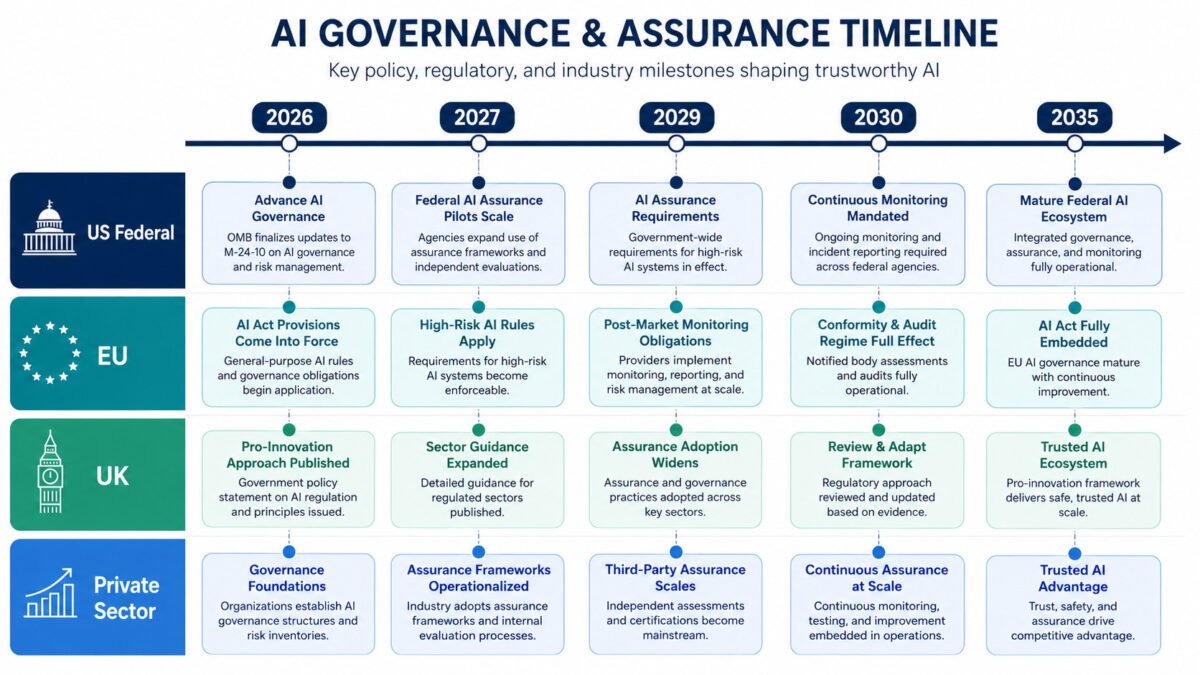
For non-federal organizations, the practical question is not whether these standards apply but when compliance obligations become legally binding. Organizations operating in regulated sectors — financial services, healthcare, defense contracting, critical infrastructure — face the earliest exposure. DORA and the EU Cyber Resilience Act are evolving toward quantum-safe-by-design requirements.[6] Organizations that begin PQC migration pilots now accumulate implementation experience before regulatory pressure converts timelines into enforcement actions.
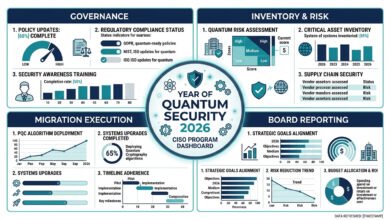
The 2026 designation as the Year of Quantum Security — backed by the FBI, NIST, and CISA — reflects a coordinated policy signal that the migration window is open and the expectation of early movers is real. [7] Organizations that defer until 2028 or 2029 risk compressed implementation timelines, vendor capacity constraints, and the compliance risk of incomplete migration against hard regulatory deadlines.
Seven Actions Every Organization Must Take After the Q-Day 2026 Breakthrough
The revised Q-Day 2026 threat timeline requires concrete steps, not continued monitoring. The following seven actions reflect the priorities recommended by NIST, CISA, and leading cryptography practitioners for organizations beginning or accelerating their post-quantum cryptography migration.
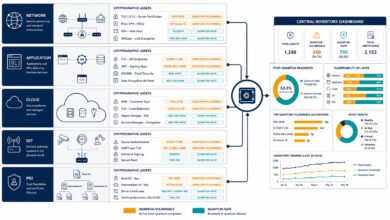
1. Conduct a Cryptographic Inventory
Identify every system, application, and data flow in your organization that uses RSA, ECC, or Diffie-Hellman key exchange. This process — sometimes called a crypto discovery audit — typically requires 12 to 24 months for large organizations. Beginning in 2026 provides adequate lead time before the 2030 federal deprecation deadline.
2. Classify Data by Confidentiality Horizon
Segment your data inventory by the number of years it requires confidentiality protection. Data requiring protection beyond 2030 — medical records, intellectual property, classified communications — is already at risk from HNDL attacks. These datasets represent your highest-priority migration candidates.
3. Begin ML-KEM Pilot Deployments
ML-KEM (FIPS 203) is the NIST-standardized key encapsulation mechanism for asymmetric encryption replacement. Run pilot deployments in low-risk systems to build institutional familiarity before applying the standard to production infrastructure. Major cloud platforms, including AWS, Azure, and Google Cloud, now support ML-KEM integration.
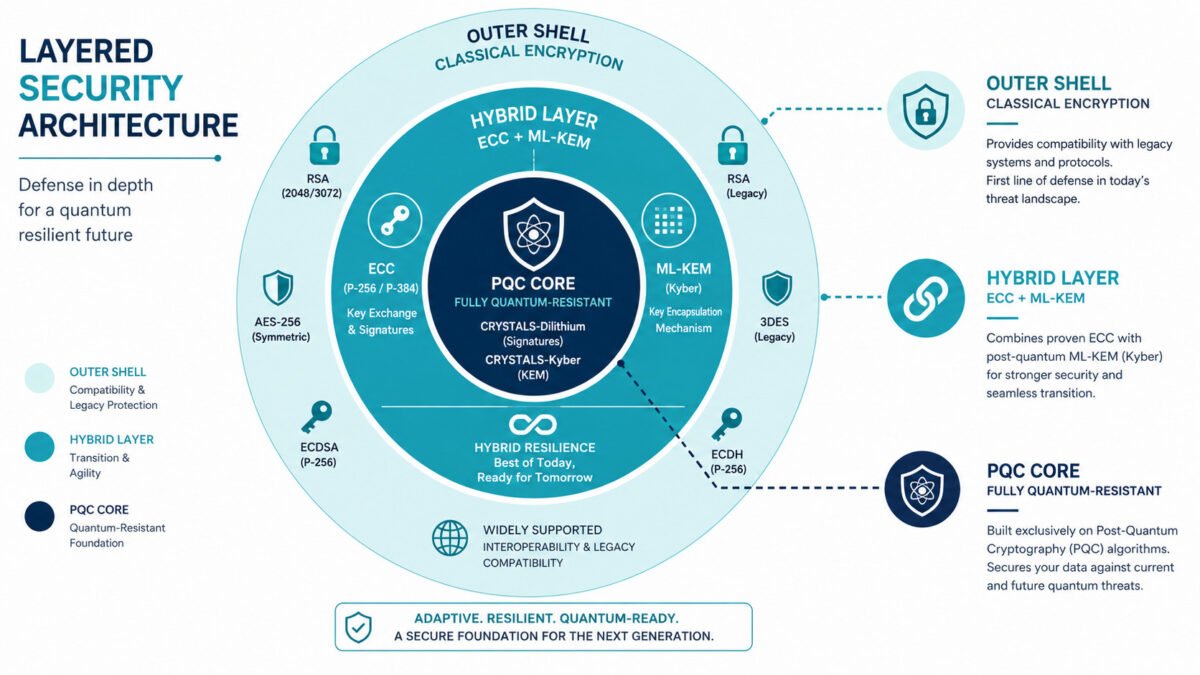
4. Implement Hybrid Encryption for Critical Systems
Hybrid encryption combines a classical algorithm (RSA or ECDH) with a PQC algorithm (ML-KEM) in a single key exchange. If either algorithm holds, the session remains secure. This approach provides immediate protection against HNDL attacks while classical infrastructure remains in place.
5. Build Crypto-Agility Into New Systems
Crypto-agility is the architectural property that allows an organization to swap cryptographic algorithms without redesigning the systems that depend on them. Hardcoding ECC into applications built today creates technical debt that compounds as migration deadlines approach. All new system designs should abstract cryptographic dependencies.
6. Assess Third-Party and Supply Chain Exposure
Your organization’s cryptographic posture is constrained by the weakest link in your vendor and partner ecosystem. Request PQC migration roadmaps from critical suppliers. Verify that data shared with third parties over encrypted channels is protected under hybrid or PQC schemes if it carries long confidentiality horizons.
7. Establish Internal PQC Governance
Assign accountability for PQC migration at the CISO or CTO level. Create a migration roadmap with quarterly milestones, a budget line tied to the 2030 deprecation deadline, and a training program for technical staff. Organizations that treat this as a project rather than a program consistently underestimate the effort required.
Table 3: Post-Quantum Cryptography Migration Priority Matrix
| System Type | Current Algorithm | HNDL Risk Level | Recommended Action | Target Deadline |
| PKI / Certificate Authority | RSA-2048 / ECC-256 | Critical | Hybrid PQC + migrate to ML-DSA | 2027 |
| TLS / HTTPS Web Traffic | ECDHE / RSA | High | Deploy ML-KEM in hybrid mode | 2027-2028 |
| VPN / Remote Access | Diffie-Hellman / ECC | High | Upgrade to ML-KEM hybrid | 2028 |
| Code Signing | RSA / ECDSA | Medium | Migrate to ML-DSA or SLH-DSA | 2028-2029 |
| Internal Databases (at-rest) | AES-256 (symmetric) | Low | Maintain — AES-256 is quantum-resistant | No change required |
| IoT / Embedded Devices | ECC lightweight variants | Medium-High | Plan hardware refresh cycle with PQC support | 2029-2030 |
Counter-Arguments
- Objection: Q-Day is still decades away. The 500,000-qubit threshold is theoretical — no machine of that scale exists or will exist soon.
Discussion: The objection is partially accurate but misframes the risk. No CRQC exists today, and most hardware projections do not place a 500,000-qubit machine before 2033 to 2035. However, the compliance deadline is not Q-Day itself. NIST deprecates RSA and ECC for federal systems in 2030, and HNDL attacks are already capturing data today. Organizations that wait for confirmed hardware existence will have no time to migrate. - Objection: Our data is encrypted with AES-256. We are already quantum-safe.
Discussion: AES-256 is correct for symmetric encryption of data at rest and is considered quantum-resistant under current analysis. However, the problem is not symmetric encryption — it is asymmetric key exchange. Every TLS session, VPN connection, and digital certificate relies on RSA or ECC for the key exchange that establishes the session. Symmetric encryption is only as secure as the key exchange that delivered the symmetric key. - Objection: PQC migration is too expensive and disruptive for mid-sized organizations to prioritize now.
Discussion: Migration cost estimates project 2 to 5 percent of annual IT security budgets over a four-year window. Organizations that begin in 2026 spread that cost across four years and access current vendor pricing before demand peaks. Organizations that defer to 2028 or 2029 will face compressed timelines, premium vendor rates, and potential regulatory fines for non-compliance. Early adoption is the lower-cost path. - Objection: NIST just finalized the standards in 2024. They may change again before 2030, making early investment wasteful.
Discussion: NIST’s published standards — ML-KEM, ML-DSA, and SLH-DSA — are finalized federal standards, not draft candidates. Revisions to finalized standards are historically rare and would not invalidate existing implementations. Waiting for further standardization activity is not a risk management strategy; it is a delay tactic that compounds technical debt.
FAQ
Q1: What exactly is Q-Day 2026, and has it already happened?
A: Q-Day 2026 refers to the updated risk horizon established by Google’s March 2026 quantum breakthrough, not to the arrival of an actual cryptographically relevant quantum computer. No CRQC capable of breaking ECC encryption exists today. The term describes the moment when the quantum threat timeline became a medium-term compliance issue rather than a generational concern.
Q2: Which encryption algorithms are vulnerable to a quantum attack?
A: RSA and ECC encryption (including ECDSA, ECDH, and secp256k1) are vulnerable because they rely on mathematical problems — integer factorization and elliptic curve discrete logarithms — that Shor’s algorithm solves efficiently on a quantum computer. AES-256 and SHA-3, which use symmetric and hash-based approaches, are considered quantum-resistant under current analysis.
Q3: What is the harvest now, decrypt later threat?
A: The harvest now, decrypt later strategy involves adversaries capturing encrypted data transmissions today and storing them until a future quantum computer can decrypt them. Nation-state actors with access to large-scale data collection infrastructure are considered the most likely operators of HNDL campaigns. Data with confidentiality requirements extending beyond 2030 is already at practical risk.
Q4: What are the NIST PQC standards, and are they ready to deploy?
A: NIST finalized three post-quantum cryptography standards in August 2024: ML-KEM (FIPS 203) for key encapsulation, ML-DSA (FIPS 204) for digital signatures, and SLH-DSA (FIPS 205) for hash-based signatures. A fourth algorithm, HQC, was selected in March 2025. These are fully finalized standards available for deployment. Major cloud and security vendors have already begun integration.
Q5: How long does PQC migration typically take for a large organization?
A: End-to-end PQC migration for a large enterprise — covering cryptographic inventory, vendor assessment, architecture changes, testing, and deployment — typically requires three to five years. The cryptographic inventory phase alone may take 12 to 24 months. Organizations beginning in 2026 are positioned to complete migration before the NIST 2030 federal deprecation deadline. Organizations that defer face compressed timelines and elevated costs.
Q6: Does the Google breakthrough mean my organization should act immediately?
A: It means your organization should treat Q-Day 2026 as an active planning trigger rather than a future monitoring event. Immediate action means beginning the cryptographic inventory, classifying data by confidentiality horizon, and initiating vendor conversations about PQC roadmaps. Full migration does not need to begin today, but the planning, budget allocation, and governance structure should be in place before the end of 2026.
Key Points
What You Need to Know About Q-Day 2026 and the Quantum Threat
- Google’s March 2026 whitepaper reduced the physical qubit estimate for breaking ECC-256 from more than 10 million to fewer than 500,000 — a 20-fold compression that moves the quantum threat from generational to medium-term.
- Harvest-now, decrypt-later attacks are already active. Long-lived data captured today under RSA or ECC encryption is already at risk of future quantum decryption.
- NIST has finalized three post-quantum cryptography standards — ML-KEM, ML-DSA, and SLH-DSA — that are ready for deployment today.
- Compliance deadlines are real and binding: NSA CNSA 2.0 requires quantum-resistant algorithms for new National Security System acquisitions by January 2027. NIST deprecates RSA/ECC for federal systems in 2030.
- The seven-action migration framework — starting with cryptographic inventory and hybrid encryption deployment — provides a structured path to Q-Day 2026 readiness.
Continue learning about quantum security:
- Next in this series: FIPS 140-2 Sunset September 2026: What Every Organization Must Do Before the Deadline [https://theweekgeek.com/cybersecurity/pqc/fips-140-2-sunset-september-2026-compliance/]
- Subscribe to the PQC series for actionable updates as compliance deadlines approach.
PQC Series Overview
This article is part of the Post-Quantum Security Series — a technical collection of guides exploring cryptographic vulnerabilities exposed by quantum computing, migration strategies for organizations, and the steps required to protect sensitive data before quantum decryption becomes operationally viable.
References
- [1] Google Quantum AI. (March 2026). Quantum circuits for the elliptic curve discrete logarithm problem optimization. Google Quantum AI Blog.
https://blog.google/innovation-and-ai/technology/safety-security/cryptography-migration-timeline/ - [2] McKinsey & Company. (2026). Quantum cybersecurity: Preparing for Q-Day and PQC migration. McKinsey Risk and Resilience.
https://www.mckinsey.com/capabilities/risk-and-resilience/our-insights/quantum-is-almost-here-are-you-and-your-systems-ready - [3] National Security Agency. (2022, updated 2026). Commercial National Security Algorithm Suite 2.0. NSA Cybersecurity Advisory.
https://www.nsa.gov/Cybersecurity/Post-Quantum-Cybersecurity-Resources/ - [4] Google Security Blog. (March 2026). Setting a 2029 timeline for post-quantum cryptography migration.
https://blog.google/innovation-and-ai/technology/safety-security/cryptography-migration-timeline/ - [5] National Institute of Standards and Technology. (August 2024). Announcing approval of FIPS 203, FIPS 204, and FIPS 205 for post-quantum cryptography. NIST News.
https://www.nist.gov/news-events/news/2024/08/nist-releases-first-3-finalized-post-quantum-encryption-standards - [6] European Commission. (June 2025). A coordinated implementation roadmap for the transition to post-quantum cryptography.
https://digital-strategy.ec.europa.eu/en/library/coordinated-implementation-roadmap-transition-post-quantum-cryptography - [7] Palo Alto Networks. (2026). What is Q-Day, and how far away is it? Cyberpedia. https://www.paloaltonetworks.com/cyberpedia/what-is-q-day
- [8] Caltech official announcement
https://iqim.caltech.edu/2026/03/31/shors-algorithm-is-possible-with-as-few-as-10000-reconfigurable-atomic-qubits/